Campanula, Genus,
- Genus
bellflowers
Temperate Northern Hemisphere; richest in the Mediterranean and Caucasus
Overview
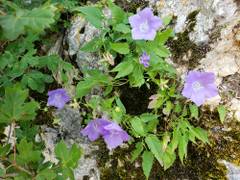
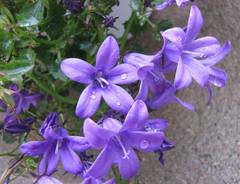
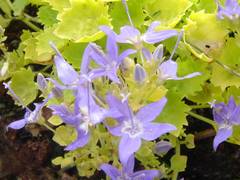
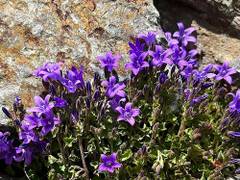
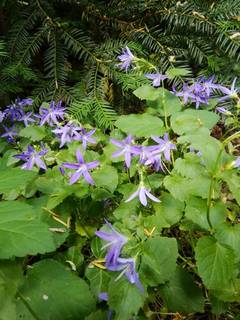
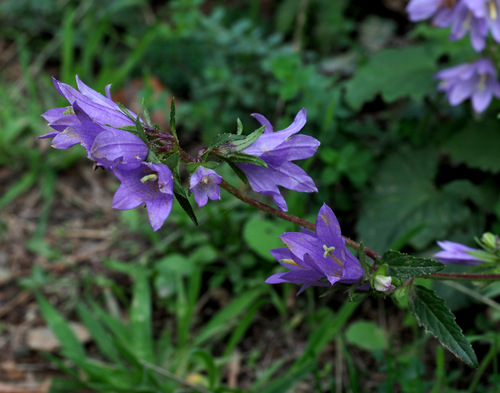
Campanula is a genus of around 400 species of annual, biennial, and perennial herbs in the family Campanulaceae, distributed across the temperate Northern Hemisphere with strong concentrations in the Mediterranean, the Caucasus, and the mountains of southern Europe. Habit ranges from ground-hugging alpine mats 4–6 in (10–15 cm) high to upright border plants reaching 4–6 ft (1.2–1.8 m). Leaves are alternate and simple, often heart-shaped at the base of the plant and narrower up the stem, with toothed margins. The flowers give the genus its common name: most are bell-shaped, though some are star- or saucer-shaped, 0.5–3 in (1.3–7.5 cm) long, in shades of blue, violet, white, and pink, with five lobes and a three-parted style. Flowers are borne singly, in spikes, or in branched clusters. The fruit is a dry capsule that opens by pores to release many small seeds. Several low species spread by rhizomes or stolons to form mats, and a few, including C. rapunculoides, spread aggressively and are difficult to remove once established. The genus grows in rock crevices, meadows, woodland, and grassland.
Native Range
Campanula occurs throughout temperate Europe, Asia, and North America, with the richest diversity in the Mediterranean Basin, Turkey, and the Caucasus. North American native species include harebell C. rotundifolia and tall bellflower C. americana. Many garden species originate in southern and eastern Europe.Suggested Uses
Campanula species are grown in rock gardens, cottage borders, edging, containers, and wall crevices according to their size. Low mat-forming species are used as groundcover and between paving, while tall species are grown for cutting and the back of borders. The flowers attract bees and other pollinating insects.How to Identify
Appearance
Size & Dimensions
Height4" - 6'
Width/Spread6" - 2'
Bloom Information
Most Campanula species flower from late spring through summer, roughly May to August, with alpine species blooming earlier and tall border species later. Individual plants bloom for 3 to 6 weeks, and removing spent flowers can extend the display. Biennial species such as C. medium flower in their second year. Flower color is predominantly blue to violet, with white and pink forms across the genus.
Detailed Descriptions
Flower Description
blue, violet, white, or pinkFoliage Description
greenGrowing Conditions
Sun Requirements
Requires 4-8 hours of direct sunlight daily
• Full Sun: 6+ hours of direct sunlight
• Partial Shade: 3-6 hours of direct sunlight
• Full Shade: Less than 3 hours of direct sunlight
Care & Maintenance
Care Guide
Campanula species grow in full sun to part shade, with afternoon shade benefiting plants in hot summer regions. Most grow in moist, well-drained soil with a pH near 6.0 to 7.5 and even moisture during the growing season. Alpine and rock-garden species need sharper drainage and tolerate leaner, drier soils. Plants are generally hardy in USDA zones 3 to 8 and need little winter protection. Taller species may need staking, as the flowering stems can flop in rich soil or wind. Many spread by rhizomes or self-seeding, and vigorous species can crowd neighbors if left unchecked.Pruning
Deadheading spent Campanula flowers prolongs bloom and reduces self-seeding in prolific species. Cutting flowering stems back to basal foliage after the main flush can prompt a second, lighter bloom. Perennial clumps are cut to the ground in late autumn once growth dies back.Container Growing
Suitable for container growing
Minimum container size: 1 gallons