Campanula, Genus, rotundifolia, Species,
- Genus & species
harebell
Circumpolar: Europe, northern Asia, North America (Alaska to Newfoundland, south to New Mexico and mountain habitats of New Jersey)
Overview
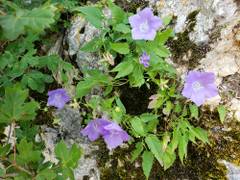
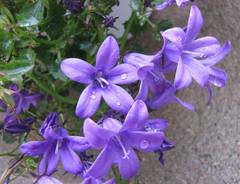
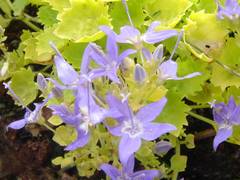
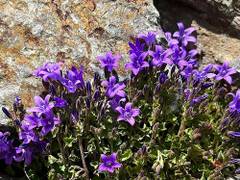
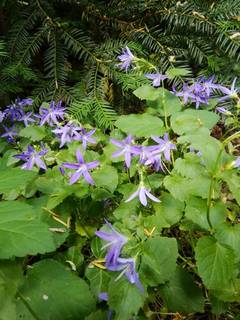
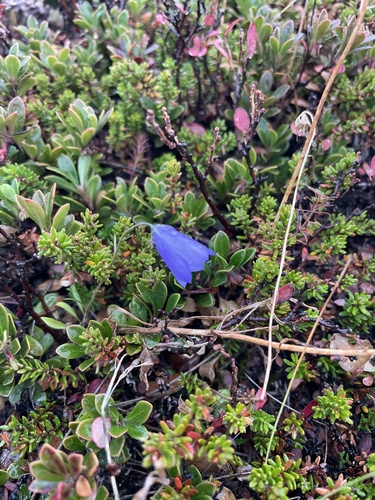
Campanula rotundifolia is a slender, wiry, clump-forming herbaceous perennial reaching 6–15 inches (15–38 cm) tall with a spread of 8–12 inches (20–30 cm). The species name 'rotundifolia' refers to the rounded basal leaves 0.5–1 inch (1.3–2.5 cm) across, which often wither before flowering and may not be present on blooming plants. Stem leaves are narrowly linear, 1–3 inches (2.5–8 cm) long, and give the flowering plant a thin, grass-like appearance. Nodding bell-shaped flowers 0.5–0.8 inch (1.3–2 cm) long in clear blue to violet-blue hang singly or in loose clusters on thin wiry stems from June through September. The thin stems sway in the slightest breeze. Growth is moderate; the plant spreads slowly by slender rhizomes. The species has a circumpolar distribution that covers Europe, northern Asia, and North America, which makes it among the widest-ranging wildflowers on the planet. Populations are highly variable across the range; alpine forms are shorter and more compact than lowland forms. Individual stems are short-lived (2–3 years) and are replaced by new shoots from the rhizome. The plant self-sows modestly, and in rich garden soils it can be outcompeted by more vigorous perennials.
Native Range
Campanula rotundifolia has a circumpolar distribution across the Northern Hemisphere. It is native to Europe (from Iceland to the Mediterranean mountains), northern Asia (Siberia, Caucasus), and North America (Alaska to Newfoundland, south to New Mexico and to mountain habitats of New Jersey). It occurs on rocky ledges, grasslands, cliffs, sand dunes, and mountain meadows from sea level to above timberline at 12,000 feet (3,600 m).Suggested Uses
Used in rock gardens, alpine gardens, meadow plantings, and along dry stone walls at 8–12 inch (20–30 cm) spacing. The wiry stems and nodding bells carry a natural wildflower character that pairs with fescue grasses and other narrow-leaved subjects. Works in naturalized grass meadows and wildflower seed mixes, on green roofs with lean substrates, and in containers of at least 1 gallon (4 L) including troughs and alpine pans. The native North American range suits the species to native plant gardens across much of the continent.How to Identify
Appearance
Size & Dimensions
Height6" - 1'3"
Width/Spread8" - 1'
Bloom Information
Nodding bell-shaped flowers 0.5–0.8 inch (1.3–2 cm) long in clear blue to violet-blue hang singly or in loose clusters from June through September. Bloom duration is 10–14 weeks. Peak bloom is June–July. Individual flowers last 5–7 days. The plant self-sows modestly for persistence.
Detailed Descriptions
Flower Description
Clear blue to violet-blueFoliage Description
Medium green; basal leaves rounded 0.5-1 inch (1.3-2.5 cm) across; stem leaves narrow linear 1-3 inches (2.5-8 cm) longGrowing Conditions
Sun Requirements
Requires 4-10 hours of direct sunlight daily
• Full Sun: 6+ hours of direct sunlight
• Partial Shade: 3-6 hours of direct sunlight
• Full Shade: Less than 3 hours of direct sunlight
Care & Maintenance
Care Guide
Plant in well-drained, lean to average soil in full sun to partial shade. Performs well on poor, rocky, alkaline, or sandy soils where competition from more vigorous plants is limited. Rich or heavy soils produce floppy growth and reduce longevity. Drought-tolerant once established. The rhizome system is long-lived but individual stems persist only 2–3 years; allowing some self-sowing keeps populations going. In rich garden soils the plant may be outcompeted by more vigorous perennials. No serious pest or disease problems.Pruning
Spent flowering stems are removed in fall or early spring. Some seed is left to set for natural reseeding. No other pruning is required.Pruning Schedule
Prune: October
fall
Container Growing
Suitable for container growing
Minimum container size: 1 gallons