Campanula, Genus, poscharskyana, Species, 'Blue Waterfall', Cultivar,
- Genus & species
- Cultivar
blue waterfall bellflower
Species native to Dinaric Alps of western Balkans; cultivar selected in cultivation
Overview
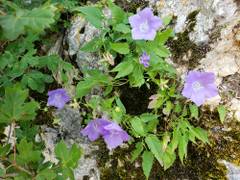
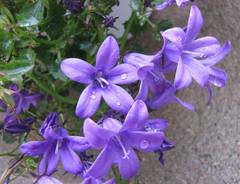
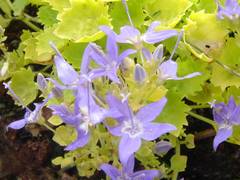
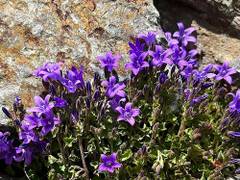
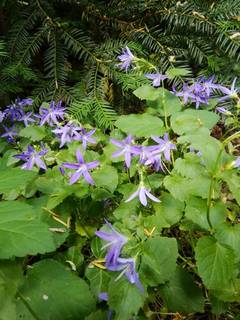
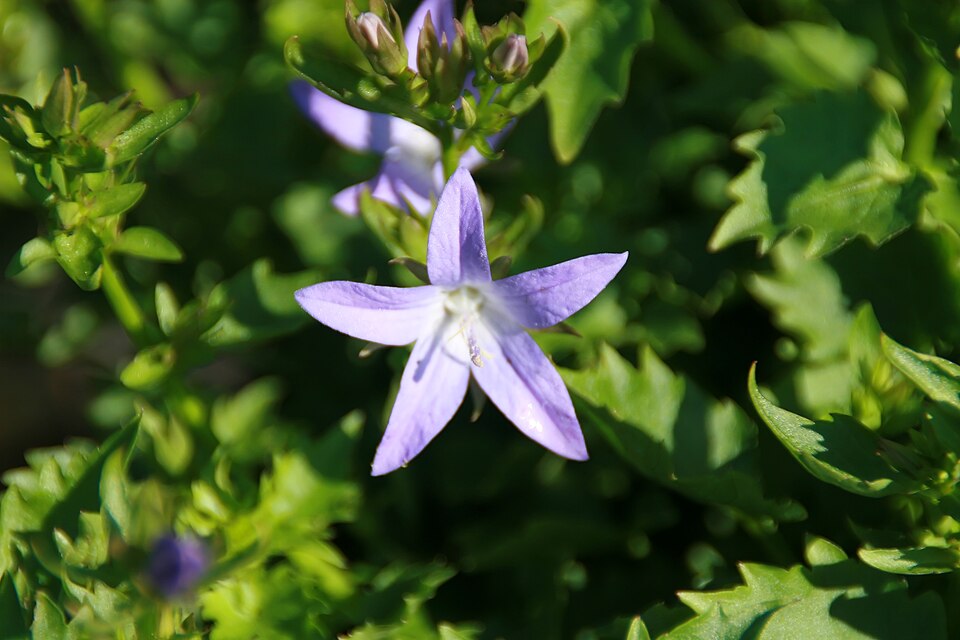
Campanula poscharskyana 'Blue Waterfall' is a vigorous, trailing, semi-evergreen perennial reaching 6–10 inches (15–25 cm) tall with a spread of 24–36 inches (60–90 cm). The cultivar carries flowers in medium to deep blue-violet — a more saturated hue than the paler lavender-blue of the species type. Star-shaped open flowers 0.7–1 inch (1.8–2.5 cm) across appear in dense clusters along trailing stems from June through September. Leaves are heart-shaped to rounded, 1–2 inches (2.5–5 cm) across, medium green, with scalloped margins. Trailing stems root at the nodes and extend 12–18 inches (30–45 cm) per season, matching the aggressive spread of the species type. Foliage is semi-evergreen, with winter dieback in zones 3–5. The cultivar name refers to the cascading growth over vertical surfaces. The vigorous spread requires management to keep it off small neighbors; slow-growing alpines are sited well away.
Native Range
The species Campanula poscharskyana is native to the Dinaric Alps of the western Balkans (Bosnia, Croatia, Montenegro) on limestone rock faces and scree. 'Blue Waterfall' was selected in cultivation.Suggested Uses
Used as a vigorous groundcover on slopes, banks, and large rock gardens at 18–24 inch (45–60 cm) spacing. Stems cascade over walls, raised beds, and retaining walls, giving the 'waterfall' effect referenced in the cultivar name. The deeper blue-violet carries stronger color contrast against green foliage than the pale species type. Not sited near small alpines or slow-growing perennials. Grows in containers of at least 2 gallons (8 L) as a trailing element.How to Identify
Appearance
Size & Dimensions
Height6" - 10"
Width/Spread2' - 3'
Bloom Information
Star-shaped deep blue-violet flowers 0.7–1 inch (1.8–2.5 cm) across open in dense clusters along trailing stems from June through September. Peak bloom is June–July, with scattered flowering into fall. Bloom duration is 10–14 weeks. Flowers are visited by bees and small butterflies.
Detailed Descriptions
Flower Description
Medium to deep blue-violetFoliage Description
Medium green, heart-shaped to rounded, 1-2 inches (2.5-5 cm) across, with scalloped (crenate) marginsGrowing Conditions
Sun Requirements
Requires 4-10 hours of direct sunlight daily
• Full Sun: 6+ hours of direct sunlight
• Partial Shade: 3-6 hours of direct sunlight
• Full Shade: Less than 3 hours of direct sunlight
Care & Maintenance
Care Guide
Plant in well-drained, average soil in full sun to partial shade. Tolerates alkaline soils and drought once established. Aggressive spread requires regular edging and runner removal; rich moist soils accelerate spread. Division every 2–3 years controls size. In partial shade the flower color holds saturation through summer heat better than in full afternoon sun on hot sites. No serious pest or disease problems.Pruning
The mat is sheared back by one-half after the main bloom flush in July to promote compact regrowth and rebloom. Hard cutback in early spring rejuvenates the plant and clears winter-damaged foliage. Vigorous growth recovers quickly from hard shearing.Pruning Schedule
Prune: March & July
early springsummer
Container Growing
Suitable for container growing
Minimum container size: 2 gallons