Campanula, Genus, 'Birch Hybrid', Cultivar,
- Genus
- Cultivar
birch hybrid bellflower
Hybrid of garden origin; parent species from the Dalmatian coast of Croatia and the Dinaric Alps of the western Balkans
Overview
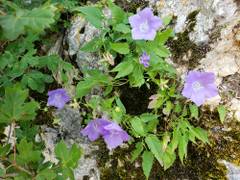
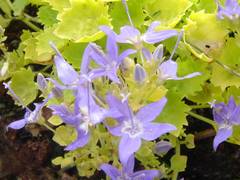
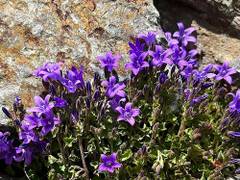
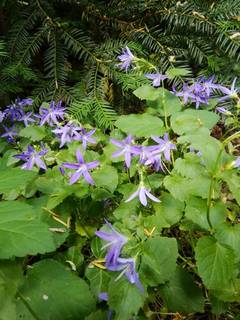
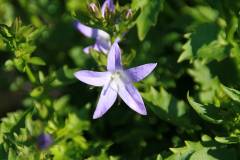
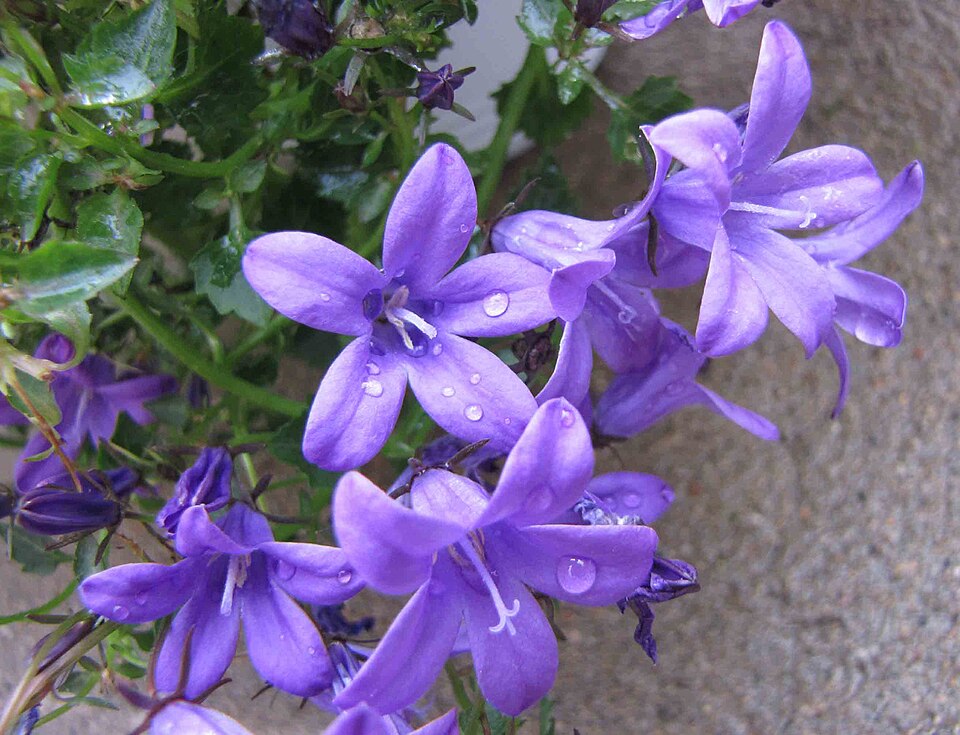
Campanula 'Birch Hybrid' is a low, spreading, semi-evergreen perennial reaching 4–6 inches (10–15 cm) tall with a spread of 12–18 inches (30–45 cm). The hybrid, generally accepted as C. portenschlagiana × C. poscharskyana, forms a dense mounding mat of rounded to heart-shaped medium green leaves 0.5–1 inch (1.3–2.5 cm) across with scalloped margins. Foliage is evergreen in zones 7–8 and semi-evergreen in colder zones, with leaves taking on a bronze tint through winter. Flowers are bell-shaped to star-shaped, 0.5–0.8 inch (1.3–2 cm) across, deep violet-blue, borne in loose sprays on thin wiry stems just above the foliage from June through September, with heaviest bloom in June–July and scattered flowering thereafter. Growth rate is moderate and the plant spreads by underground runners to form a continuous mat. Spread sits between the parents: faster than C. portenschlagiana and slower than C. poscharskyana. In hot, humid summers (zones 8–9), the center of the mat may thin or die back. Slugs feed on the foliage.
Native Range
Campanula 'Birch Hybrid' is a hybrid of garden origin, with parent species C. portenschlagiana (native to the Dalmatian coast of Croatia) and C. poscharskyana (native to the Dinaric Alps of the western Balkans). Both parents grow on limestone rocks and walls.Suggested Uses
Used in rock gardens, between stepping stones, along path edges, and in wall crevices at 12–15 inch (30–38 cm) spacing. The mat cascades over low walls and raised bed edges, and grows in containers of at least 2 gallons (8 L), including troughs and window boxes. Pairs with Aubrieta, Phlox subulata, and Thymus in rock gardens, and colonizes tight gaps between stones via underground runners.How to Identify
Appearance
Size & Dimensions
Height4" - 6"
Width/Spread1' - 1'6"
Bloom Information
Bell-shaped to star-shaped deep violet-blue flowers 0.5–0.8 inch (1.3–2 cm) across open in loose sprays from June through September. Peak bloom is June–July; scattered flowering continues into fall when moisture is maintained. Deadheading individual flowers is not practical, but shearing the entire mat after the main flush promotes a second lighter flush in late summer.
Detailed Descriptions
Foliage Description
Medium green, rounded to heart-shaped, 0.5-1 inch (1.3-2.5 cm) across, with scalloped (crenate) margins; bronze winter tintGrowing Conditions
Sun Requirements
Requires 4-10 hours of direct sunlight daily
• Full Sun: 6+ hours of direct sunlight
• Partial Shade: 3-6 hours of direct sunlight
• Full Shade: Less than 3 hours of direct sunlight
Care & Maintenance
Care Guide
Plant in well-drained, average soil in full sun to partial shade. Tolerates alkaline and slightly dry soils, reflecting the limestone origins of both parent species. Consistent moisture extends the bloom season; drought shortens it. In zones 8–9 partial shade limits center dieback caused by heat and humidity. The spreading mat may be thinned or edged every year or two to keep it from encroaching on smaller neighbors. Divide every 3–4 years if the center thins. Slugs are the main pest; no serious disease problems.Pruning
Shear or cut back the entire mat by one-half to two-thirds after the main flush of bloom in July, which promotes compact regrowth and a second lighter flush of flowers in late summer. Winter-damaged foliage is removed in early spring. No other pruning is required.Pruning Schedule
Prune: July
summer
Container Growing
Suitable for container growing
Minimum container size: 2 gallons