Campanula, Genus, portenschlagiana, Species,
- Genus & species
Dalmatian bellflower
Dalmatian coast of Croatia (limestone mountains near Split)
Overview
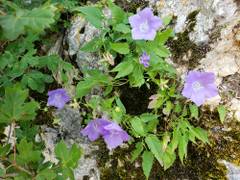
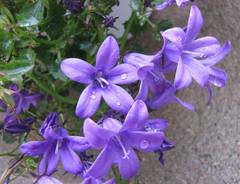
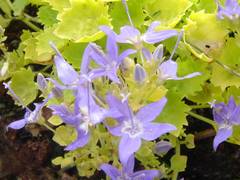
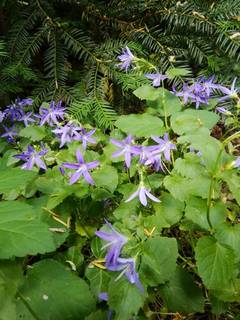
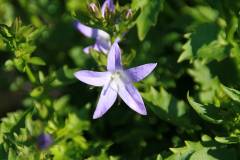
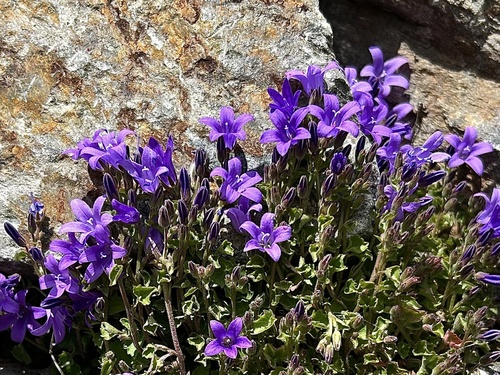
Campanula portenschlagiana is a low, mounding, semi-evergreen perennial reaching 4–6 inches (10–15 cm) tall with a spread of 12–18 inches (30–45 cm). Plants form a dense, compact dome of rounded to kidney-shaped dark green leaves 0.5–1.5 inches (1.3–4 cm) across with scalloped margins. In June–July, the foliage mound is covered by masses of upward-facing funnel- to bell-shaped flowers 0.6–0.8 inch (1.5–2 cm) across in deep violet-purple, and at peak bloom the flowers largely obscure the foliage. Growth is moderate; the plant spreads by short stolons and self-sowing to form a weed-suppressing mat. Unlike the related C. poscharskyana, this species stays in a contained mound rather than trailing out several feet. The root system colonizes cracks in stone and masonry and can persist for years in wall joints. Foliage is semi-evergreen, persisting through mild winters but dying back partially in zones 4–5. In hot, humid climates the center of the mat may thin. Slugs feed on the foliage. The species name honors Franz von Portenschlag-Ledermayer, an Austrian botanist.
Native Range
Campanula portenschlagiana is native to the Dalmatian coast of Croatia, specifically the limestone mountains and coastal cliffs around the city of Split and the adjacent islands. It occurs on limestone rock faces, walls, and scree from sea level to 3,000 feet (900 m).Suggested Uses
Used in rock gardens, wall crevices, between stepping stones, and as border edging at 10–15 inch (25–38 cm) spacing. The dense mound functions as a small-scale groundcover that suppresses weeds and cascades over low walls and raised bed edges. Grows in containers of at least 1 gallon (4 L), including troughs and window boxes. The contained habit suits placements near smaller rock garden plants without smothering them; plants naturalize in stone walls and mortared joints.How to Identify
Appearance
Size & Dimensions
Height4" - 6"
Width/Spread1' - 1'6"
Bloom Information
Masses of funnel- to bell-shaped deep violet-purple flowers 0.6–0.8 inch (1.5–2 cm) across cover the foliage mound from June through July. Bloom duration is 3–4 weeks for the main flush, with scattered rebloom into September on sheared plants. Flower density at peak largely obscures the foliage.
Detailed Descriptions
Foliage Description
Dark green, rounded to kidney-shaped, 0.5-1.5 inches (1.3-4 cm) across, with scalloped (crenate) marginsGrowing Conditions
Sun Requirements
Requires 4-10 hours of direct sunlight daily
• Full Sun: 6+ hours of direct sunlight
• Partial Shade: 3-6 hours of direct sunlight
• Full Shade: Less than 3 hours of direct sunlight
Care & Maintenance
Care Guide
Plant in well-drained, gritty to average soil in full sun to partial shade. Tolerates alkaline soils, reflecting its limestone origins. Drought-tolerant once established, but consistent moisture extends the bloom period. Good drainage is essential; crown rot develops in wet winter soils. The contained habit makes the species less invasive than C. poscharskyana, though it still colonizes cracks in walls and paving. Division every 3–4 years refreshes the crown if the center thins. Slugs are the main pest; no serious disease problems.Pruning
Spent flowers are sheared after the main bloom flush in July to promote sporadic rebloom and maintain a tidy mound. Winter-damaged foliage is removed in early spring. No other pruning is required.Pruning Schedule
Prune: July
summer
Container Growing
Suitable for container growing
Minimum container size: 1 gallons