Campanula, Genus, patula, Species,
- Genus & species
spreading bellflower
Overview
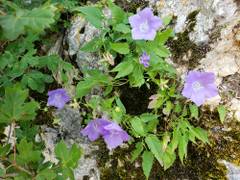
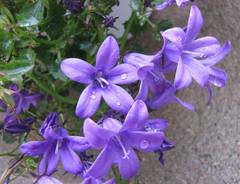
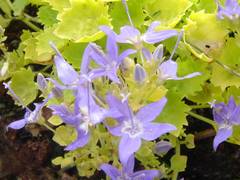
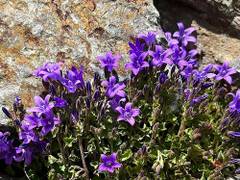
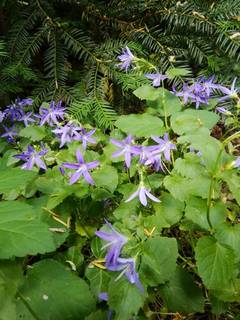
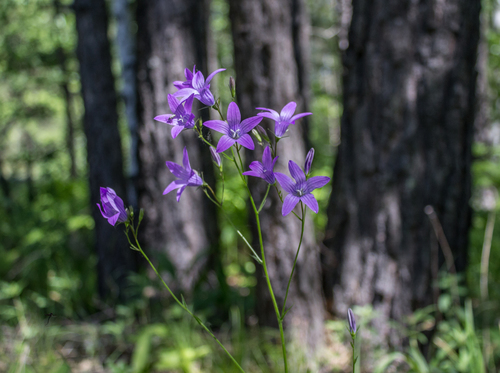
Campanula patula is a biennial or short-lived perennial in the bellflower family, forming a basal rosette in its first year and an erect, branched flowering stem 12-24 inches (30-60 cm) tall in its second. The slender stems carry narrow, lance-shaped leaves 1-3 inches (2.5-7.5 cm) long that become smaller up the stem. From late May to July the plant opens widely spreading, funnel- to star-shaped flowers 0.6-1 inch (1.5-2.5 cm) across in an open, loosely branched panicle. Petals are violet-blue, occasionally pale or white, fused at the base into a short tube that flares into five pointed lobes. Each flower is held on a long, wiry stalk, giving the inflorescence an airy outline. After flowering the plant sets capsules that release tiny seed, and the parent usually dies, persisting in gardens through self-sowing. It grows in meadows, woodland margins, hedge banks, and grassy roadsides on neutral to slightly acidic soils. The species declines under heavy grazing and frequent mowing, and seedlings need open ground to establish.
Native Range
Native to Europe, from Britain and France east to Russia and south to the Balkans. It grows in hay meadows, open woodland, hedge banks, and grassy verges, mostly on neutral to mildly acidic soils.Suggested Uses
Grown in cottage gardens, wildflower meadows, and naturalistic borders where its airy flower stems weave among other plants. It suits informal grassland plantings and pollinator gardens, drawing bees and hoverflies to the open bells.How to Identify
Appearance
Size & Dimensions
Height1' - 2'
Width/Spread8" - 1'
Bloom Information
Detailed Descriptions
Foliage Description
greenGrowing Conditions
Sun Requirements
Requires 4-8 hours of direct sunlight daily
• Full Sun: 6+ hours of direct sunlight
• Partial Shade: 3-6 hours of direct sunlight
• Full Shade: Less than 3 hours of direct sunlight