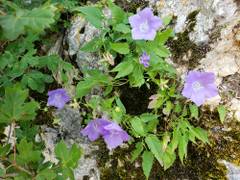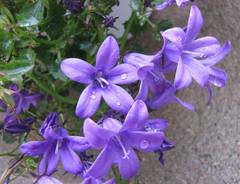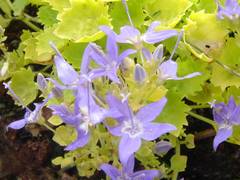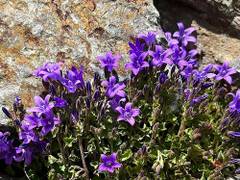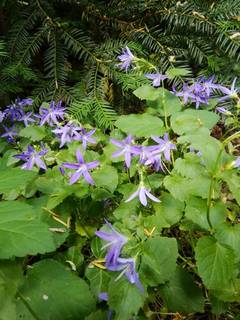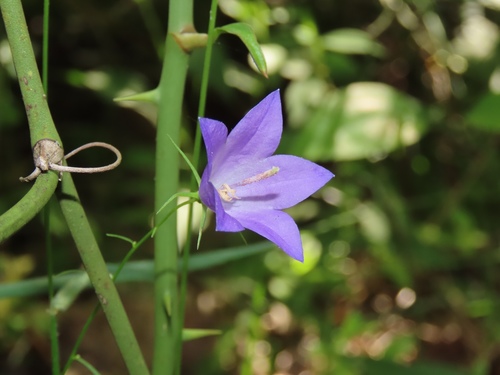
Campanula, Genus, intercedens, Species,
- Genus & species
intermediate bellflower
Overview
Campanula intercedens is a small perennial of the harebell group reaching 6-16 inches (15-40 cm) tall and 6-12 inches (15-30 cm) wide, forming a slender clump from a thin rootstock. Rounded to heart-shaped leaves make up a low basal rosette, while the narrow, almost grass-like leaves on the flowering stems differ sharply from them. Nodding bell-shaped flowers, blue to violet and about 0.6-1 inch (15-25 mm) long, hang from wiry stems in summer. The flowers have five shallow lobes and a protruding style. It belongs to the Campanula rotundifolia aggregate, a group of closely related montane bellflowers in Europe, and is set apart within that complex by intermediate leaf and flower characters. The plant grows on rocky slopes, grassland, and open stony ground, and tolerates lean, well-drained soils. It needs sharp drainage and sun to light shade; heavy, wet soils cause crown rot, and the slender habit can be lost among more vigorous neighbors.
Native Range
Campanula intercedens is native to Europe, occurring in montane and upland regions as part of the widespread harebell complex. It grows on rocky slopes, dry grassland, and stony open ground.Suggested Uses
Used in rock gardens, alpine troughs, gravel plantings, and the front of well-drained borders. Suited to lean, stony sites where larger perennials struggle. Spaced 8-10 inches (20-25 cm) apart in small groups.How to Identify
Appearance
Size & Dimensions
Height6" - 1'4"
Width/Spread6" - 1'
Bloom Information
Flowering occurs in summer, mainly June through August. Slender stems carry several nodding bells that open over a period of weeks. Removing faded flowers can extend the flowering period into late summer.
Detailed Descriptions
Foliage Description
greenGrowing Conditions
Sun Requirements
Requires 4-8 hours of direct sunlight daily
• Full Sun: 6+ hours of direct sunlight
• Partial Shade: 3-6 hours of direct sunlight
• Full Shade: Less than 3 hours of direct sunlight
Care & Maintenance
Care Guide
Grow in full sun to light shade in lean, gritty, sharply drained soil. This species tolerates drought once established and is suited to rock gardens and stony banks. Heavy, wet, or fertile soils cause weak growth and crown rot. No supplemental feeding is needed, and rich soil reduces the compact habit. It is hardy in USDA zones 4-7 and withstands cold winters in well-drained sites. Slugs can damage young basal foliage in spring.Pruning
Shear or deadhead spent flowering stems after the main bloom to encourage further flowers and limit self-sowing. Cut back faded foliage in late autumn or leave it to shelter the crown over winter. No structural pruning is required.Pruning Schedule
Prune: July–August
summer
Container Growing
Suitable for container growing
Minimum container size: 1 gallons