Juniperus, Genus, chinensis, Species, 'Blue Point', Cultivar,
- Genus & species
- Cultivar
blue point juniper
Northeast Asia (China, Mongolia, Korea, Japan)
Overview
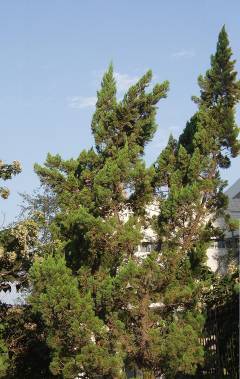
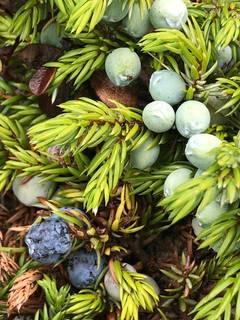
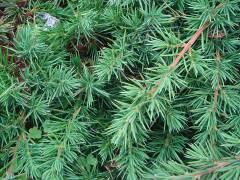
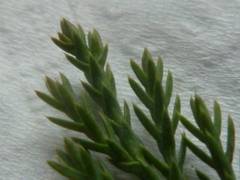
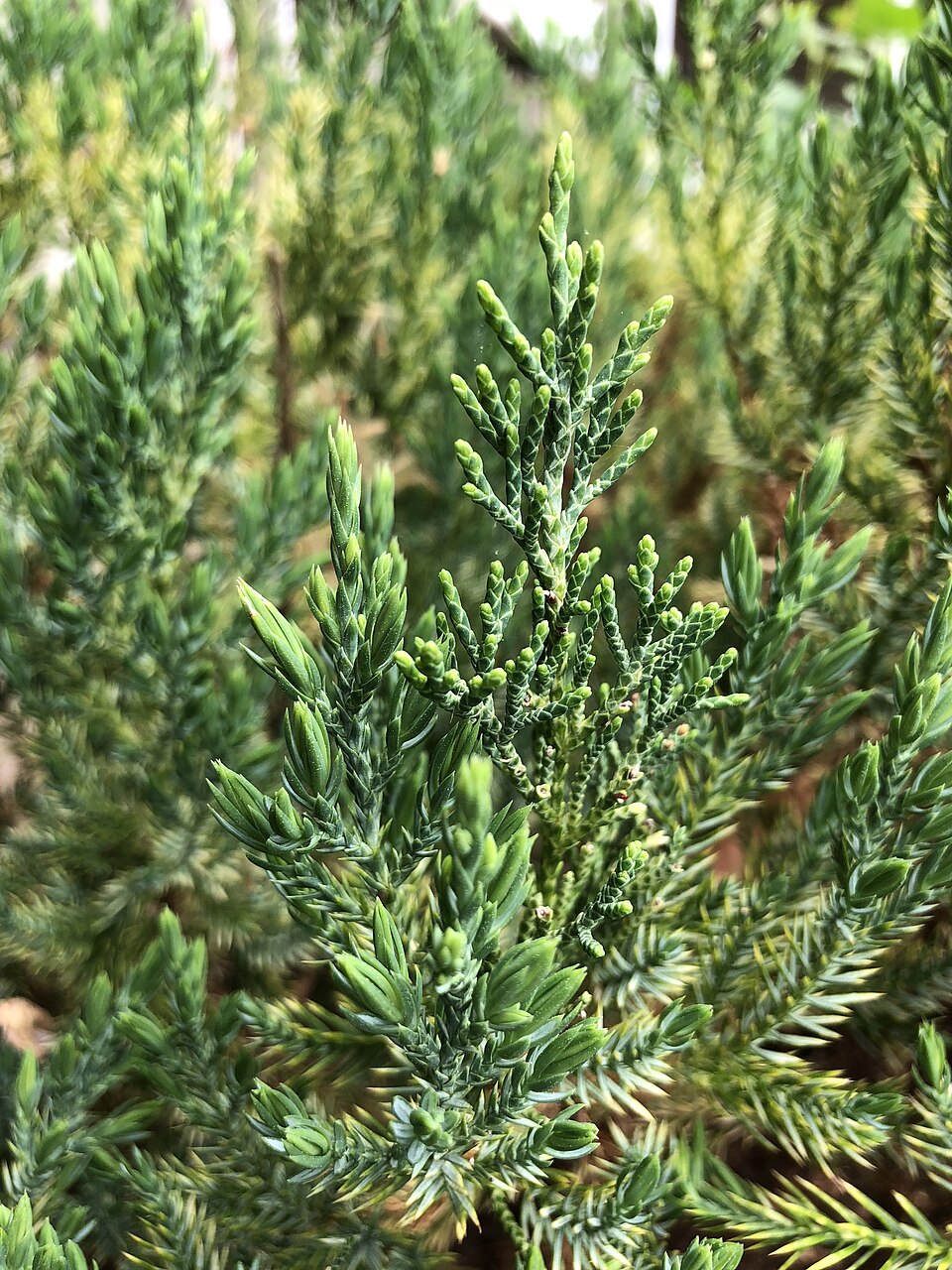
Juniperus chinensis 'Blue Point' is an evergreen coniferous cultivar with a dense pyramidal to teardrop habit, reaching 8-12 feet (2.4-3.7 m) tall and 4-6 feet (1.2-1.8 m) wide at 15-20 years, with mature specimens to 15 feet (4.5 m). Branching is upright and tightly held; the silhouette tapers from a broad base to a pointed apex. Adult foliage is scale-like, 0.04-0.08 inch (1-2 mm), blue-green to gray-blue, denser and more uniform than the species; juvenile foliage on shaded inner growth is needle-like, 0.2-0.4 inch (5-10 mm), and prickly. The cultivar is dioecious and most commercial stock is male, producing pollen but no berry-like cones; occasional female plants set blue-bloomed cones 0.2-0.3 inch (5-8 mm) ripening in autumn of the second year. Growth rate is slow to moderate at 4-8 inches (10-20 cm) per year. Plants tolerate clay, sand, and rocky soils with good drainage and a wide pH range from 5.0 to 8.0. Limitations include susceptibility to phomopsis and kabatina tip blights in humid summers, spider mite outbreaks in hot dry conditions, and bagworm infestation across the eastern United States.
Native Range
The species Juniperus chinensis is native to northeast Asia, including China, Mongolia, Korea, Japan, and the Russian Far East, occurring at sea level to 7,800 feet (2,400 m) on rocky slopes, coastal sites, and dry mountain ridges. 'Blue Point' was introduced by Monrovia Nursery in the 1970s as a chance seedling selection.Suggested Uses
Used as a vertical accent in foundation plantings, mixed shrub borders, formal entryways, and as a container specimen in zones 5-9. Spacing of 60-72 inches (150-180 cm) for screen plantings; closer spacing accelerates lower-branch loss. Suitable for 15-25 gallon (57-95 L) containers, holding form 10-15 years before requiring root pruning or upgrade.How to Identify
Appearance
Size & Dimensions
Height8' - 12'
Width/Spread4' - 6'
Bloom Information
Pollen cones release in March-April; juniper foliage produces no showy bloom. Most J. chinensis 'Blue Point' clones in the nursery trade are male and produce no fruit. Female plants, when present, ripen blue-bloomed cones over two seasons, maturing in autumn of the second year.
Detailed Descriptions
Foliage Description
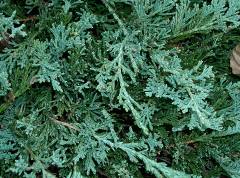
blue-green to gray-blueGrowing Conditions
Sun Requirements
Requires 6-12 hours of direct sunlight daily
• Full Sun: 6+ hours of direct sunlight
• Partial Shade: 3-6 hours of direct sunlight
• Full Shade: Less than 3 hours of direct sunlight
Care & Maintenance
Care Guide
Full sun for 6 or more hours daily maintains dense form and blue color; partial shade causes thinning and a duller cast. Watering at 7-10 day intervals during the first two growing seasons supports establishment; established plants tolerate 3-5 weeks of drought in zones 5-7. Soil drainage is critical; root rot from Phytophthora appears within 1-2 seasons in standing water. Bagworm cases (1.5-2 inches / 4-5 cm) appear July-September in eastern US plantings; manual case removal in late winter reduces the next generation. Spider mites cause stippling and bronzing in hot dry weather; strong water sprays reduce populations within 2-3 weeks. Phomopsis tip blight appears as scattered orange-brown branchlets in wet springs; cultural controls (improved air circulation, removal of affected tips) limit spread.Pruning
Pruning is minimal and limited to removal of dead, damaged, or diseased branches in late spring after new growth hardens. Light shaping of the apex maintains the conical silhouette, but cuts into old, leafless wood do not regenerate. Multiple-leader plants are corrected to a single central stem in the first 2-3 years. Cleanup of bagworm cases occurs in winter.Pruning Schedule
Prune: May–June
late spring
Container Growing
Suitable for container growing
Minimum container size: 15 gallons