Betula, Genus, alleghaniensis, Species,
- Genus & species
yellow birch
Northeastern North America (Newfoundland to Manitoba, south through Appalachians to Georgia)
Overview
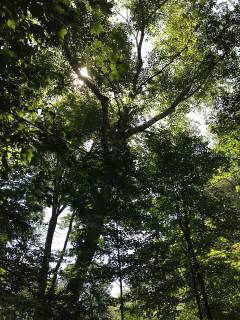
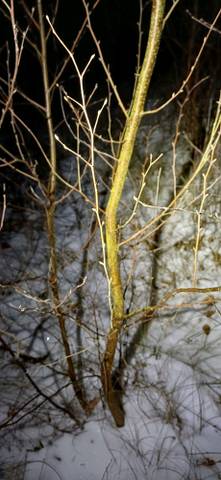
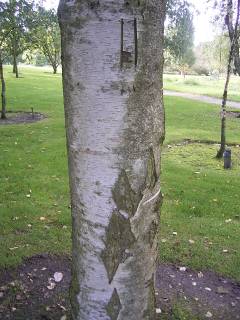
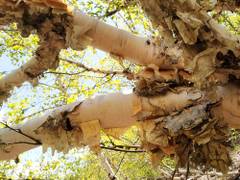
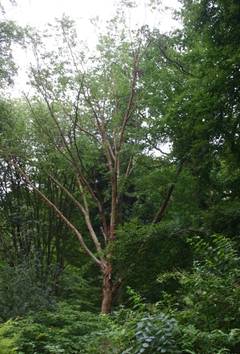
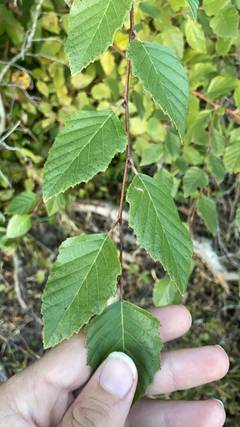
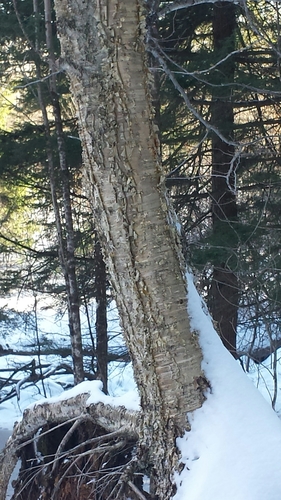
Betula alleghaniensis is a large deciduous tree reaching 60–75 feet (18–23 m) tall with a spread of 35–50 feet (10.5–15 m) in cultivation, and taller in undisturbed native forests. The bark is yellowish-bronze to golden-brown and peels in thin, curly, papery strips that give the trunk a shaggy texture; bark on older trees develops irregular, scaly plates near the base. Crushing or scratching young bark and twigs releases a wintergreen (methyl salicylate) scent. Leaves are ovate to oblong, 3–5 inches (8–13 cm) long, dark green above and paler beneath, with doubly serrate margins and 12–18 pairs of lateral veins. Male catkins 3–4 inches (8–10 cm) long dangle in clusters of 2–3 in April–May; female catkins are smaller and upright on the same tree. Fall foliage turns golden-yellow. Growth rate is moderate at 12–18 inches (30–45 cm) per year. The species tolerates less heat and drought than B. nigra and performs poorly south of zone 6. Bronze birch borer (Agrilus anxius) attacks stressed trees, and iron chlorosis develops in alkaline soils above pH 7.0.
Native Range
Betula alleghaniensis is native to northeastern North America, from Newfoundland and Nova Scotia west to Manitoba, and south through the Appalachian Mountains to Georgia at higher elevations. It is a dominant canopy tree in northern hardwood forests, growing in cool, moist ravines, stream banks, and mountain slopes from near sea level in the north to 5,000 feet (1,500 m) in the southern Appalachians.Suggested Uses
Used as a specimen tree in cool-climate gardens, parks, and naturalized woodland edges where the golden bark is visible against a dark background. Multi-stemmed specimens near paths and patios allow the bark to be seen at close range. Suitable for rain gardens and streamside plantings with consistent moisture; requires adequate space for the 35–50 foot (10.5–15 m) spread and is not used in containers or on hot, dry sites.How to Identify
Appearance
Size & Dimensions
Height60' - 75'
Width/Spread35' - 50'
Bloom Information
Male catkins 3–4 inches (8–10 cm) long emerge in April–May, pendant in clusters of 2–3. Female catkins are smaller, upright, and produced on the same tree. Flowers are wind-pollinated. Upright, cylindrical seed cones 1–1.5 inches (2.5–4 cm) long disintegrate on the tree in fall, releasing small winged nutlets.
Detailed Descriptions
Foliage Description
Dark green above, paler beneath with pubescent veins; doubly serrate marginsGrowing Conditions
Sun Requirements
Requires 5-10 hours of direct sunlight daily
• Full Sun: 6+ hours of direct sunlight
• Partial Shade: 3-6 hours of direct sunlight
• Full Shade: Less than 3 hours of direct sunlight
Care & Maintenance
Care Guide
Plant in moist, well-drained, acidic soil (pH 4.5–6.5) in full sun to partial shade. Consistent moisture and cool root conditions reduce stress that invites bronze birch borer (Agrilus anxius); a 3–4 inch (8–10 cm) layer of organic mulch over the root zone supports this. Alkaline soils above pH 7.0 cause iron chlorosis (interveinal yellowing of leaves). The species performs in zones 3–6; in hotter, drier climates it declines. Leaf miners may disfigure foliage in summer, and aphids can produce honeydew. In suitable cool, moist sites the species is long-lived, persisting 150 years or more in the wild.Pruning
Prune in late summer through fall to limit heavy sap bleeding that occurs with winter and spring cuts. Remove dead, crossing, or damaged branches, and leave the naturally irregular spreading crown intact. Canopy raising is done gradually by removing lower limbs over several years if clearance is needed. Major scaffold limbs are retained; large wounds heal slowly on birch and invite borer entry.Pruning Schedule
Prune: August–September
summerfall