Betula, Genus, populifolia, Species,
- Genus & species
gray birch
Overview
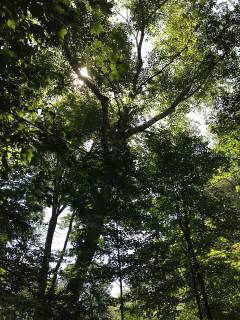
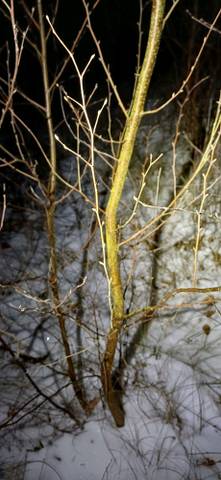
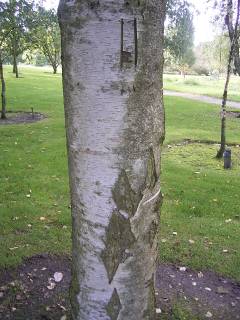
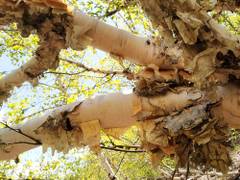
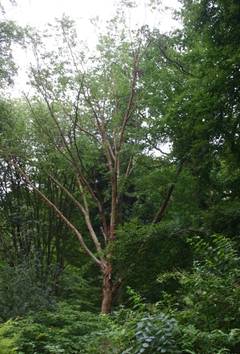
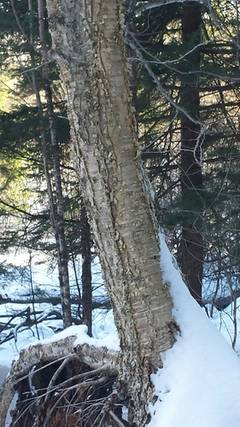
Betula populifolia is a deciduous tree 20-40 feet (6-12 m) tall and 10-20 feet (3-6 m) wide, often growing with several leaning trunks from a single base. The bark is chalky grayish-white with dark triangular patches below the branches and does not peel in papery sheets, unlike paper birch. Leaves are triangular with a long-tapering tip, 2-3 inches (5-7.5 cm) long, doubly toothed, glossy dark green above, turning pale yellow in fall, and tremble on flattened stalks in light wind. Yellow-brown male catkins 2-4 inches (5-10 cm) long hang at the branch tips and shed pollen in spring as the leaves emerge, while shorter female catkins ripen into cylindrical cone-like clusters that scatter tiny winged seeds through fall and winter. A fast-growing pioneer, it colonizes burned, cleared, and abandoned land and tolerates poor, dry, and sterile soils where few trees take hold. It is short-lived, often declining within 30-50 years. One trade-off is susceptibility to the bronze birch borer, which kills stressed trees from the top down.
Native Range
Native to northeastern North America, from the Maritime Provinces and Quebec south to Virginia and west to the Great Lakes. It grows on poor sandy or gravelly soils, burned ground, bog edges, and abandoned fields.Suggested Uses
Used for quick screening and naturalizing on poor or disturbed soils, in native plantings, and on reclaimed sites. It is grown in clumps for white bark and light shade in cold-climate gardens.How to Identify
Appearance
Size & Dimensions
Height20' - 40'
Width/Spread10' - 20'
Bloom Information
Yellow-brown male catkins lengthen and shed pollen in April and May as the new leaves expand. Wind-pollinated female catkins on the same tree ripen over summer into cone-like clusters. There is no petalled flower, as the catkins are the reproductive structures.
Detailed Descriptions
Foliage Description
Glossy dark green, pale yellow in fallGrowing Conditions
Sun Requirements
Requires 6-12 hours of direct sunlight daily
• Full Sun: 6+ hours of direct sunlight
• Partial Shade: 3-6 hours of direct sunlight
• Full Shade: Less than 3 hours of direct sunlight
Care & Maintenance
Care Guide
Grows in full sun on a wide range of soils, including poor, dry, sandy, and gravelly ground, at pH 5.0-7.0, and tolerates wet edges and compacted fill. It establishes fast on bare sites and needs little care, though it is shallow-rooted and shows stress in prolonged drought. Hardy in zones 3-6, it declines in summer heat south of its range. The bronze birch borer attacks drought-stressed and aging trees, so steady soil moisture and mulch lower the risk. It is short-lived and self-seeds freely onto open ground.Pruning
Pruning is done in summer or fall, since birches bleed sap heavily if cut in late winter or spring. Dead and borer-killed wood is removed to slow the spread of damage. The multi-trunked form is usually left intact rather than trained to a single leader.Pruning Schedule
Prune: July–September
summerfall