Abies, Genus, fraseri, Species,
- Genus & species
Fraser fir
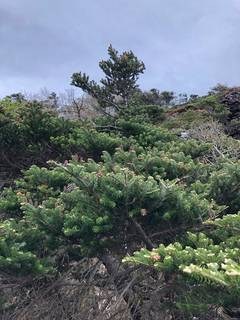
Endemic to the highest peaks of the southern Appalachian Mountains in Virginia, North Carolina, and Tennessee, where the species occurs at elevations above 4,500 ft (1,370 m) on Mount Mitchell, Clingmans Dome, Mount Rogers, and surrounding summits in cool humid cloud-immersed forests with annual precipitation of 75-100 inches (190-254 cm); among the more geographically restricted conifers in North America, with the wild range listed as endangered by the IUCN due to massive mortality from balsam woolly adelgid ({Adelges piceae}) since the 1960s — over 90% of mature trees in some stands have been killed
Overview
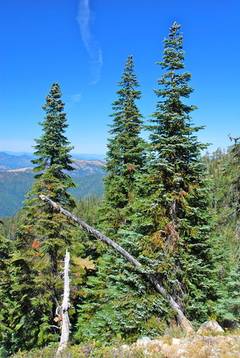
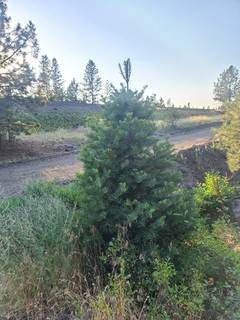
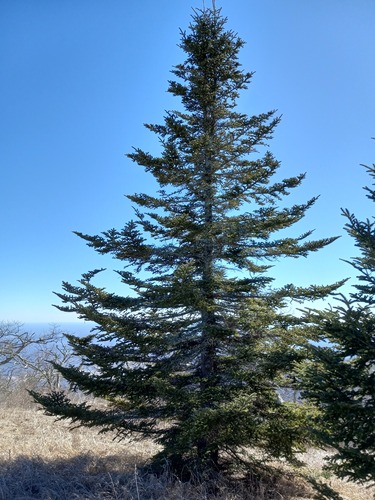
Abies fraseri is a medium-sized narrowly pyramidal evergreen conifer in the pine family (Pinaceae), growing 30-50 ft (9-15 m) tall and 15-20 ft (4.5-6 m) wide in the wild, typically smaller in cultivation. The crown is dense, symmetrical, with stiff horizontal branches. Bark is thin, smooth, grey-brown, with raised resin blisters on young trees, becoming scaly with age. Needles are flat, 0.5-0.75 inch (12-19 mm) long, dark green and glossy above with two silvery-white stomatal bands beneath, spirally arranged but twisted to appear two-ranked. The silvery undersides flash when wind lifts the branches — a recognizable visual character at field inspection. Cones are upright, cylindrical, 1.5-2.5 inches (4-6 cm) long, purple when young, ripening to brown. The key diagnostic feature separating A. fraseri from the closely related A. balsamea is the exserted reflexed bract scales visible between the seed scales — giving the cone a bristly or whiskered appearance. Endemic to a narrow range in the southern Appalachian Mountains above 4,500 ft (1,370 m), the species is listed as endangered by the IUCN due to massive mortality from balsam woolly adelgid (Adelges piceae), which has killed more than 90% of mature trees in some stands since the 1960s. Despite its restricted wild range, the species is the most-produced Christmas tree in the United States — over 50 million trees are in commercial production, primarily in North Carolina. Shallow-rooted and intolerant of heat, drought, and urban pollution.
Native Range
Abies fraseri is endemic to the highest peaks of the southern Appalachian Mountains in Virginia, North Carolina, and Tennessee. The species occurs at elevations above 4,500 ft (1,370 m) — on Mount Mitchell, Clingmans Dome, Mount Rogers, and surrounding summits — in cool humid cloud-immersed forests with annual precipitation of 75-100 inches (190-254 cm). Among the more geographically restricted conifers in North America.Suggested Uses
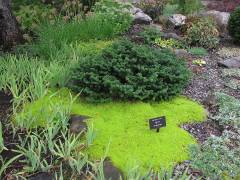
The most commercially produced Christmas tree species in the United States — the dense branching, strong fragrance, strong needle retention, and stiff branches that support heavy ornaments make it the industry standard. In landscape use, planted as a specimen in cool-climate gardens (USDA zones 4-6) with moist acidic soil. Used in reforestation and conservation plantings in the southern Appalachians to replace adelgid-killed stands. The compact cultivar 'Prostrata' is used in rock gardens.How to Identify
Appearance
Size & Dimensions
Height30' - 50'
Width/Spread15' - 20'
Bloom Information
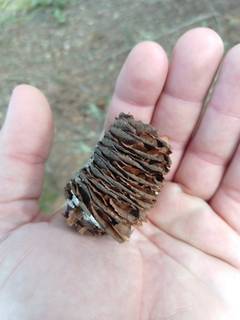
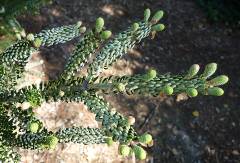
Male pollen cones are small, reddish, clustered on the underside of branches, releasing pollen in May through June. Female seed cones develop upright on upper branches, 1.5-2.5 inches (4-6 cm) long, dark purple when immature, ripening to brown by September. Cones disintegrate on the branch in autumn, leaving only the central axis.
Detailed Descriptions
Flower Description
Purple upright cylindrical seed cones 1.5-2.5 inches (4-6 cm) long with exserted reflexed bract scales visible between the seed scales — the bristly whiskered appearance separates A. fraseri from the closely related A. balsameaFoliage Description
Dark green glossy upper surface with two silvery-white stomatal bands beneath; flat needles 0.5-0.75 inch (12-19 mm) long spirally arranged but twisted to appear two-ranked; the silvery undersides flash conspicuously when wind lifts the branchesGrowing Conditions
Sun Requirements
Requires 4-8 hours of direct sunlight daily
• Full Sun: 6+ hours of direct sunlight
• Partial Shade: 3-6 hours of direct sunlight
• Full Shade: Less than 3 hours of direct sunlight
Care & Maintenance
Care Guide
Plant in full sun to partial shade in moist acidic well-drained soil at pH 4.5-5.5. Space 12-15 ft (3.7-4.5 m) apart. The species requires cool summers and consistent moisture and does not tolerate temperatures above 85°F (29°C) for extended periods, drought, or dry wind. In USDA zones 4-6, water regularly during the first 3 years; maintain consistent soil moisture thereafter. Mulch with 3-4 inches (8-10 cm) of acidic organic material. Susceptible to balsam woolly adelgid — inspect annually for white woolly masses on bark and treat with horticultural oil if detected. In the Pacific Northwest, the species is restricted to cool high-elevation sites with reliable summer moisture and does not perform well in the Puget Sound lowlands.Pruning
No routine pruning is required. Remove dead or damaged branches at any time. Correct double leaders by removing the weaker stem in late winter. In Christmas tree production, annual shearing in summer shapes the tree for a denser more symmetrical form.Pruning Schedule
Prune: February–March
late spring