Image 1 of 16
1 / 16
Plant Reference
Abies, Genus, grandis, Species,
- Genus & species
grand fir
Pacific Northwest and northern Rocky Mountains — British Columbia south to northern California, east to Montana and Idaho; sea level to 5,000 feet (1,500 m)
Overview
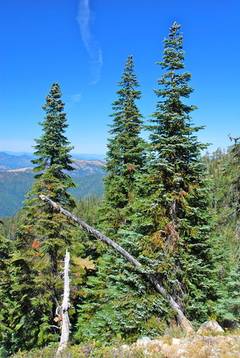
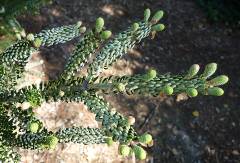
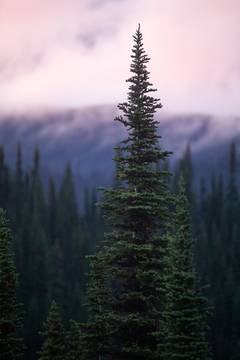
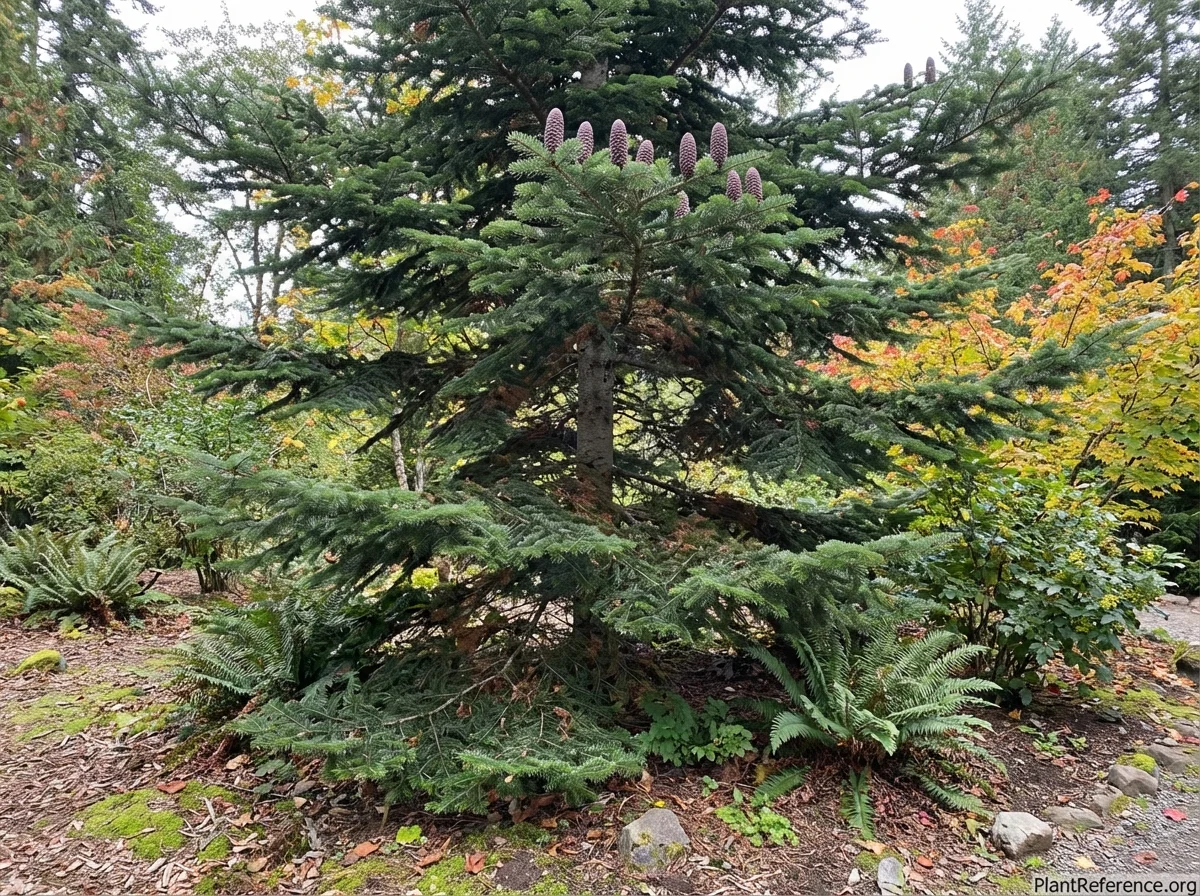
Abies grandis is an upright coniferous evergreen tree growing 60-120 feet (18-37 m) tall and 15-25 feet (4.5-7.5 m) wide with a strongly pyramidal crown. The species name grandis means great, referring to the mature height. Flat needles, 1-2 inches (2.5-5 cm) long, are lustrous dark green above with two white stomatal bands beneath, arranged in flat horizontal sprays with a comb-like parting on the upper surface. Foliage releases a strong citrus-tangerine fragrance when crushed. Upright cylindrical cones, 2-4 inches (5-10 cm), are yellowish-green aging to brown and disintegrate on the tree. Native to the Pacific Northwest and northern Rocky Mountains from British Columbia south to northern California and east to Montana and Idaho, at elevations from sea level to 5,000 feet (1,500 m) — a lowland species compared to subalpine firs. Growth rate is 2-3 feet (60-90 cm) per year in favorable sites, faster than other North American firs. Susceptible to Armillaria root rot in heavy, wet soils. The mature size of 60-120 feet (18-37 m) requires a very large site. Commonly grown as a Christmas tree for the fragrance. Drought-tolerant once established. Not deer-resistant. Non-toxic.
Native Range
Native to the Pacific Northwest and northern Rocky Mountains, from British Columbia south to northern California and east to Montana and Idaho. Found from sea level to 5,000 feet (1,500 m) elevation.Suggested Uses
Grown as a large native coniferous specimen on very large sites, spaced 15-25 feet (4.5-7.5 m) apart. Also commonly used as a Christmas tree for the citrus-tangerine fragrance. Not adapted to small residential lots or sites with poorly drained clay. Non-toxic. Hardy in zones 6-9.How to Identify
Appearance
Size & Dimensions
Height60' - 120'
Width/Spread15' - 25'
Bloom Information
Not applicable — conifer. Wind-pollinated. Male strobili release pollen in April-May. Upright cylindrical cones, 2-4 inches (5-10 cm), yellowish-green aging to brown, ripen and disintegrate on the tree in fall.
Detailed Descriptions
Foliage Description
lustrous dark green above, two white stomatal bands below; flat needles 1-2 inches (2.5-5 cm) arranged in flat horizontal sprays with a comb-like parting on the upper surface; strong citrus-tangerine fragrance when crushedGrowing Conditions
Sun Requirements
Requires 4-8 hours of direct sunlight daily
• Full Sun: 6+ hours of direct sunlight
• Partial Shade: 3-6 hours of direct sunlight
• Full Shade: Less than 3 hours of direct sunlight
Care & Maintenance
Care Guide
Site in part sun to full sun (4-8 hours) in well-drained soil with a pH of 5.0-7.0. Drought-tolerant once established. Susceptible to Armillaria root rot in heavy wet soil — well-drained conditions are critical for long-term health. Growth rate is 2-3 feet (60-90 cm) per year; the eventual mature size of 60-120 feet (18-37 m) requires a very large site. Not deer-resistant. Non-toxic. Hardy in zones 6-9.Pruning
No routine pruning is needed. Remove dead or damaged branches in early spring (February-March). The central leader should not be removed; firs will not regenerate a lost terminal leader.Pruning Schedule
Prune: February–March
early spring