When to Plant Green Beans in San Francisco: Complete Guide + Best Varieties for Zone 10a
Pets & Toxicity
Recorded toxicity for plants linked in this guide. An unknown status is not a safety assessment.
No linked plant is recorded as toxicDetailsHide
Phaseolus vulgaris 'Blue Lake' — Toxicity
Non-toxic when cooked. Raw pods carry lectins (phytohemagglutinin) that cause digestive upset on raw consumption — pods are cooked before eatingView Phaseolus vulgaris 'Blue Lake' plant profilePhaseolus vulgaris 'Kentucky Wonder' — Toxicity
Non-toxicView Phaseolus vulgaris 'Kentucky Wonder' plant profilePhaseolus vulgaris 'Purple Queen' — Toxicity
Non-toxicView Phaseolus vulgaris 'Purple Queen' plant profilePhaseolus vulgaris 'Dragon Tongue' — Toxicity
Non-toxicView Phaseolus vulgaris 'Dragon Tongue' plant profile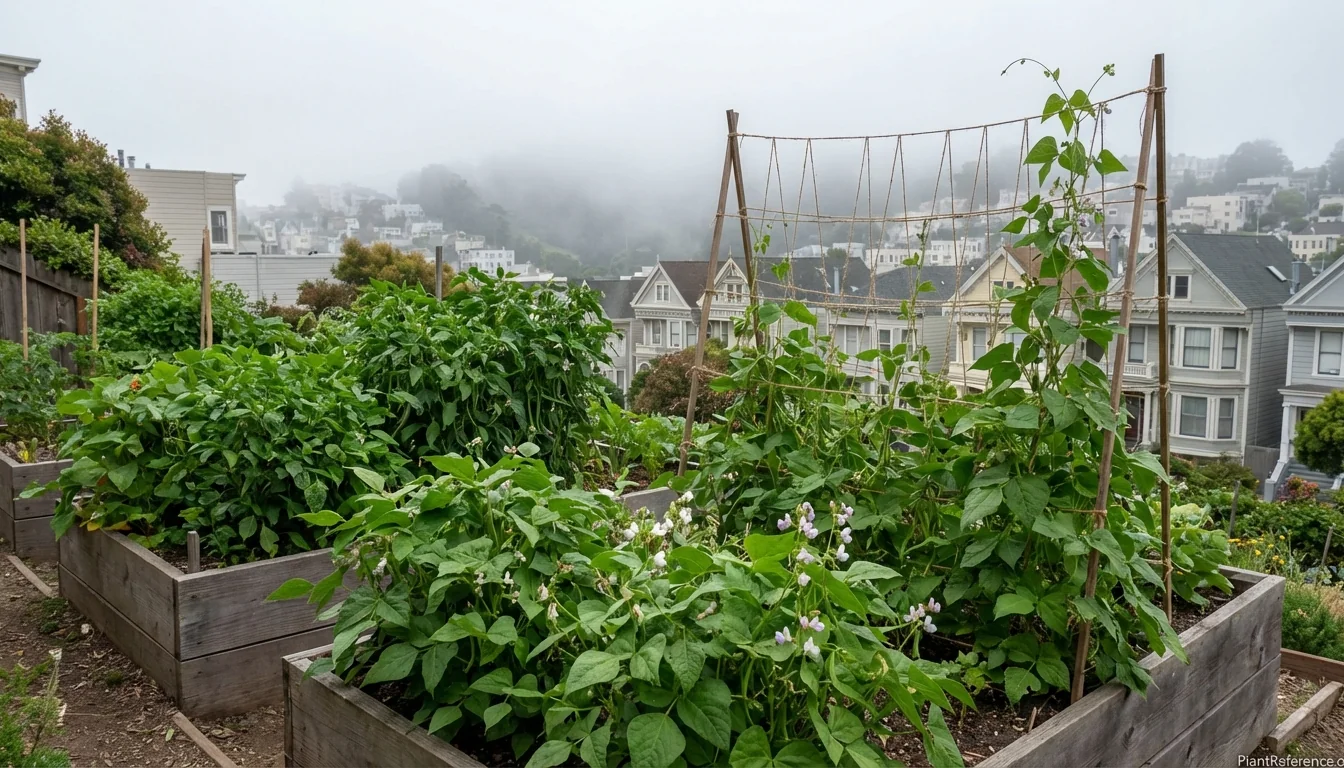
— Image © Plant Reference 2026
San Francisco's unique Zone 10a coastal climate presents both opportunities and challenges for green bean growers. While the long frost-free season seems promising, the reality is more complex—those famous summer fogs keep temperatures surprisingly cool.
Here's what newcomers don't expect: San Francisco's "summer" rarely gets hot enough for beans to truly thrive. The secret is choosing the right varieties, timing your plantings, and working with the microclimates in your specific neighborhood.
The challenge is often warmth rather than frost, but frost risk varies by site and year. The real limitation is those cool, foggy summers that rarely break 70°F (21°C). Beans are warm-season crops that slow their growth when temperatures stay below 65°F (18°C).
Best Green Bean Varieties for San Francisco's Climate
Not all green bean varieties handle San Francisco's cool summers equally. The table below highlights the varieties that actually produce well in our unique climate.
Choosing Beans for Cool San Francisco Summers
Variety | Days to Maturity | Best For | Notes for San Francisco |
|---|---|---|---|
50-55 days | Quick harvest | Earliest producer | |
55-65 days | Main crop | Consistent performer | |
53-60 days | Fresh eating | Romano type; bush bean | |
55-60 days | Specialty crop | Purple color shows well against fog | |
55-60 days | Farmers markets | Unique appearance | |
60-70 days | Long season | Needs a warm, sheltered site |
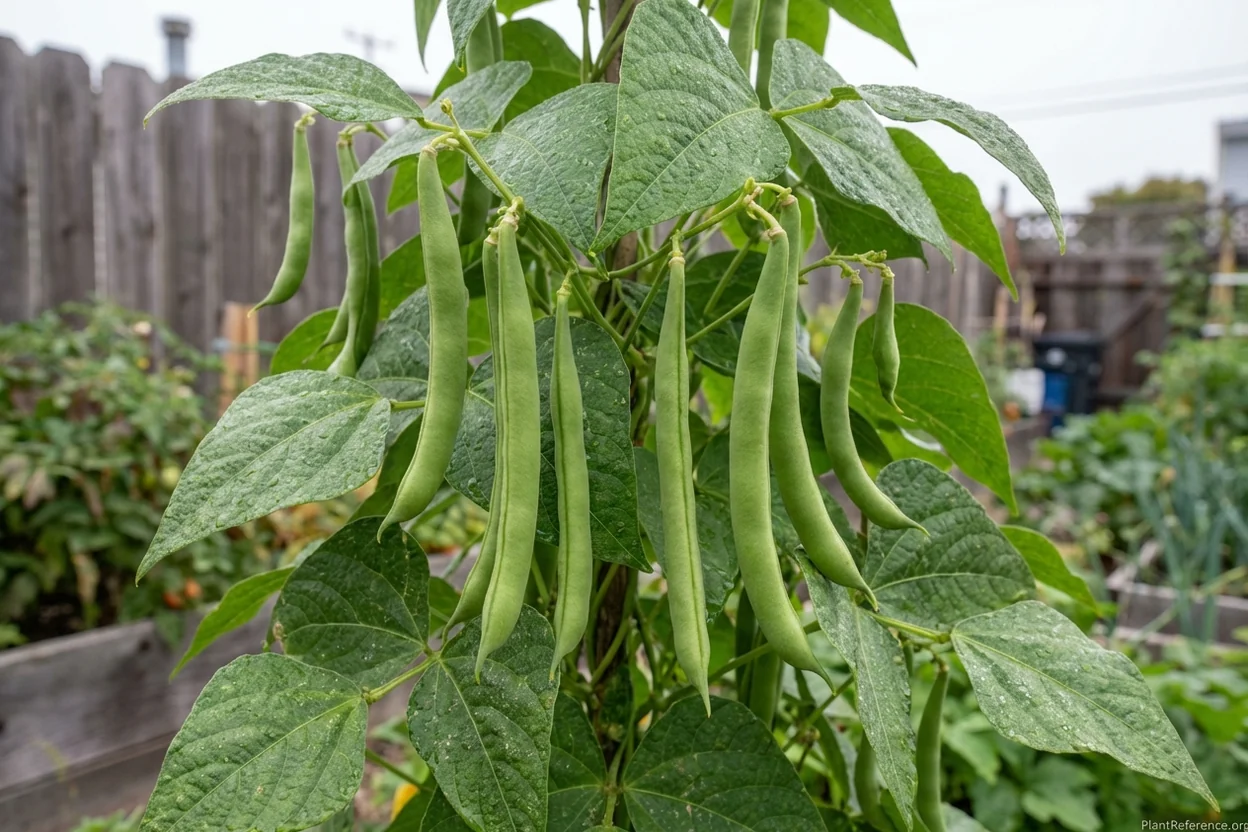
🌿Phaseolus vulgaris 'Provider' is my top recommendation for San Francisco beginners. This bush variety was bred for reliability and actually performs better in cooler conditions than many heat-lovers. At 50-55 days to maturity, you can get multiple harvests even if your planting timing isn't perfect.
🌿Phaseolus vulgaris 'Blue Lake' comes in second. The bush strain (not the pole version) is a main-season crop for a sunny, sheltered bed.
Use Caution with Heat-Lovers: Yardlong beans need sustained warmth. Cherokee Trail of Tears is a regular pole bean.
Bush vs. Pole Varieties in SF Climate
In most climates, I'd recommend pole beans for extended harvest. But San Francisco's cool summers change the math. Bush varieties like 🌿Phaseolus vulgaris 'Provider' and 🌿Phaseolus vulgaris 'Roma II' often provide an earlier crop than pole varieties because they mature faster during the brief warm windows.
Bush Bean Advantages:
Mature quickly in suitable growing conditions
Allow for succession planting
No trellis needed in windy SF conditions
Better for small city lots
When Pole Beans Work: 🌿Phaseolus vulgaris 'Kentucky Wonder' needs a warm, sheltered site and a long season. Plant when soil is warm.
Specific Planting Dates for San Francisco
Here's the month-by-month planting strategy for San Francisco's climate patterns.
Early Planting: Let Soil Temperature Decide
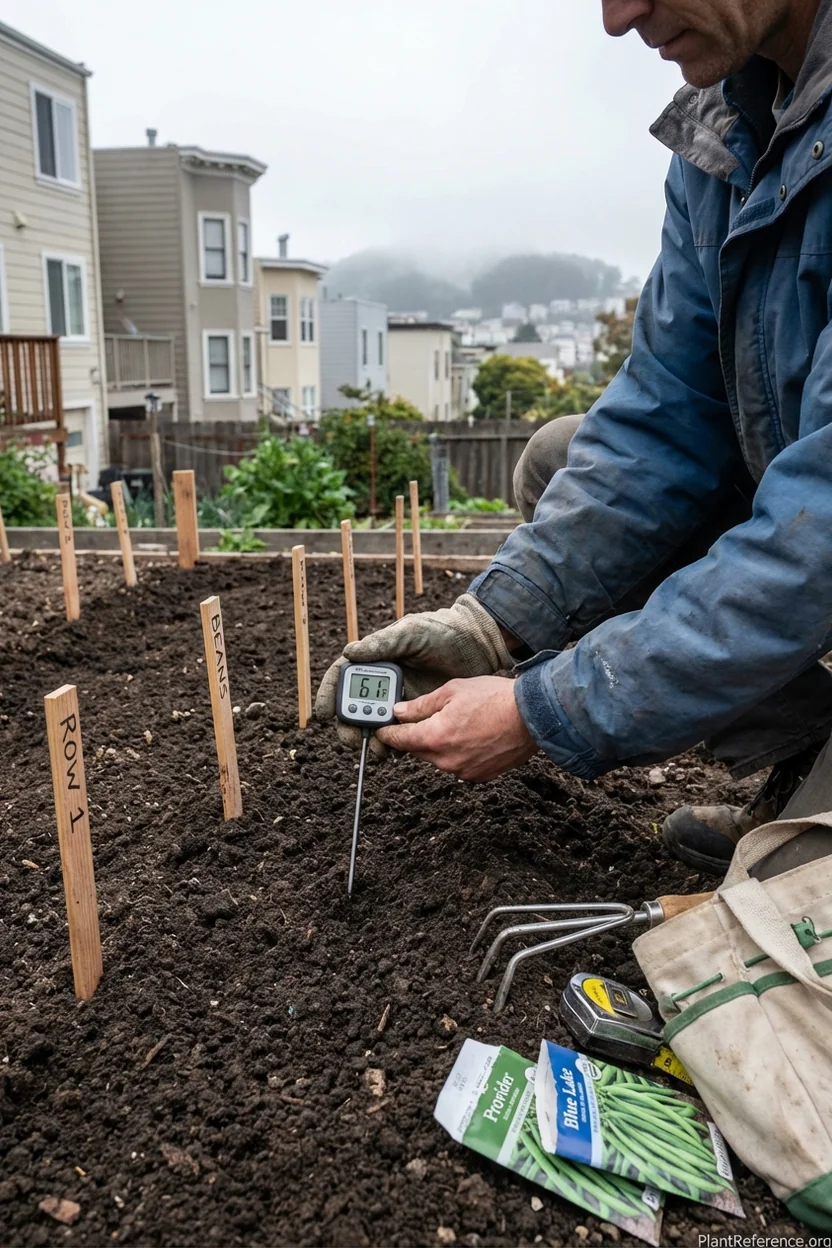
Late March (March 20-30): First planting of 🌿Phaseolus vulgaris 'Provider' - Soil temperature: at least 60°F (16°C); otherwise delay sowing - Air temperature: Daytime highs reaching 60-65°F (15-18°C) - Risk: Late cool spell can slow germination
Mid-April (April 10-20): Main spring planting - All bush varieties: 🌿Phaseolus vulgaris 'Blue Lake', 🌿Phaseolus vulgaris 'Roma II', 🌿Phaseolus vulgaris 'Purple Queen' - Soil temperature: 60-65°F (15-18°C) - This can be an early planting window in a warm, sheltered garden
Early May (May 1-15): Succession planting - Second round of 🌿Phaseolus vulgaris 'Provider' for continuous harvest - 🌿Phaseolus vulgaris 'Kentucky Wonder' in warmest locations only
Summer Succession Planting
San Francisco's "summer" requires a different approach than most gardening advice suggests.
Late May (May 20-30): Pre-fog planting - Third succession of bush varieties - This planting often performs better than later summer sowings
June-July: Monitor your microclimate - If your garden stays above 65°F (18°C) most days, continue succession planting - In fog-heavy areas (Sunset, Richmond districts), use soil warmth and exposure to decide whether to sow in June-July
August (August 1-15): Late summer opportunity - Final planting of 🌿Phaseolus vulgaris 'Provider' - Harvest before November rains - 50-day maturity is an estimate; cool conditions can delay harvest beyond early October
Late-Summer and Fall Considerations
Unlike hot climate zones that have excellent fall bean seasons, San Francisco's early fall is often clearer and warmer than its foggy summer.
Late August planting of 🌿Phaseolus vulgaris 'Provider' can work, but it's risky. You're racing against: - Variable late-season weather - Earlier sunsets reducing heat accumulation - October rains potentially starting early
I generally recommend focusing your energy on spring through summer plantings rather than pushing the fall season.
Complete Growing Guide for San Francisco
Soil Preparation for Coastal Conditions
San Francisco's marine influence creates specific soil challenges that affect bean growing success.
pH Requirements: Beans prefer 6.0-7.0 pH. SF soil pH varies. Test your soil and follow its lime recommendation.
Drainage Concerns: Our clay-heavy soils combined with winter rains create drainage problems. Raised beds aren't just convenient—they're useful where drainage is poor.
Build beds 8-12 inches (20-30 cm) high with this mix:
40% native soil (if decent drainage)
30% compost
20% coarse sand or perlite
10% clean topsoil
Wind Protection: SF's afternoon winds can damage bean plants. Install simple barriers using bamboo stakes and burlap on the west side of your planting area.
Microclimates Matter More Than Zone
Zone 10a describes average extreme winter lows, but your specific location makes all the difference for bean success.
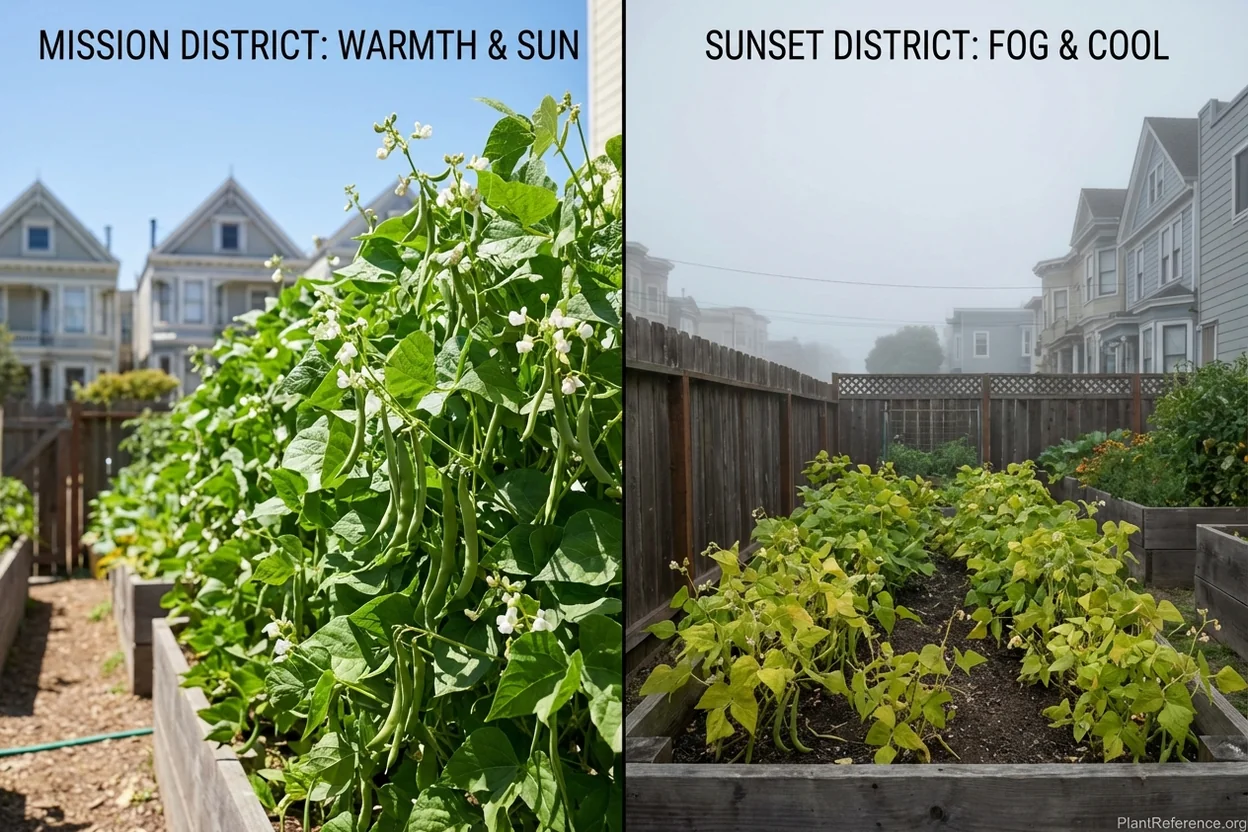
Warmest Areas (Best for Beans):
Mission District: Protected from ocean winds
Potrero Hill: South-facing slopes, less fog
Bernal Heights: Elevated, good sun exposure
SOMA: Urban heat island effect
Coolest Areas (Challenging for Beans):
Sunset District: Heavy fog, ocean influence
Richmond District: Marine layer persists longer
Twin Peaks area: High elevation, windy
If you're in a cool microclimate, start with 🌿Phaseolus vulgaris 'Provider' and focus on warm-soil plantings.
Spacing and Support for SF Conditions
Bush Varieties: Plant 4-6 inches (10-15 cm) apart in rows 18 inches (45 cm) apart. The wider spacing (compared to standard 4-inch recommendations) allows better air circulation in our humid marine climate.
Pole Varieties: If attempting 🌿Phaseolus vulgaris 'Kentucky Wonder', use sturdy supports. SF's afternoon winds can topple inadequate trellises. I recommend: - 8-foot cedar posts sunk 18 inches deep - Sturdy wire mesh or bamboo teepees - Wind barriers on the west side
Watering Strategy for Marine Climate
San Francisco's summer fog provides natural humidity, but it doesn't replace proper watering. Here's how to adapt irrigation for our unique conditions:
Morning Watering: Water in the morning. Afternoon fog combined with wet soil can favor fungal diseases.
Deep, Infrequent Schedule: - Seeds: Keep moist, not soggy - Plants: About 1 inch (2.5 cm) total weekly - Flowering/pods: Keep soil evenly moist
Fog Season Adjustments: When heavy fog persists, check soil moisture before watering.
Troubleshooting San Francisco-Specific Problems
Cool coastal gardens face recurring problems. Here's how to handle them.
Slow Germination and Poor Emergence
Symptoms: Seeds planted properly but taking 2-3 weeks to emerge, or emerging weakly Cause: Cool soil temperatures below 60°F (15°C) combined with marine moisture Solution: Wait for proper soil temperature. Use row covers or clear plastic mulch to warm soil faster. Consider pre-sprouting seeds indoors on damp paper towels.
Plants Flowering But Not Setting Pods
Symptoms: Healthy plants with many flowers that drop off without forming pods Cause: Temperature stress, dry soil, or excess nitrogen during flowering Solution: Check soil moisture and recent temperatures before blaming fog. Provide wind protection and consider using season extension covers. Focus on morning sun exposure.
Powdery Mildew on Leaves
Symptoms: White powdery coating on leaves, particularly lower ones Cause: High humidity from marine air combined with poor air circulation Solution: Increase plant spacing to 6 inches (15 cm) even for bush varieties. Water at soil level to limit other leaf diseases; powdery mildew itself can infect dry leaves. Remove affected lower leaves promptly.
Slugs and Snails
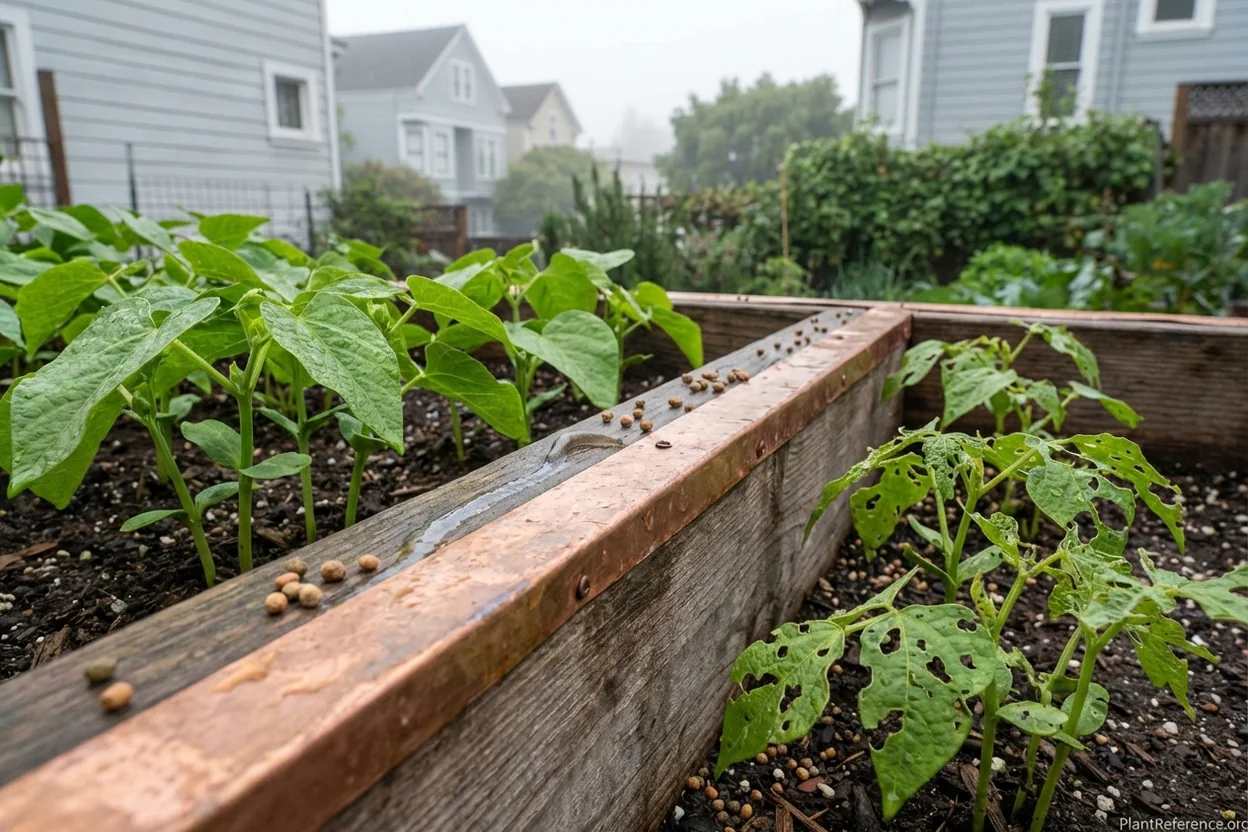
Symptoms: Holes in leaves, silvery trails, young plants completely eaten Cause: High humidity from fog creates perfect slug habitat Solution: Install copper tape around raised beds. Use iron phosphate baits. Hand-pick in early morning when they're active. Encourage ground beetles by providing habitat.
Rust Disease
Symptoms: Orange-brown spots on undersides of leaves, yellowing of affected leaves Cause: Cool, moist conditions from marine influence combined with poor air circulation Solution: Plant rust-resistant varieties like 🌿Phaseolus vulgaris 'Roma II'. Avoid overhead watering. Remove infected leaves and shoots promptly. Improve drainage and air flow.
Harvest & Storage
San Francisco's extended growing season allows for strategic harvest planning that maximizes your bean production.
Optimal Harvest Timing
Bush varieties like 🌿Phaseolus vulgaris 'Provider' and 🌿Phaseolus vulgaris 'Blue Lake' produce their main crop over 2-3 weeks. In SF's cool climate, pods develop more slowly than in hot regions, so check daily once pods reach 4 inches (10 cm) long.
Harvest indicators:
Pods snap crisply when bent
Seeds barely visible as small bumps
Bright color without yellowing
Pods make a "squeaky" sound when rubbed together
Morning harvest is best—pods are crisp once fog or dew has dried.
Succession Harvest Strategy
With proper planning, you can harvest fresh beans from May through October:
May harvest: March planting of 🌿Phaseolus vulgaris 'Provider' June-July harvest: April planting of main-season varieties August-September harvest: June-July succession plantings October harvest: August planting (in warmer microclimates only)
Storage and Preservation
Fresh storage: Refrigerate immediately in perforated bags. Use within 5-7 days.
Freezing: Blanch for 3 minutes, ice bath, drain, and freeze. Label with variety and date—SF's long season means you might have multiple varieties to track.
Seed saving: Allow pods to dry completely on plants before prolonged wet weather or any forecast frost. Damp coastal conditions can make drying difficult.
Frequently Asked Questions
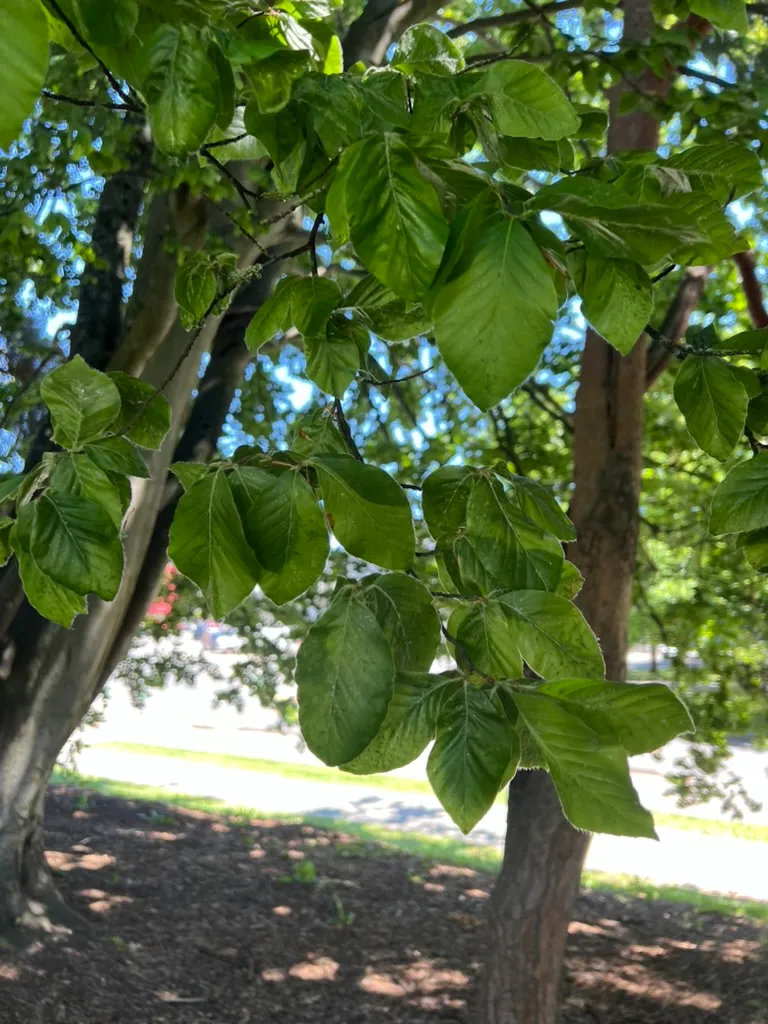
Reading about plants and recognising them are different skills. These three build the second.
- Daily PlantIdentify the day’s mystery plant from a close-up photograph.
- Keyed OutWork a dichotomous key, lead by lead, to name a hidden specimen.
- Name That PlantName a specimen from botanical clues dealt hardest first.
Free to play, no account needed
Dot grew up on a small farm in rural Virginia and has maintained a vegetable garden for decades. After retiring from teaching elementary school, she became a Master Gardener volunteer and spends her time mentoring new gardeners at community garden plots in Richmond. She's especially knowledgeable about heirloom varieties, seed saving, and traditional growing methods passed down from her grandmother. Dot's no-nonsense advice comes from extensive trial and error—she's seen every tomato disease, pest problem, and weather disaster imaginable. Her biggest pet peeve is gardeners who overcomplicate simple tasks. "Plants want to grow," she often says. "Your job is to not get in their way."