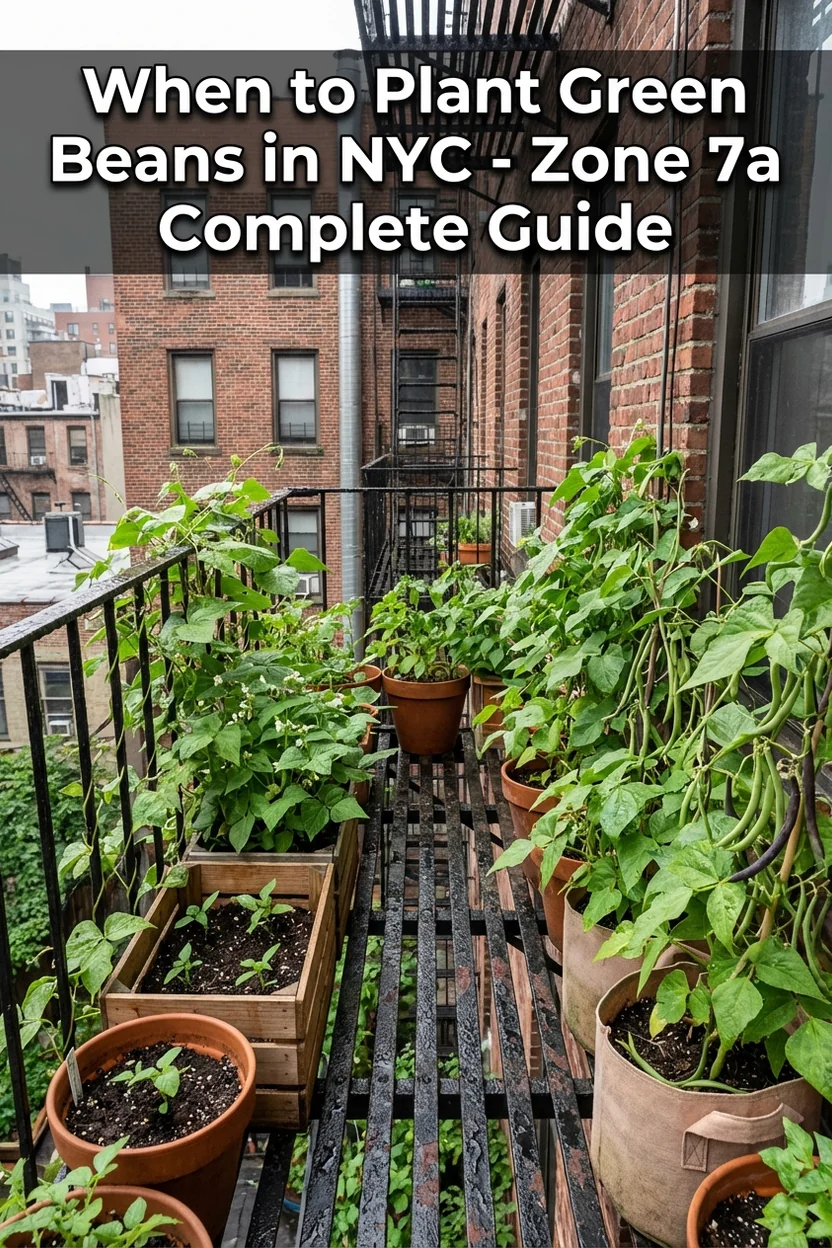
When to Plant Green Beans in New York: Complete Guide + Best Varieties for Zone 7a
Pets & Toxicity
Recorded toxicity for plants linked in this guide. An unknown status is not a safety assessment.
No linked plant is recorded as toxicDetailsHide
Phaseolus vulgaris 'Blue Lake' — Toxicity
Non-toxic when cooked. Raw pods carry lectins (phytohemagglutinin) that cause digestive upset on raw consumption — pods are cooked before eatingView Phaseolus vulgaris 'Blue Lake' plant profilePhaseolus vulgaris 'Kentucky Wonder' — Toxicity
Non-toxicView Phaseolus vulgaris 'Kentucky Wonder' plant profilePhaseolus vulgaris 'Purple Queen' — Toxicity
Non-toxicView Phaseolus vulgaris 'Purple Queen' plant profilePhaseolus vulgaris 'Dragon Tongue' — Toxicity
Non-toxicView Phaseolus vulgaris 'Dragon Tongue' plant profile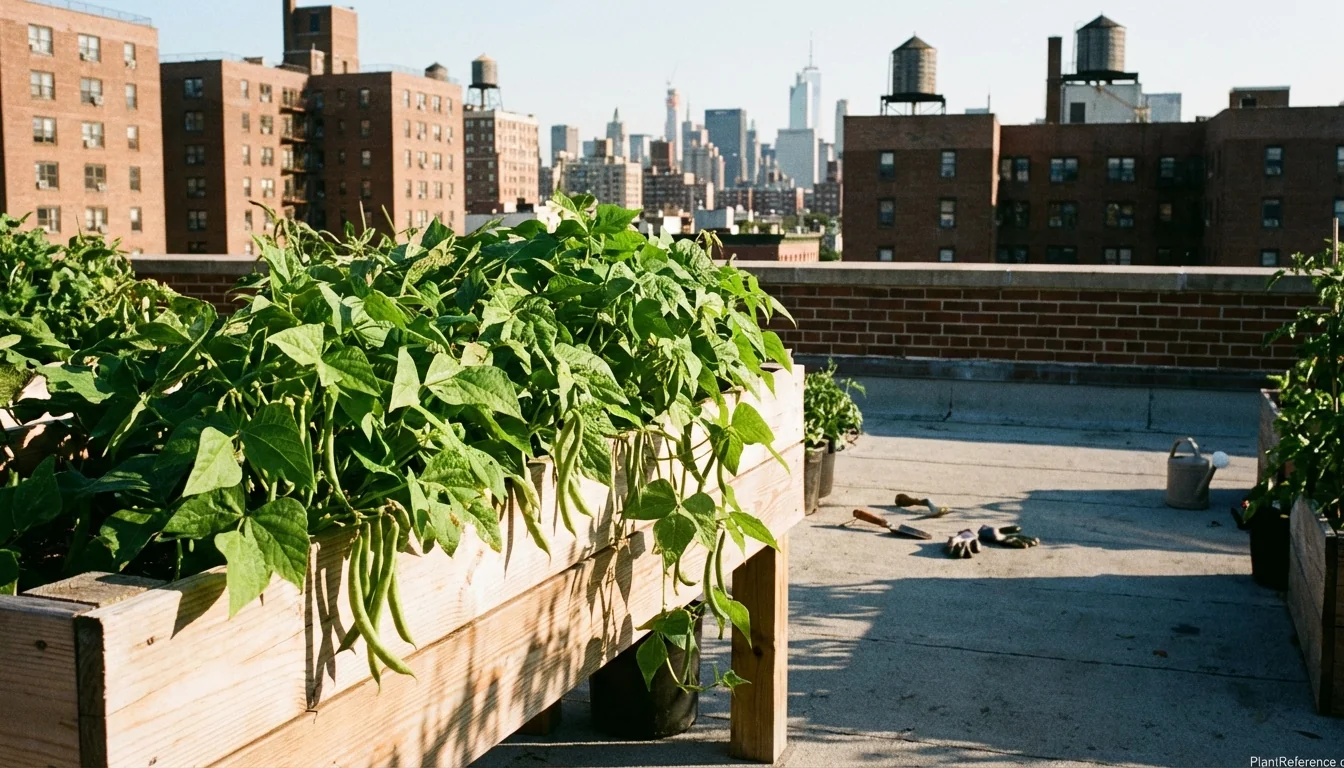
— Image © Plant Reference 2026
Growing green beans in New York City might seem challenging with limited space, but Zone 7a's generous 200-day growing season from April 15 to November 1 creates excellent opportunities for multiple harvests. I've been growing beans in urban environments for decades, and New York's climate is actually ideal for succession planting—you can squeeze in four to five separate plantings for continuous fresh beans from June through October.
Best Green Bean Varieties for New York's Zone 7a Climate
New York's Zone 7a climate with its April 15 last frost and November 1 first frost creates a sweet spot for green bean production. The 200-day growing season gives you more flexibility than shorter northern zones while avoiding the extreme heat that plagues southern regions.
Variety | Days to Maturity | Growth Habit | Best For New York | Space Requirements |
|---|---|---|---|---|
50-55 days | Bush | Early season, succession | 4" spacing | |
53-60 days | Bush | Hot summer tolerance | 4" spacing | |
55-60 days | Bush | Easy harvest visibility | 4" spacing | |
55-65 days | Bush | Premium pod quality | 6" spacing | |
55-60 days | Bush | Specialty market crop | 6" spacing | |
60-70 days | Pole | Vertical growing, small spaces | 6" spacing |
Bush Varieties for New York
Provider 🌿Phaseolus vulgaris 'Provider' is your go-to variety for New York's unpredictable spring weather. At 50-55 days to maturity, it's the fastest option and handles cool soil better than other varieties. Plant Provider for your first succession in early May when soil temperatures hit 60°F (15°C).
Roma II 🌿Phaseolus vulgaris 'Roma II' produces flat Romano-style pods that hold their quality longer in New York's occasionally humid summers. The 53-60 day maturity makes it perfect for mid-season plantings when summer heat arrives.
Purple Queen 🌿Phaseolus vulgaris 'Purple Queen' offers a practical advantage in urban gardens—the purple pods are easy to spot against green foliage, reducing harvest time. This matters when you're tending plants on a rooftop or fire escape where every minute counts.
Pole Varieties for Small Spaces
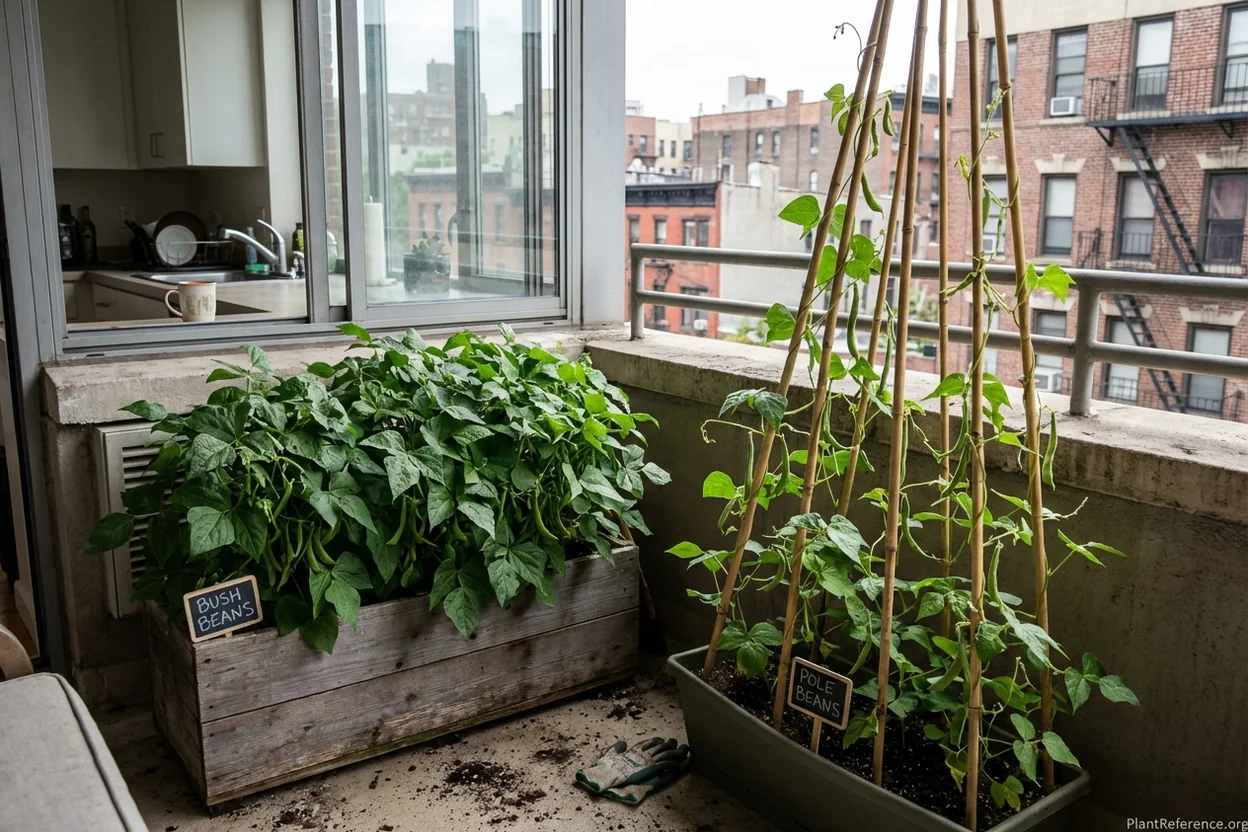
Kentucky Wonder 🌿Phaseolus vulgaris 'Kentucky Wonder' is ideal for New York's space-constrained growing conditions. One plant can produce as much as three bush plants while taking up just one square foot of ground space. The 60-70 day maturity fits perfectly into New York's season, planted in May for July harvest that continues until frost.
Premium Varieties for Quality
Blue Lake 🌿Phaseolus vulgaris 'Blue Lake' produces restaurant-quality pods with exceptional tenderness. The 6-inch spacing requirement means fewer plants per container, but the superior pod quality makes it worthwhile for fresh eating.
Dragon Tongue 🌿Phaseolus vulgaris 'Dragon Tongue' is a wax bean with purple striping that commands premium prices at New York farmers markets. If you're growing for sale or special occasions, this variety justifies the extra space requirement.
Specific Planting Dates for New York City
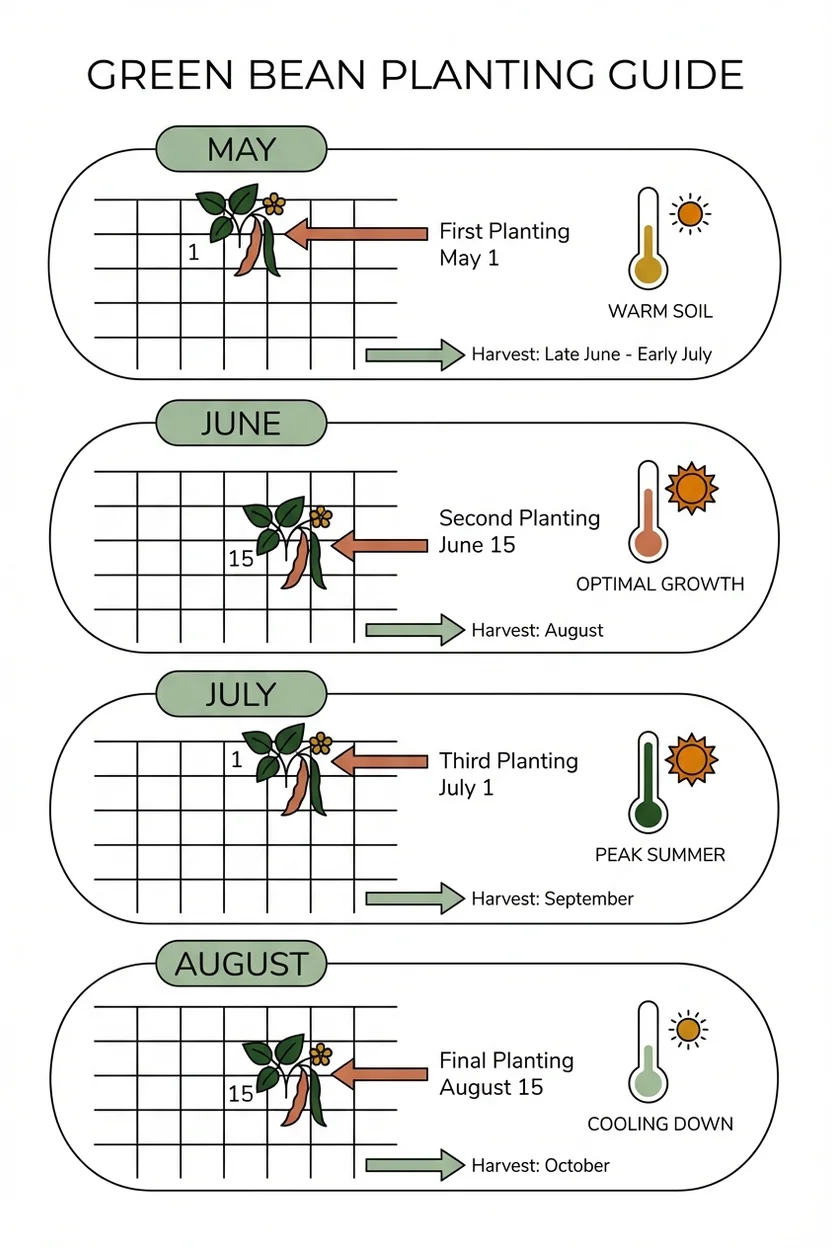
New York's last frost date of April 15 means you can start planting green beans by May 1st once soil temperatures reach 60°F (15°C). Here's your complete planting schedule for maximizing New York's 200-day growing season.
Spring Planting Schedule
First Planting: May 1-7 Plant 🌿Phaseolus vulgaris 'Provider' as soon as soil temperature reaches 60°F (15°C). This early planting takes advantage of cool spring weather and avoids summer heat stress. Expect harvest from June 20-July 1.
Second Planting: May 15-22 Add 🌿Phaseolus vulgaris 'Blue Lake' or 🌿Phaseolus vulgaris 'Kentucky Wonder' for mid-season production. These varieties handle the transition into summer heat well. Harvest begins July 5-15.
Summer Succession Strategy
Third Planting: June 1-8 🌿Phaseolus vulgaris 'Roma II' excels in New York's summer conditions. The flat Romano pods handle heat better than round varieties. Harvest starts mid-July through August.
Fourth Planting: June 15-22 Your main summer crop using any variety except Provider, which struggles in hot weather. Focus on 🌿Phaseolus vulgaris 'Purple Queen' or 🌿Phaseolus vulgaris 'Dragon Tongue' for diversity.
Late Season Opportunities
Final Planting: July 15-August 1 Plant fast-maturing 🌿Phaseolus vulgaris 'Provider' one last time. Count backwards from November 1 first frost—55 days puts your latest safe planting at September 7, but August plantings are more reliable.
Urban Microclimate Considerations
New York's urban heat island effect can extend your season by 1-2 weeks. Rooftop gardens may experience earlier last frost (April 10) and later first frost (November 5-10), giving you extra planting opportunities.
Buildings create wind tunnels that can damage pole bean structures. Position 🌿Phaseolus vulgaris 'Kentucky Wonder' trellises perpendicular to prevailing winds or use building walls as windbreaks.
Complete Growing Guide for New York Gardens
Growing green beans successfully in New York requires adapting traditional garden techniques to urban constraints and the Zone 7a climate. Here's what works in real New York growing conditions.
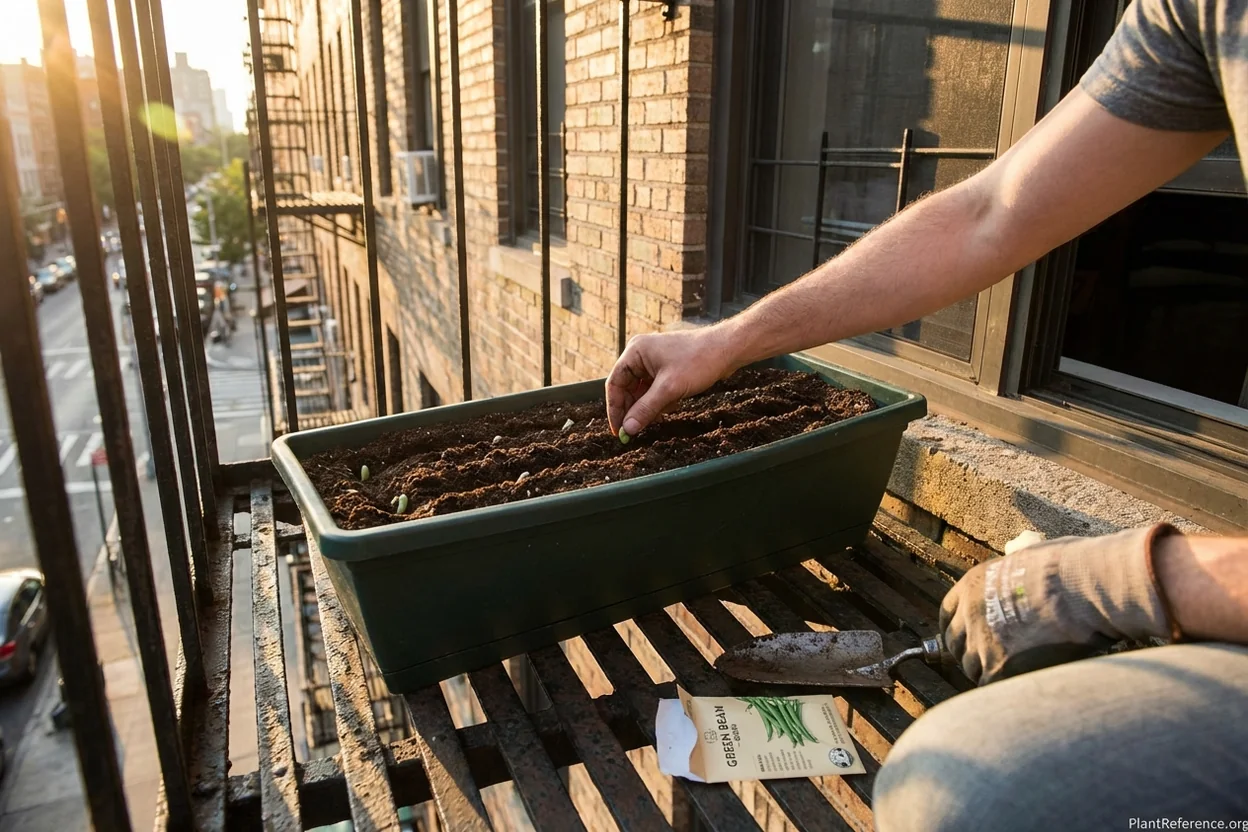
Container Requirements for Urban Growing
Most New York gardeners grow in containers due to space limitations. Use containers at least 12 inches deep for bush varieties and 18 inches deep for 🌿Phaseolus vulgaris 'Kentucky Wonder'. Width matters more than depth—a 24-inch wide container supports 6 bush bean plants at 4-inch spacing.
Drainage is critical in New York's variable weather. Drill additional 1/2-inch holes in container bottoms if needed. Soggy soil from spring rains kills more bean plants than any pest.
Soil Preparation in Urban Environments
New York's urban soil is often contaminated or compacted. Use quality potting mix rather than garden soil. A 50-50 blend of potting soil and compost provides the loose, well-draining environment beans require.
Bean seeds contain enough stored energy to germinate without fertilizer. In fact, high nitrogen fertilizer prevents the beneficial Rhizobium bacteria from colonizing bean roots. Use a balanced starter fertilizer like 5-10-10 at planting, then rely on the plant's nitrogen-fixing ability.
Planting Techniques That Work in NYC
Plant bean seeds 1 inch deep in clay-based potting mix, 1.5 inches deep in lighter soils. The "Direct-sow" requirement means no transplanting—bean roots are too fragile for urban gardeners to mess with.
Space bush varieties (🌿Phaseolus vulgaris 'Provider', 🌿Phaseolus vulgaris 'Roma II', 🌿Phaseolus vulgaris 'Purple Queen') at 4 inches apart. Give larger varieties (🌿Phaseolus vulgaris 'Blue Lake', 🌿Phaseolus vulgaris 'Dragon Tongue') 6 inches spacing to prevent overcrowding in containers.
For 🌿Phaseolus vulgaris 'Kentucky Wonder', install supports before planting. Bean vines grab whatever's available—better they find your trellis than your neighbor's laundry line.
Watering Strategy for New York Climate
New York's spring rains can keep soil soggy, but summer heat dries containers quickly. Maintain consistent soil moisture without waterlogging. Stick your finger 2 inches into the soil—if dry, water deeply until it runs from drainage holes.
Morning watering prevents fungal diseases that thrive in New York's humid conditions. Wet foliage overnight invites trouble, especially for dense plantings of 🌿Phaseolus vulgaris 'Roma II'.
Water needs spike during flowering and pod development. A stressed plant drops flowers and stops producing—disaster for succession plantings timed to bridge harvest gaps.
Troubleshooting New York-Specific Bean Problems
Urban bean growing in New York presents unique challenges you won't find in suburban gardens. Here's how to solve the problems I see most often in city gardens.
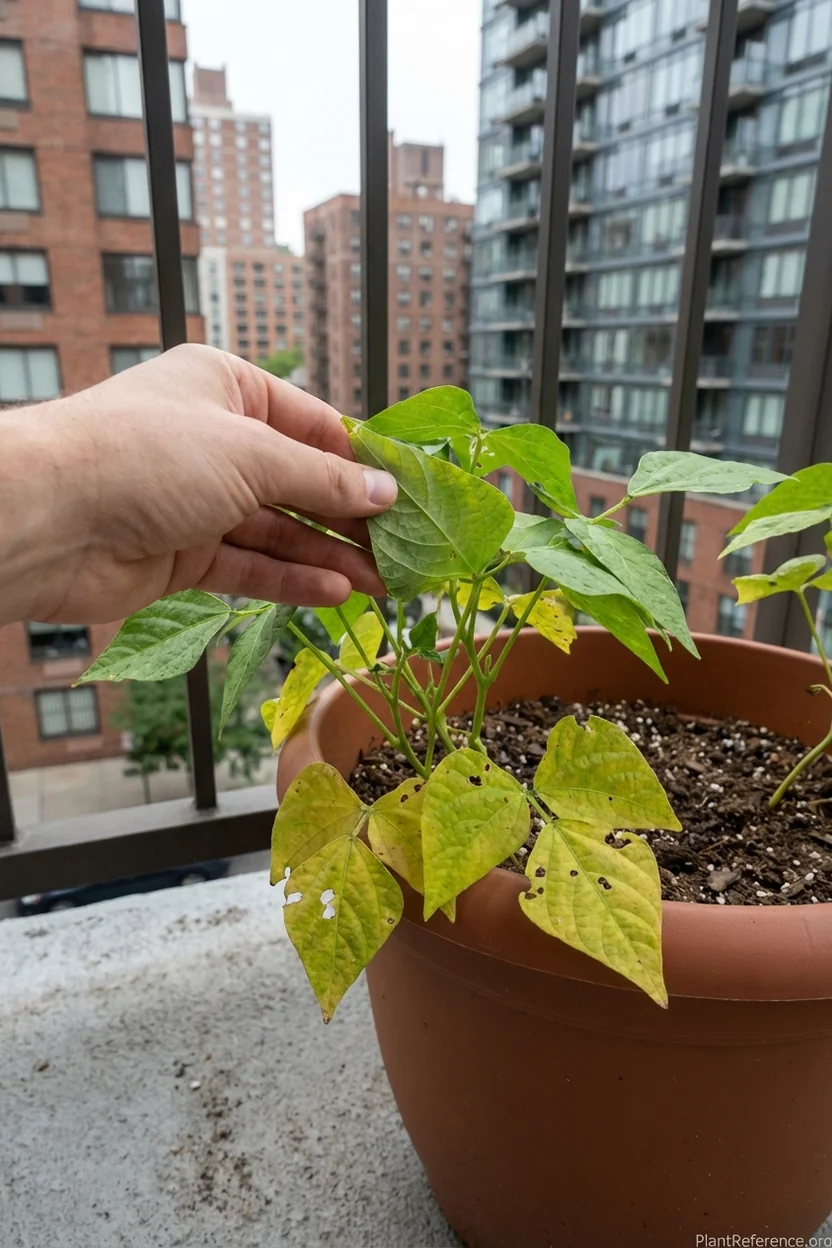
Heat Stress in Urban Microclimates
New York's concrete and asphalt create heat islands that can push temperatures 10-15°F higher than surrounding areas. Rooftop gardens are especially vulnerable.
Symptoms: Flower drop, wilting during hottest part of day, poor pod set Solution: Provide afternoon shade using umbrellas or shade cloth. Water containers twice daily during heat waves. Choose 🌿Phaseolus vulgaris 'Roma II' for better heat tolerance.
Wind Damage on Tall Buildings
High-rise apartment balconies and rooftops experience stronger winds that can shred bean foliage and topple pole bean structures.
Symptoms: Tattered leaves, broken stems, collapsed trellises Solution: Install windbreaks using bamboo screening. Choose sturdy 🌿Phaseolus vulgaris 'Provider' over delicate 🌿Phaseolus vulgaris 'Dragon Tongue' for exposed locations.
Poor Germination in Cool Spring Soil
Container soil stays cooler than ground soil, delaying germination in New York's variable spring weather.
Symptoms: Seeds rot before sprouting, patchy emergence after 2 weeks Solution: Wait until soil temperature hits 60°F consistently. Use black containers to absorb more heat. Cover newly planted containers with clear plastic until emergence.
Mexican Bean Beetle Urban Infestations
Urban gardens often lack the natural predators that control bean beetles in rural areas.
Symptoms: Skeletonized leaves with only veins remaining, copper-colored beetles with black spots Solution: Hand-pick adults and egg masses from leaf undersides. 🌿Phaseolus vulgaris 'Purple Queen' makes beetle eggs more visible for removal.
Fungal Problems in Humid Conditions
New York's humidity, especially in summer, promotes white mold and other fungal diseases.
Symptoms: White cottony growth on stems, brown spots on pods Solution: Increase spacing between plants for better air circulation. Water at soil level, not on foliage. Choose disease-resistant 🌿Phaseolus vulgaris 'Blue Lake' varieties.
Harvest & Storage in NYC Climate
New York's 200-day growing season means you'll be harvesting green beans from June through October with proper succession planting. Knowing when and how to harvest makes the difference between tender, flavorful beans and tough, stringy disappointments.
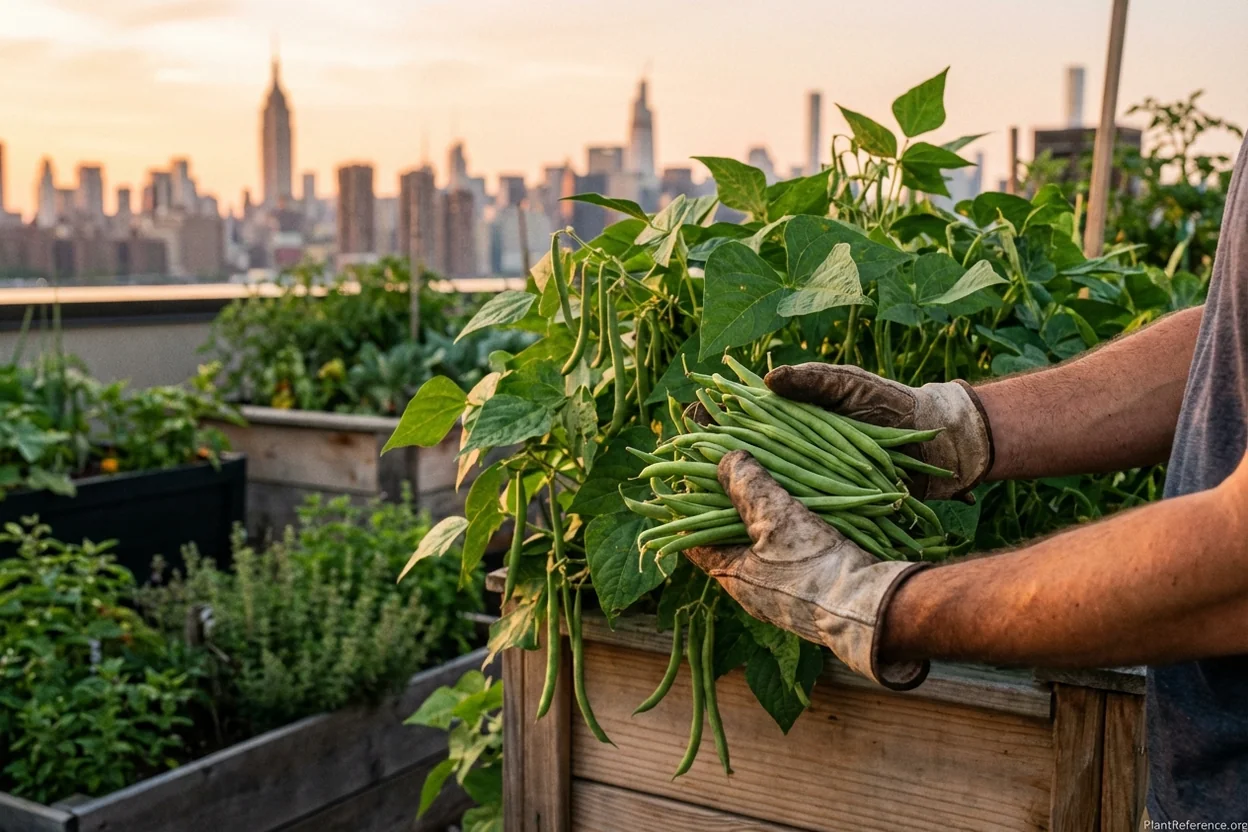
Recognizing Perfect Harvest Timing
Bush varieties like 🌿Phaseolus vulgaris 'Provider' and 🌿Phaseolus vulgaris 'Roma II' produce their entire crop within 10-14 days. Check plants daily once pods appear—beans go from perfect to tough overnight in New York's summer heat.
Pole beans like 🌿Phaseolus vulgaris 'Kentucky Wonder' produce continuously. Harvest every 2-3 days to keep plants producing. Skip a week and the plant thinks its job is done.
Test pod readiness by snapping one in half. Perfect beans snap cleanly with an audible crack. Seeds should be barely visible—no larger than BB pellets.
Maximizing Yield from Small Spaces
Urban gardens require intensive harvesting to maximize limited space. Pick all ready pods even if you can't use them immediately—this signals the plant to keep producing.
🌿Phaseolus vulgaris 'Purple Queen' makes harvesting faster in low-light urban conditions. The purple pods stand out against green foliage, reducing the time spent searching through dense plants.
Storage Solutions for Urban Gardeners
Most New York apartments lack root cellars or large freezers. Fresh beans keep 5-7 days refrigerated in perforated plastic bags. For longer storage, blanch beans for 2 minutes, ice-water bath, then freeze in portion-sized containers.
Blanching technique: Bring large pot of water to rolling boil. Add beans for exactly 2 minutes. Immediately transfer to ice water bath. This preserves color, texture, and nutrition better than raw freezing.
→ Presto 6-Quart Stainless Steel Pot ($25-35) - Perfect size for blanching beans
Heavy-duty stainless steel construction handles high-heat blanching without scorching. 6-quart capacity processes 2-3 pounds of beans per batch, ideal for succession harvest preservation. Wide opening accommodates long Romano-style pods from varieties like Roma II. Includes steamer basket for efficient blanching setup. Works on all stovetops including urban apartment induction units. Easy cleanup after processing multiple bean varieties.
Product link unavailable
Frequently Asked Questions
Reading about plants and recognising them are different skills. These three build the second.
- Daily PlantIdentify the day’s mystery plant from a close-up photograph.
- Keyed OutWork a dichotomous key, lead by lead, to name a hidden specimen.
- Name That PlantName a specimen from botanical clues dealt hardest first.
Free to play, no account needed
Frank retired from the city parks department after 28 years, the last fifteen as a grounds supervisor overseeing park plantings and maintenance crews. He now spends his time volunteering at a local historic garden, maintaining his own half-acre property in the Roxborough neighborhood, and writing about landscape maintenance, seasonal timing, and the practical side of keeping plants healthy through Mid-Atlantic winters and humid summers. Frank knows what works at scale and what's a waste of time—he's planted thousands of trees and shrubs and watched plenty of them fail. His advice tends toward what's proven and durable rather than what's trendy.