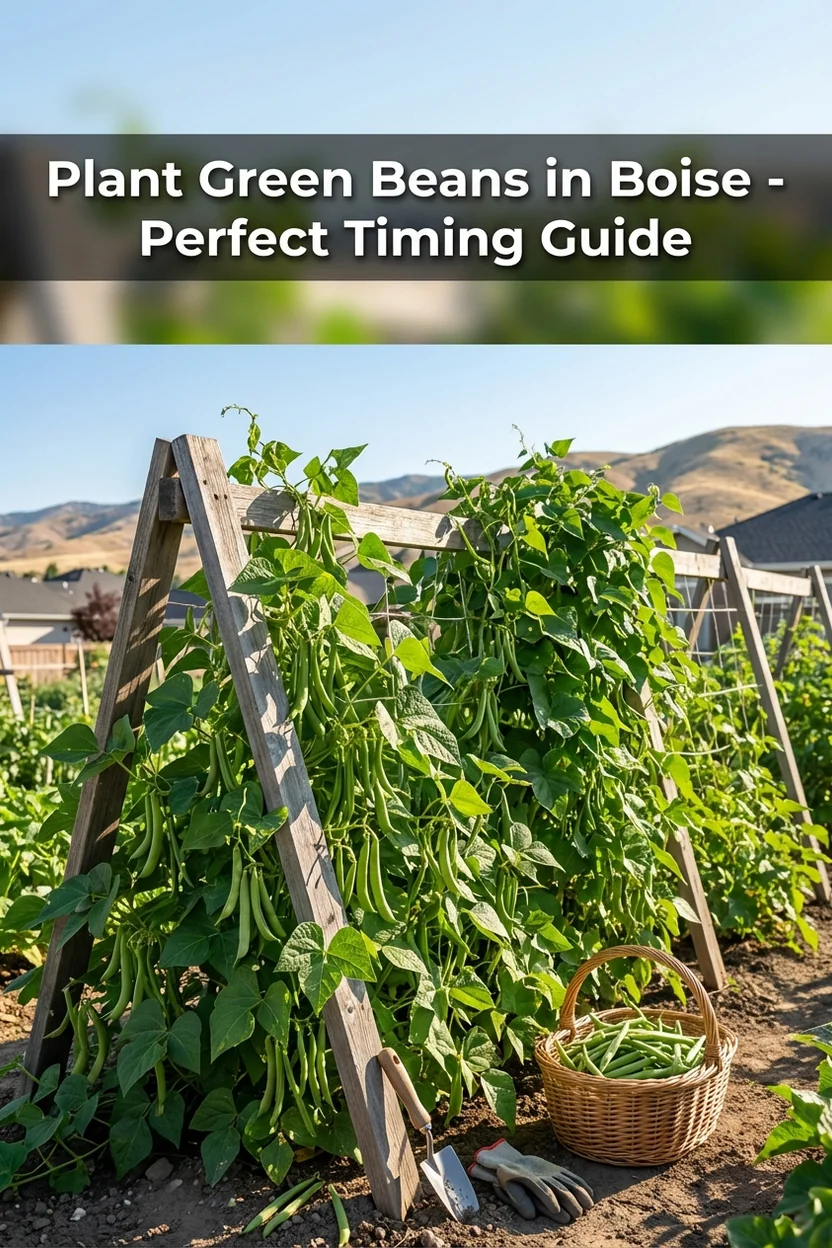
When to Plant Green Beans in Boise: Complete Guide + Best Varieties for Zone 6a
Pets & Toxicity
Recorded toxicity for plants linked in this guide. An unknown status is not a safety assessment.
No linked plant is recorded as toxicDetailsHide
Phaseolus vulgaris 'Blue Lake' — Toxicity
Non-toxic when cooked. Raw pods carry lectins (phytohemagglutinin) that cause digestive upset on raw consumption — pods are cooked before eatingView Phaseolus vulgaris 'Blue Lake' plant profilePhaseolus vulgaris 'Kentucky Wonder' — Toxicity
Non-toxicView Phaseolus vulgaris 'Kentucky Wonder' plant profilePhaseolus vulgaris 'Purple Queen' — Toxicity
Non-toxicView Phaseolus vulgaris 'Purple Queen' plant profilePhaseolus vulgaris 'Dragon Tongue' — Toxicity
Non-toxicView Phaseolus vulgaris 'Dragon Tongue' plant profile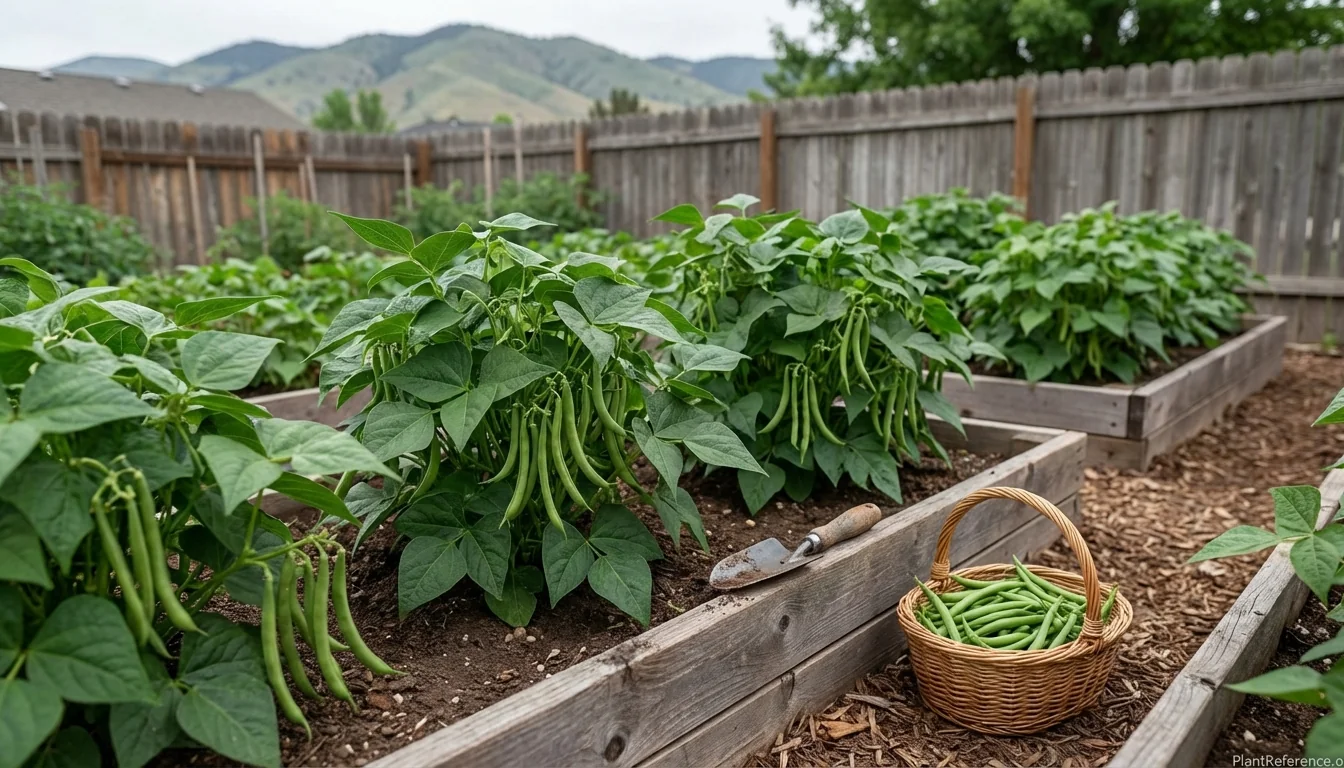
— Image © Plant Reference 2026
Timing your green bean planting in Boise correctly means the difference between a bumper harvest and disappointment. With Zone 6a's last frost averaging May 4 and first frost around October 9, Boise gardeners have a solid 158-day growing season—perfect for multiple succession plantings of these warm-season favorites.
After forty years of vegetable gardening, I've learned that green beans 🌿Phaseolus vulgaris 'Provider' (fay-see-OH-lus vul-GAR-iss) are one of the most rewarding crops for Idaho gardeners. They're forgiving, productive, and with proper succession planting, you'll have fresh beans from July straight through to your first hard frost. The key is understanding which varieties work best in our high-altitude, dry climate and when to plant them for maximum production.
Best Green Bean Varieties for Boise's Zone 6a Climate
Selecting the right varieties makes all the difference in Idaho's unique growing conditions. Our dry air, intense UV radiation at 2,700-foot elevation, and temperature swings between day and night require specific variety characteristics.
Variety | Days to Maturity | Best For Boise | Growth Habit | Spacing |
|---|---|---|---|---|
50-55 days | Succession planting | Bush | 4 inches | |
53-60 days | Processing/freezing | Bush | 4 inches | |
55-60 days | Easy harvest visibility | Bush | 4 inches | |
55-65 days | Premium fresh eating | Bush | 6 inches | |
55-60 days | Gourmet market appeal | Bush | 6 inches | |
60-70 days | Maximum yield per plant | Pole | 6 inches |
Bush Varieties: The Workhorses of Boise Gardens
🌿Phaseolus vulgaris 'Provider' is my go-to recommendation for Boise gardeners. At 50-55 days to harvest, it's fast enough for our shorter season and reliable enough to plant every two weeks from mid-May through July. This variety earned its name by consistently producing even when conditions aren't perfect.
The 4-inch spacing requirement means you can pack more plants into limited space. I've grown Provider beans in 4x4-foot raised beds and harvested over 15 pounds from that small area by planting new rows every three weeks.
🌿Phaseolus vulgaris 'Roma II' produces the flat, wide Romano-style pods that freeze beautifully. If you're planning to preserve your harvest for Idaho's long winter, this variety maintains its texture better than round pod types. The 53-60 day maturity window fits perfectly into Boise's growing season.
🌿Phaseolus vulgaris 'Purple Queen' offers a practical advantage beyond its striking appearance. The deep purple pods are instantly visible against green foliage, making harvest faster and more thorough. In Boise's intense sunlight, the dark pods actually warm faster than green varieties, giving you a slight head start on pod development.
Specialty Bush Varieties for Boise
🌿Phaseolus vulgaris 'Blue Lake' requires the wider 6-inch spacing because it produces a larger plant frame and more extensive root system. This variety is worth the extra space if you want the finest eating quality. Blue Lake beans stay tender longer than other varieties, giving you more flexibility in harvest timing.
🌿Phaseolus vulgaris 'Dragon Tongue' is a wax bean with purple stripes that creates visual interest in the garden. The 6-inch spacing prevents the plants from falling over when loaded with pods. However, this variety is more sensitive to Boise's dry air and requires consistent moisture.
Pole Variety: Maximum Production Strategy
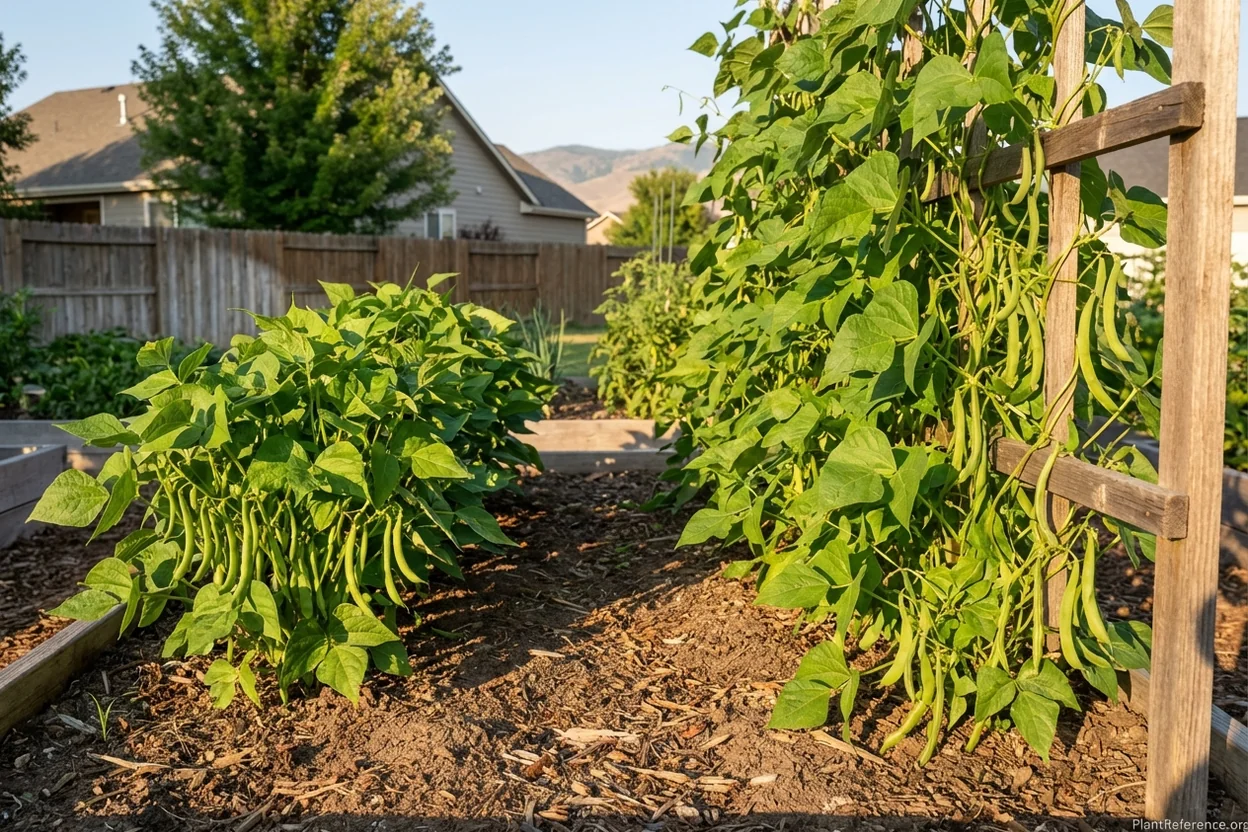
🌿Phaseolus vulgaris 'Kentucky Wonder' is the champion for small-space Boise gardeners. One plant can produce what five bush plants produce, but over a longer period. The 60-70 day maturity means you'll start harvesting in early July from a mid-May planting and continue picking through September.
The challenge with Kentucky Wonder in Boise is providing adequate support. Our afternoon winds can topple inadequate trellises. Use sturdy 8-foot posts with heavy-gauge wire or netting.
Specific Planting Dates for Boise Idaho
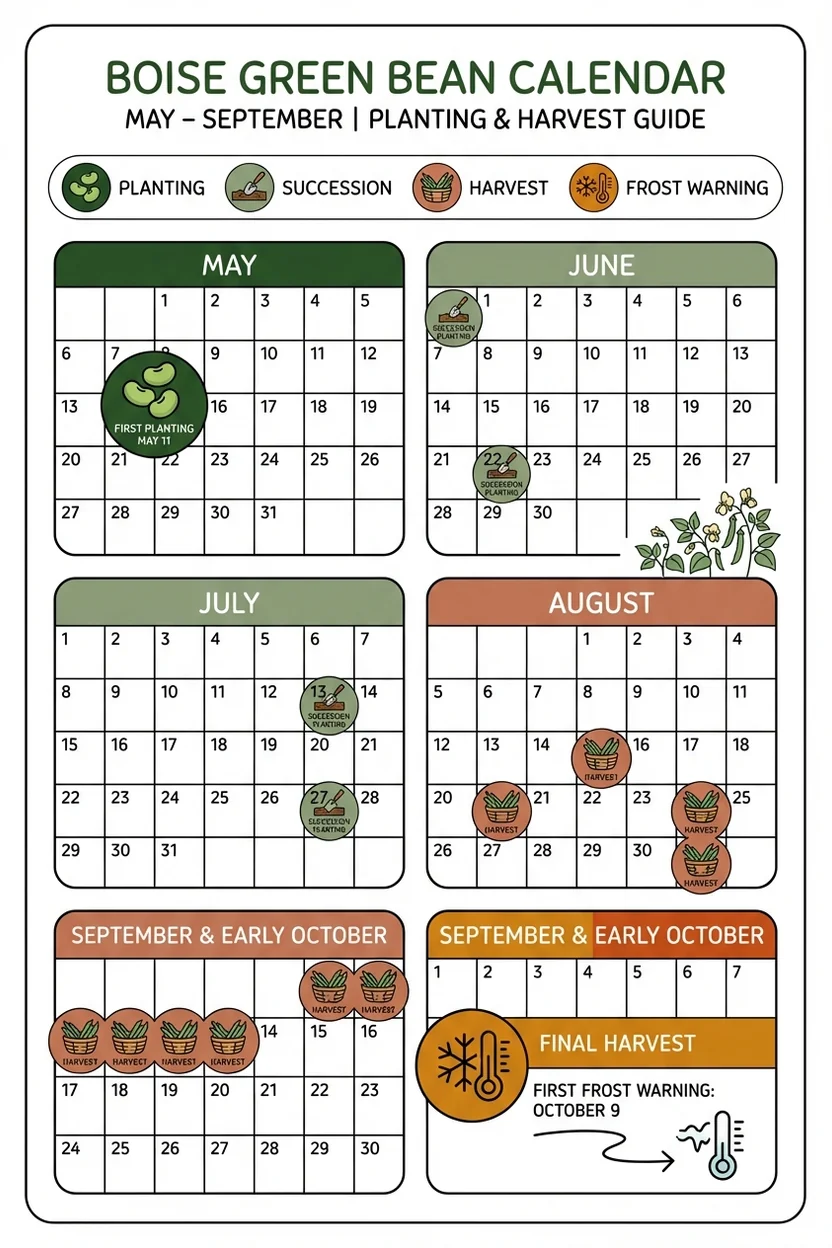
Boise's Zone 6a climate gives us specific windows for bean success. With our last frost averaging May 4, the earliest safe planting date is May 11—one week after the last frost date to ensure soil has warmed adequately.
Spring Planting Schedule for Boise
First Planting: May 11-18
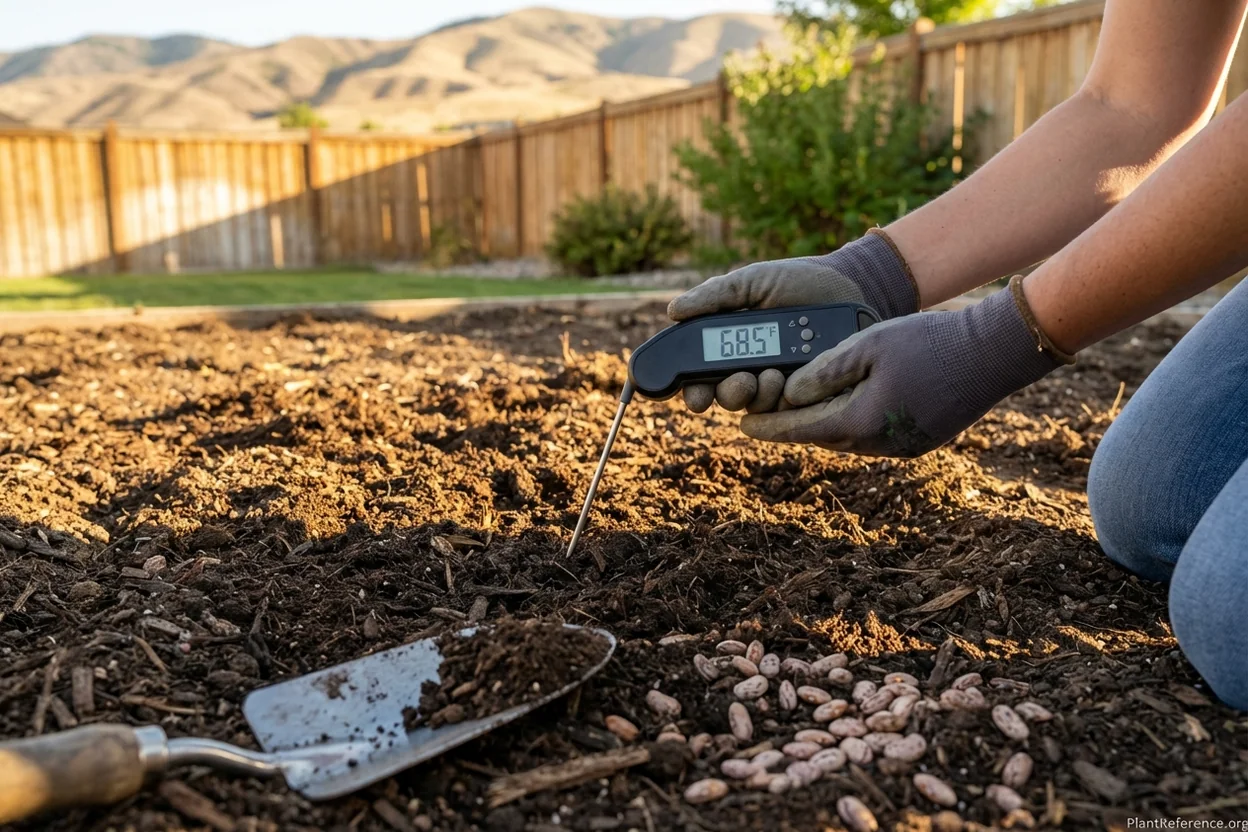
Soil temperature: Check that soil has reached 60°F (16°C) at 2-inch depth
Varieties:
🌿Phaseolus vulgaris 'Provider' for earliest harvest, 🌿Phaseolus vulgaris 'Kentucky Wonder' for season-long production - Expected harvest: Late June through July
Second Planting: May 25-June 1 - Varieties: 🌿Phaseolus vulgaris 'Roma II' for processing, 🌿Phaseolus vulgaris 'Blue Lake' for fresh eating - Expected harvest: Mid to late July
Third Planting: June 15-22 - Varieties: 🌿Phaseolus vulgaris 'Purple Queen' for easy harvest, 🌿Phaseolus vulgaris 'Dragon Tongue' for specialty appeal - Expected harvest: Early to mid-August
Final Planting: July 8-15 - Varieties: Only 🌿Phaseolus vulgaris 'Provider' (fastest at 50 days) - Expected harvest: Late August through September - This timing ensures harvest completion before October 9 first frost
Soil Temperature Guidelines for Boise
Bean seeds rot in cold, wet soil. In Boise's clay-heavy soils, this is especially problematic in cool springs.
Critical temperatures:
Minimum soil temperature: 60°F (16°C)
Optimal germination: 70-80°F (21-27°C)
Air temperature: Night temperatures consistently above 50°F (10°C)
Testing soil temperature: Use a soil thermometer at 9 AM for three consecutive days. If readings average 60°F or higher, proceed with planting. Don't rely on calendar dates—soil temperature trumps calendar every time.
Fall Growing Strategy
Boise's long season allows for a strategic fall crop if you plan correctly.
Fall planting window: August 1-15 - Plant only 🌿Phaseolus vulgaris 'Provider' (50-55 days to harvest) - Count backward from October 9 (first frost): 55 days = August 15 latest planting - Harvest: Late September through early October - Advantage: Cooler weather means fewer pest issues and extended pod tenderness
Complete Growing Guide for Boise Green Beans
Success with green beans in Idaho requires understanding our unique growing conditions: dry air, intense UV, temperature swings, and alkaline soil.
Soil Preparation for Idaho Conditions
Boise's native clay soil needs modification for bean success. The tight clay doesn't drain well, and wet soil kills bean seeds faster than cold soil does.
Drainage improvement:
Add 2-3 inches (5-8 cm) of compost annually
Mix in coarse sand (not fine sand) if drainage is severely poor
Raise beds 4-6 inches (10-15 cm) above grade for faster warming and better drainage
Never work clay soil when wet—wait until it crumbles in your hand
pH management: Idaho soils often run alkaline (pH 7.5-8.0). Beans prefer 6.0-7.0 pH for optimal nutrient availability and nitrogen fixation.
Test soil pH each spring using digital meter or test strips
Add sulfur in fall to lower pH (takes 6 months to show effect)
Apply 1-2 pounds sulfur per 100 square feet to drop pH by 0.5 points
Organic matter naturally acidifies soil over time
Direct Sowing Technique
All bean varieties must be direct sown—they don't transplant well because the taproot breaks easily.
Planting depth:
Clay soil: 1 inch (2.5 cm) deep
Amended soil: 1.5 inches (4 cm) deep
Sandy soil: 2 inches (5 cm) deep
Seed spacing by variety:
🌿Phaseolus vulgaris 'Provider', 🌿Phaseolus vulgaris 'Roma II', 🌿Phaseolus vulgaris 'Purple Queen': 4 inches (10 cm) apart
🌿Phaseolus vulgaris 'Blue Lake', 🌿Phaseolus vulgaris 'Dragon Tongue', 🌿Phaseolus vulgaris 'Kentucky Wonder': 6 inches (15 cm) apart
Row spacing: 18-24 inches (45-60 cm) for bush varieties, 36 inches (90 cm) for pole beans
Irrigation Strategy for Boise's Dry Climate
Idaho's dry air and low humidity create unique watering challenges. Beans need consistent moisture but hate wet feet.
Critical watering periods:
Germination (days 1-10): Keep soil surface moist but not soggy
Flowering (days 35-45): Provide 1-1.5 inches (2.5-4 cm) water weekly
Pod development (days 45-55): Maintain consistent moisture to prevent tough, stringy pods
Boise-specific irrigation tips:
Water deeply twice weekly rather than light daily watering
Apply water early morning (6-8 AM) to reduce evaporation
Use drip irrigation or soaker hoses to keep foliage dry
Mulch heavily to conserve moisture in our dry air
Monitor soil moisture 3-4 inches (8-10 cm) deep, not just surface
Support Systems for Pole Beans
🌿Phaseolus vulgaris 'Kentucky Wonder' requires sturdy support in Boise's windy conditions. Afternoon winds from the west can topple inadequate trellises when plants are fully loaded with pods.
Recommended support methods:
Heavy-duty bean poles: 8-foot (2.4 m) cedar or treated posts
Cattle panel sections: 16-foot (5 m) panels cut in half, supported by T-posts
Bean teepee: Three 8-foot poles lashed at top, planted around base
Avoid: Lightweight bamboo stakes, tomato cages, string trellises
Troubleshooting Boise-Specific Growing Problems
Our high-altitude, dry climate creates specific challenges that don't occur in humid regions. Here's how to solve the most common problems Boise bean growers face.
Poor Germination in Clay Soil
Symptoms: Seeds planted but few plants emerge, or emergence is spotty and delayed.
Causes specific to Boise:
Clay soil crusting after watering or rain
Cold soil temperature (below 60°F)
Soil compaction preventing emergence
Solutions:
Cover seeded rows with fine compost or vermiculite instead of native soil
Wait for soil temperature confirmation before planting
Avoid walking on wet clay soil which causes compaction
Consider raised beds for faster soil warming
Blossom Drop and Empty Pods
Symptoms: Plants flower heavily but pods don't develop, or pods form but remain thin and empty.
Causes in Idaho climate:
Temperature fluctuations (cool nights below 50°F during flowering)
Dry air preventing pollen transfer
Inconsistent soil moisture during pod set
Solutions:
Plant after nighttime temperatures stay above 50°F (10°C)
Maintain consistent soil moisture during flowering period
Use row covers on cool nights if late cold snap threatens
Hand-pollinate by gently shaking flowering plants mid-morning
Brown Leaf Edges (Tip Burn)
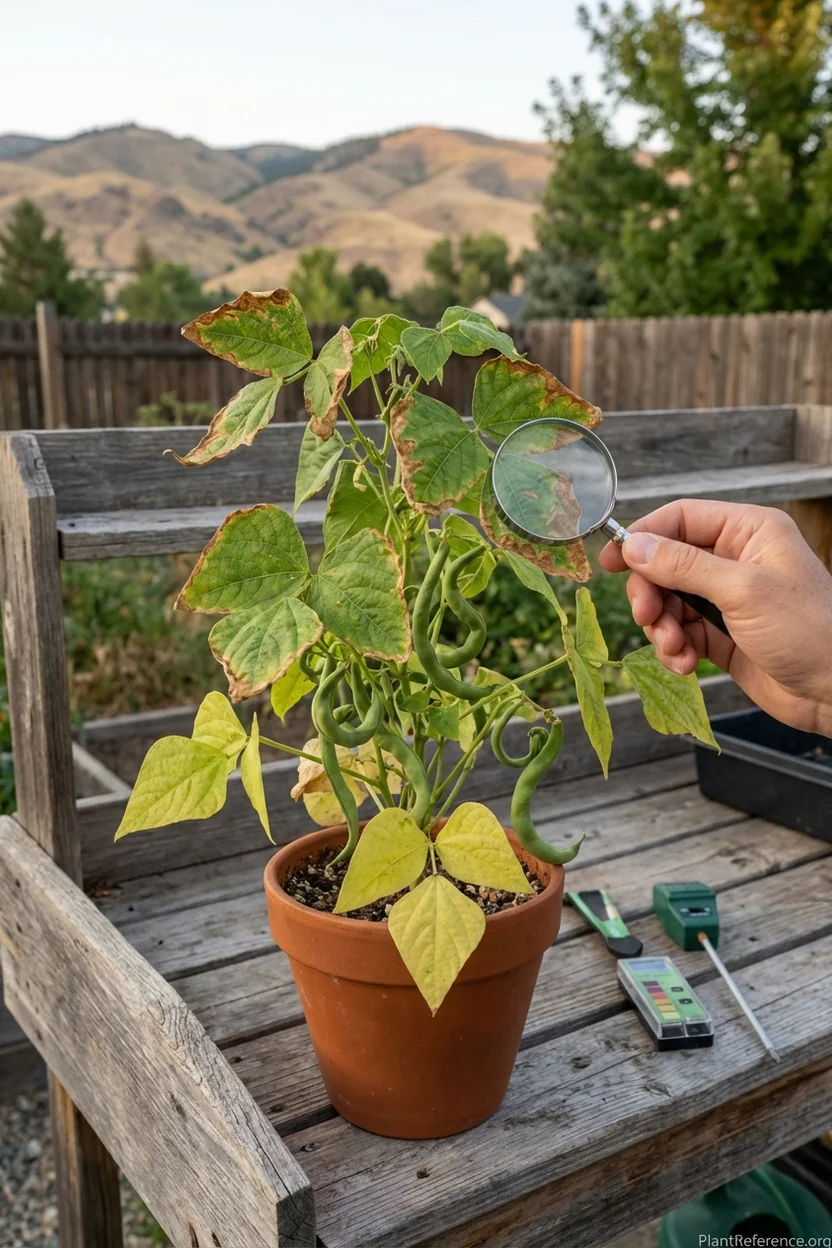
Symptoms: Leaf margins turn brown and crispy, especially on 🌿Phaseolus vulgaris 'Dragon Tongue' and 🌿Phaseolus vulgaris 'Blue Lake'.
Cause: Low humidity combined with intense high-altitude UV radiation.
Prevention:
Mulch heavily to increase soil moisture evaporation around plants
Plant in location with morning sun, afternoon shade during hottest months
Increase watering frequency (not amount) during heat waves
Consider temporary shade cloth (30% shade) during extreme heat events above 95°F (35°C)
Alkaline Soil Yellowing
Symptoms: Young leaves turn yellow while veins remain green (interveinal chlorosis).
Cause: Iron deficiency caused by alkaline Idaho soil preventing iron uptake.
Solutions:
Apply chelated iron fertilizer as foliar spray
Add organic matter annually to naturally acidify soil
Use sulfur applications in fall to gradually lower soil pH
Ensure proper drainage—waterlogged alkaline soil worsens iron lockup
Harvest and Storage in Idaho's Climate
Idaho's dry air affects both when and how to harvest green beans for best quality.
Optimal Harvest Timing by Variety
Bush varieties: Harvest when pods snap crisply but seeds inside are still small and soft.
🌿Phaseolus vulgaris 'Provider': Check daily starting day 50, harvest every 2-3 days
🌿Phaseolus vulgaris 'Roma II': Pods stay tender longer than round types, harvest when 4-5 inches (10-13 cm) long
🌿Phaseolus vulgaris 'Purple Queen': Deep color makes optimal timing obvious—harvest when purple is vibrant
Pole variety: 🌿Phaseolus vulgaris 'Kentucky Wonder' produces continuously. Harvest every 2-3 days to keep plants productive through September.
Harvest Techniques for Maximum Plant Longevity
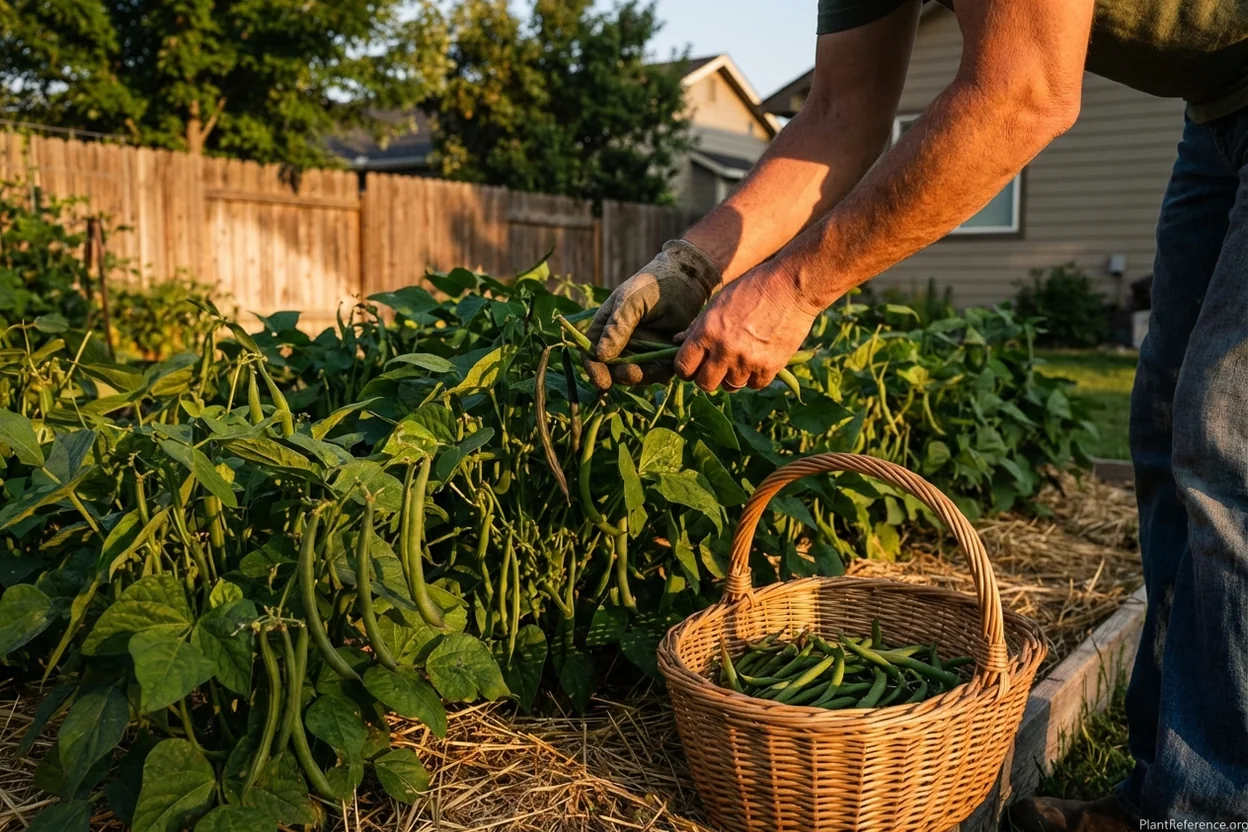
Two-handed method: Hold stem with one hand, twist pod off with other hand. Pulling pods without supporting the stem damages the plant and reduces future production.
Early morning harvest: Pods harvested in cool morning air (before 9 AM) have highest moisture content and stay fresh longer.
Frequency: Check plants every other day once production starts. In Boise's dry air, pods can go from perfect to tough in 2-3 days.
Storage and Preservation
Idaho's low humidity affects how harvested beans behave compared to humid regions.
Immediate storage:
Refrigerate unwashed beans in perforated plastic bags
Use within 5-7 days for best quality
Don't wash until ready to use—moisture encourages spoilage
Freezing for winter storage:-
Blanch in boiling water for 3 minutes
Plunge into ice water immediately
Drain thoroughly and freeze in meal-sized portions
🌿Phaseolus vulgaris 'Roma II' maintains best texture after freezing
Seed saving: Allow 2-3 pods per plant to fully mature if saving seed for next year. Mark these pods early so you don't accidentally harvest them. Seeds are ready when pods are brown and rattling.
Frequently Asked Questions
Reading about plants and recognising them are different skills. These three build the second.
- Daily PlantIdentify the day’s mystery plant from a close-up photograph.
- Keyed OutWork a dichotomous key, lead by lead, to name a hidden specimen.
- Name That PlantName a specimen from botanical clues dealt hardest first.
Free to play, no account needed
Lily is a Master Gardener and high-desert homesteader outside Boise. She and her husband moved to Idaho from the Bay Area and had to completely relearn gardening for a climate with alkaline soil, intense sun, hard freezes, and limited water. Lily now grows a large vegetable garden, maintains a small orchard of cold-hardy fruit trees, and raises cut flowers for the local farmers market. She writes about the specific challenges of intermountain gardening—short seasons, temperature swings, and the importance of soil amendment in high-pH soils. Lily is honest about the learning curve: high-desert gardening is humbling, and she thinks more gardening writers should admit when conditions are genuinely difficult.