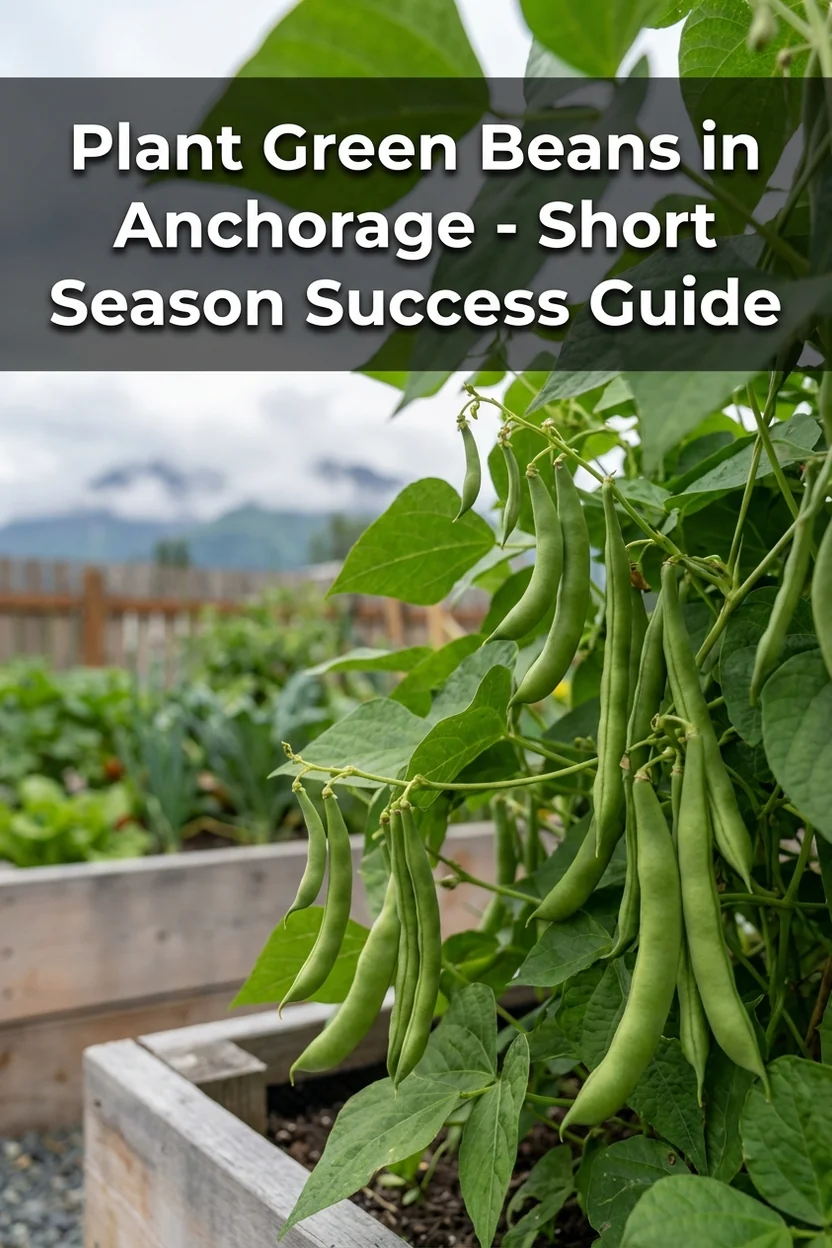
When to Plant Green Beans in Anchorage: Complete Guide + Best Varieties for Zone 4b
Pets & Toxicity
Recorded toxicity for plants linked in this guide. An unknown status is not a safety assessment.
No linked plant is recorded as toxicDetailsHide
Phaseolus vulgaris 'Blue Lake' — Toxicity
Non-toxic when cooked. Raw pods carry lectins (phytohemagglutinin) that cause digestive upset on raw consumption — pods are cooked before eatingView Phaseolus vulgaris 'Blue Lake' plant profilePhaseolus vulgaris 'Kentucky Wonder' — Toxicity
Non-toxicView Phaseolus vulgaris 'Kentucky Wonder' plant profilePhaseolus vulgaris 'Purple Queen' — Toxicity
Non-toxicView Phaseolus vulgaris 'Purple Queen' plant profilePhaseolus vulgaris 'Dragon Tongue' — Toxicity
Non-toxicView Phaseolus vulgaris 'Dragon Tongue' plant profile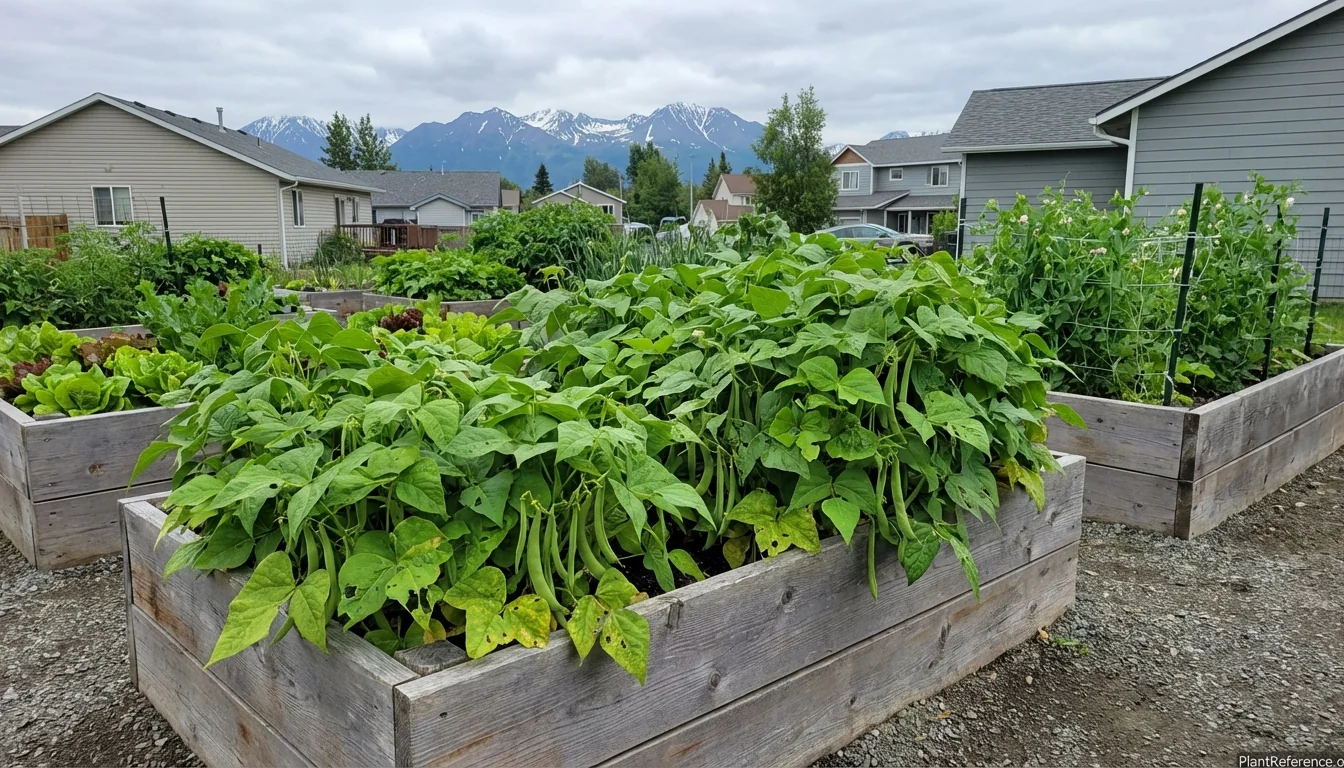
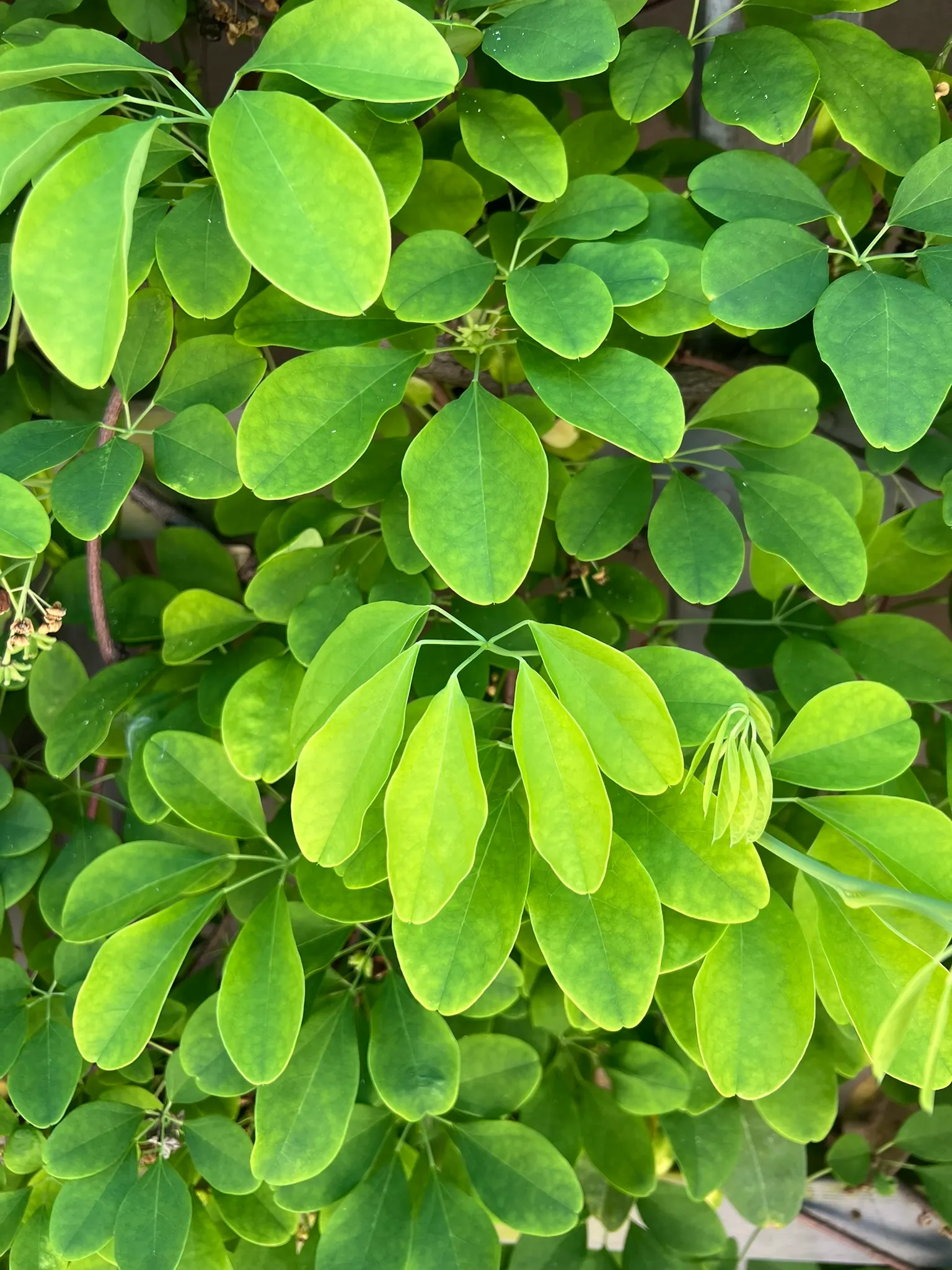
— Image © Plant Reference 2026
Anchorage gardeners face a unique challenge: how do you grow tender warm-season crops like green beans 🌿Phaseolus vulgaris 'Blue Lake' (fah-zee-OH-lus vul-GAHR-iss) in a Zone 4b climate with just 118 frost-free days? The secret lies in choosing the right varieties and timing your plantings precisely around Anchorage's last frost date of May 19 and first frost date of September 14.
After forty years of helping northern gardeners succeed with vegetables, I've learned that Anchorage's short season doesn't mean you can't grow excellent green beans—you just need to be smart about it. The key is selecting ultra-fast bush varieties and using techniques to capture every bit of warmth Alaska's summer provides.
Your success window runs from late May through early September. That gives you exactly 118 days to work with, which rules out long-season varieties like Kentucky Wonder but opens up exciting possibilities with the right fast-maturing cultivars.
Best Green Bean Varieties for Anchorage's Climate
Variety selection makes or breaks your bean harvest in Alaska. I recommend sticking to varieties that mature in 60 days or less—anything longer is gambling with the September 14 frost date.
Variety | Days to Maturity | Growth Habit | Best For Anchorage | Notes for Zone 4b |
|---|---|---|---|---|
50-55 days | Bush | Primary crop | Fastest maturity, cold-soil tolerant | |
53-60 days | Bush | Flat Italian pods | Disease-resistant, reliable | |
55-60 days | Bush | Easy visibility | Purple pods show against foliage | |
55-65 days | Bush/Pole | Risky but possible | Only if planted by May 25 | |
55-60 days | Bush | Specialty harvest | Tender, needs protection | |
60-70 days | Pole | NOT recommended | Too long for Anchorage season |
Why Provider is Perfect for Anchorage
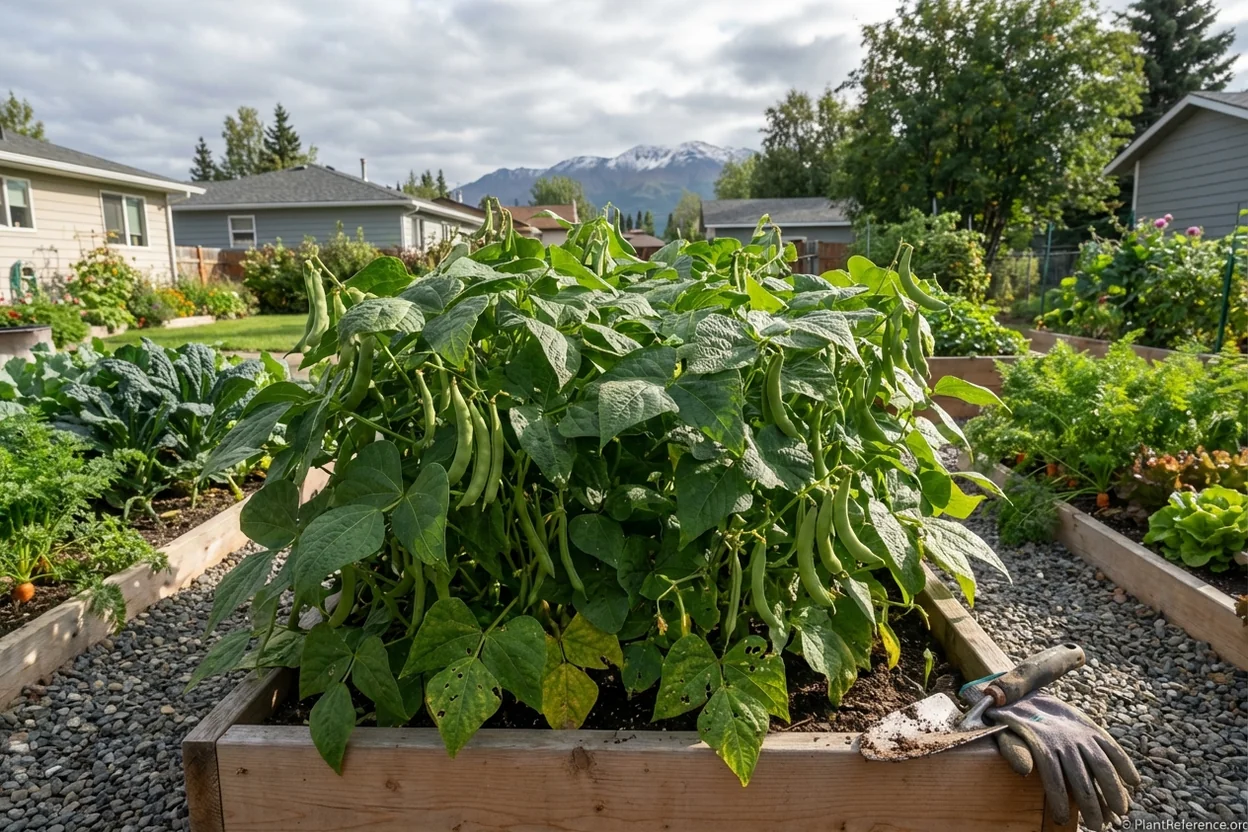
🌿Phaseolus vulgaris 'Provider' earned its name by being the most dependable bean you can grow. In Anchorage's challenging climate, dependability trumps everything else. This variety was specifically bred for northern conditions and short seasons.
Provider germinates in cooler soil than other varieties—a crucial advantage when you're planting in late May. While other beans sulk in 55°F (13°C) soil, Provider gets to work immediately. The 50-day maturity means you can plant as late as June 10 and still harvest before frost.
The compact bush habit produces all its pods within a 2-week window, which is exactly what you want in Alaska. You get your entire harvest before weather becomes unpredictable, and you can preserve the whole crop at once.
Roma II: The Flat-Pod Alternative
🌿Phaseolus vulgaris 'Roma II' brings Italian-style flat beans to Alaska. These Romano-type beans stay tender longer than round varieties, giving you a few extra days of harvest window—valuable insurance in unpredictable late-season weather.
The flat, wide pods are easier to spot during harvest, and they freeze better than round beans if you're preserving your crop. Roma II also shows good resistance to common fungal diseases that can appear during Anchorage's occasionally wet summers.
Purple Queen: Visibility Advantage
🌿Phaseolus vulgaris 'Purple Queen' might seem like a novelty, but the purple pods serve a practical purpose in Alaska's variable light conditions. When morning fog or overcast skies make harvesting challenging, the purple pods stand out dramatically against green foliage.
The anthocyanin pigments that create the purple color also indicate higher antioxidant content. Purple Queen produces reliable yields in the 55-60 day window, though pods turn green when cooked.
Specific Planting Dates for Anchorage
Timing is everything in Zone 4b. Plant too early and cold soil rots your seed. Plant too late and September frost ends your season before harvest.
Critical Dates for Bean Success
Last Frost Date: May 19 (average) Safe Planting Window: May 25-June 15 Latest Planting Date: July 1 (only for 50-day varieties) First Frost Date: September 14 (average)
Why May 25 is Your Target Date
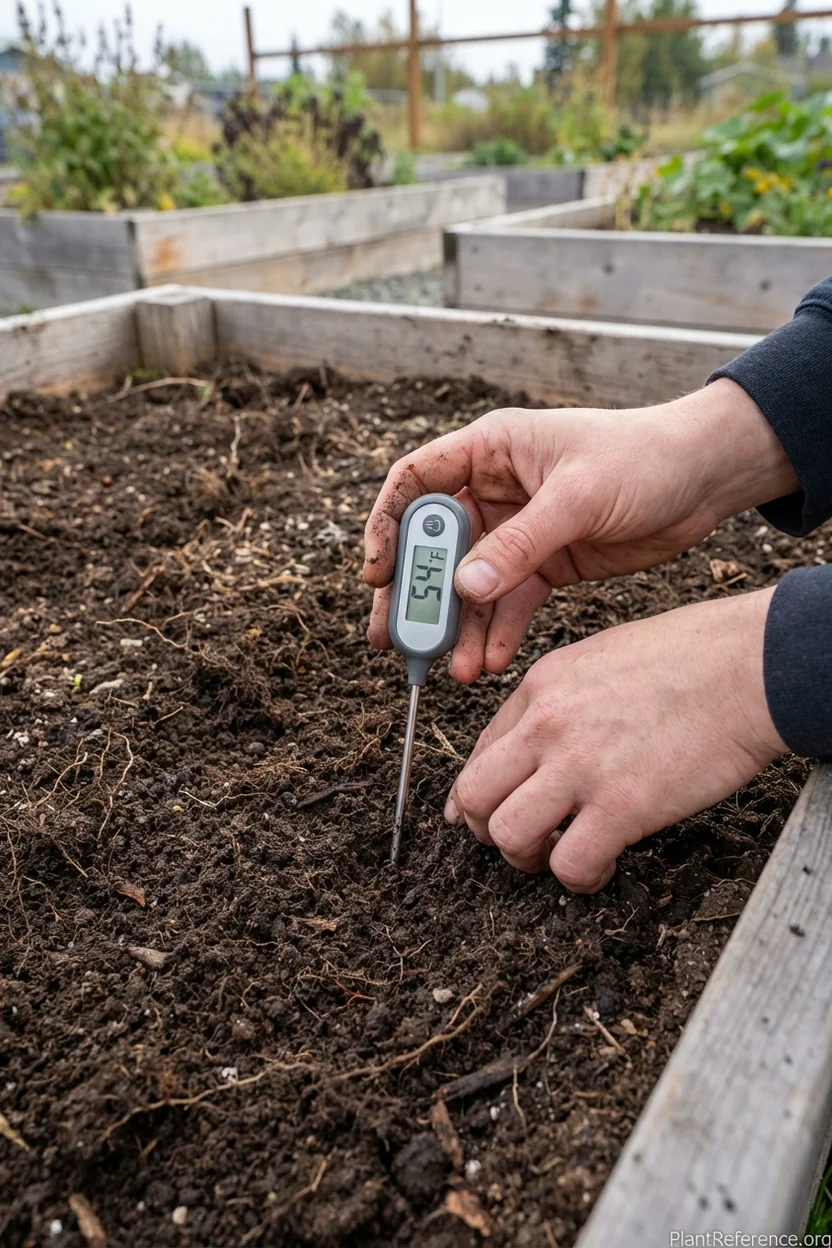
Even though the average last frost is May 19, soil temperature matters more than air temperature for direct-sown beans. Cold, waterlogged soil kills bean seeds faster than a light frost kills transplants.
Wait until soil temperature reaches 55°F (13°C) consistently. In Anchorage, this typically happens around May 25. You can check soil temperature with a probe thermometer at 2-inch depth first thing in the morning for three consecutive days.
Succession Planting Strategy
With only 118 growing days, you get exactly two succession plantings in Anchorage:
First Planting: May 25-30 - Varieties: Provider, Roma II, Purple Queen - Harvest: Mid-July to early August
Second Planting: June 15-20 - Varieties: Provider only (fastest at 50 days) - Harvest: Mid-August to early September
Don't attempt a third succession—there isn't enough time. Instead, plant pole beans if you want extended harvest from a single planting.
Heat Accumulation Techniques
Anchorage's cool summers mean you need to capture and concentrate every bit of warmth:
Black Plastic Mulch: Lay black plastic over planting area two weeks before sowing. This warms soil 8-12°F (4-7°C) above ambient. Cut holes for seeds and leave plastic in place all season.
Wall of Water Protection: For the earliest plantings, surround young plants with water-filled plant protectors. These moderate temperature swings and extend your effective season by 2-3 weeks on both ends.
South-Facing Location: Plant beans against a south-facing fence or wall. Reflected heat can add 5-10 growing degree days per week.
Complete Growing Guide for Anchorage
Success with beans in Zone 4b requires attention to every detail. There's no room for error when your growing window is this narrow.
Soil Preparation
Beans need well-drained soil that warms quickly. Anchorage's heavy clay and cool temperatures work against both requirements.
Raised Beds are Essential: Build beds 8-12 inches (20-30 cm) high using cedar boards. Raised soil drains better and warms 2-3 weeks earlier than ground-level plantings. Fill with a mix of compost, peat moss, and native soil.
pH Requirements: Test soil pH—beans prefer 6.0-7.0. Most Anchorage soils run slightly acidic and benefit from lime application in fall before spring planting.
Fertility Strategy: Beans fix their own nitrogen, but they need phosphorus for root development and pod formation. Apply a 5-10-10 fertilizer at planting, avoiding high-nitrogen fertilizers that discourage nitrogen fixation.
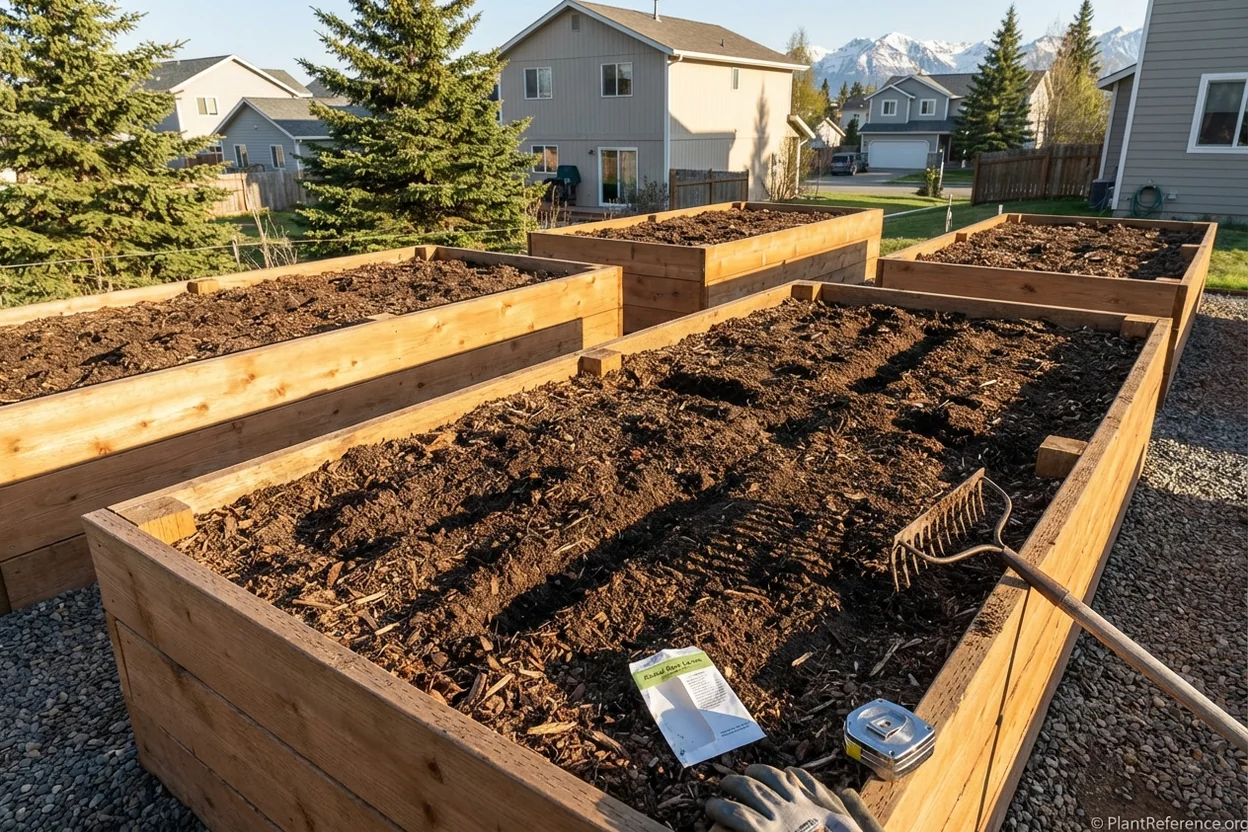
Direct-Sowing Technique
All bean varieties require direct sowing—their taproots don't tolerate transplanting. Here's how to maximize germination in Anchorage conditions:
Seed Depth: Plant 1 inch (2.5 cm) deep in clay soil, 1.5 inches (4 cm) in sandy soil. Deeper planting in cool soil delays emergence and increases rot risk.
Spacing Precision: Follow database recommendations exactly—4 inches (10 cm) for bush varieties like Provider, 6 inches (15 cm) for vigorous types like Blue Lake. Overcrowding in Alaska's humid summers invites fungal problems.
Row Orientation: Run rows east-west to maximize sun exposure. In Anchorage's latitude, every degree of heat capture matters for your beans.
Germination Timeline: Expect 7-10 days for emergence in good conditions, up to 14 days if weather turns cool after planting.
Watering and Moisture Management
Anchorage's variable summer weather—from drought to deluges—requires flexible irrigation strategy.
Critical Watering Periods: - Germination (first 10 days): Keep top 2 inches (5 cm) moist but not soggy - Flowering (35-45 days after planting): Provide 1 inch (2.5 cm) per week consistently - Pod development: Continue consistent moisture until harvest
Overwatering Signs: In Anchorage's clay soils, overwatering shows as yellowing lower leaves and stunted growth. Beans hate "wet feet" more than slight drought.
Mulching Strategy: Apply 2-inch (5 cm) layer of straw mulch after plants reach 4 inches (10 cm) tall. This moderates soil temperature and conserves moisture during dry spells.
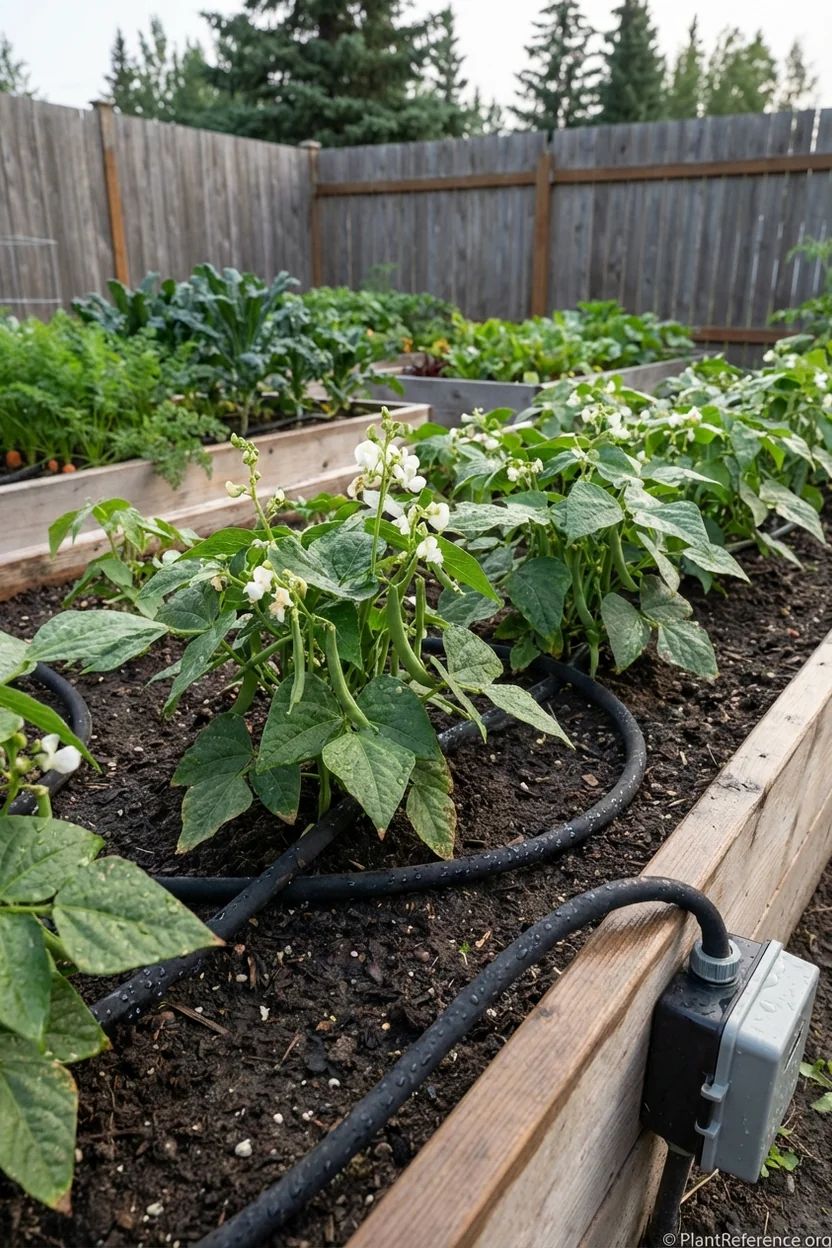
Season Extension Techniques
To maximize Anchorage's short season, employ these proven techniques:
Row Covers: Use lightweight spun fabric covers for the first 3-4 weeks after planting. This adds 5-10°F (3-6°C) of protection and can extend your season by 10-14 days total.
Cold Frame Extensions: Build simple cold frames around your bean beds. On cool September nights, close the frames to protect developing pods from early frost.
Variety Timing: Plant your fastest variety (Provider) first on May 25, then plant Roma II on June 1 for succession harvest.
Support Systems for Pole Beans
While I generally recommend bush varieties for Anchorage, if you want to try pole beans, proper support is critical:
Trellis Height: Keep structures under 6 feet (1.8 m) tall. Anchorage's wind can topple taller supports, and beans won't reach full height anyway in the short season.
Wind Protection: Install bean teepees or trellises in protected locations. Constant wind stress reduces flowering and pod development.
Troubleshooting Anchorage-Specific Problems
Alaska's unique growing conditions create specific challenges you won't find in most gardening guides.
Problem | Symptoms | Likely Cause | Quick Fix |
|---|---|---|---|
Seeds rotting before germination | No sprouts after 14 days, mushy seeds | Cold, wet soil temperature below 55°F | Wait for soil warmth, use black plastic to pre-warm soil, consider peat pot transplants |
Slow, weak growth | Pale foliage, stunted plants, minimal leaf expansion | Cool soil temperatures stunting root development | Apply black mulch around plants, side-dress with phosphorus-rich fertilizer, ensure south-facing location |
Flowers but no pods | Abundant blooms with no fruit set | Cool nights below 55°F during flowering disrupting pollination | Cover plants with row covers on cool nights, hand-pollinate with small paintbrush, plant earlier varieties |
Late-season frost damage | Blackened foliage, shriveled pods, plant collapse | Early frost before September 14 killing tender growth | Harvest all pods immediately at frost warning, cover with sheets or row covers, focus on 50-55 day varieties |
Pest pressure concentrating | Heavy aphid/beetle populations, visible damage | Short season intensifies pest impact in compressed timeframe | Monitor daily, use row covers until flowering, hand-pick pests immediately, ensure strong plant growth |
Disease Management in Cool, Humid Conditions
Anchorage's cool, humid summers can promote fungal diseases that devastate bean crops:
White Mold (Sclerotinia): Appears as white cottony growth on stems. Prevent by ensuring good air circulation—never crowd plantings. Water at soil level, not on foliage.
Rust: Orange spots on leaf undersides. More common in humid weather. Choose resistant varieties like Roma II and ensure morning sun exposure to dry dew quickly.
Mosaic Virus: Transmitted by aphids, causes mottled yellow leaves. Control aphids immediately and remove infected plants to prevent spread.
Harvest & Storage
Proper harvest timing maximizes both yield and quality in Anchorage's compressed season.
When to Harvest
Bush Beans (Provider, Roma II, Purple Queen): Begin checking pods daily starting at 45 days from planting. Harvest when pods snap crisply and seeds inside are small and tender.
Timing is Critical: In Alaska's short season, check plants every other day once pods begin forming. A few days too late means tough, stringy beans.
Daily Harvest Rule: Pick all ready pods every 48 hours. This keeps the plant producing new flowers and pods. Stop harvesting and the plant stops producing.
Storage and Preservation
Most Anchorage gardeners preserve their entire bean harvest since the production window is concentrated:
Fresh Storage: Keep harvested beans in refrigerator up to 5 days. Store in perforated plastic bags to maintain humidity while preventing condensation.
Blanching for Freezing: Blanch beans in boiling water for 3 minutes, immediately plunge into ice water, then freeze in portion-sized bags. Properly frozen beans keep 8-10 months.
Canning Options: Roma II and Provider can well using pressure canning methods. Follow USDA guidelines for safe processing times at Anchorage's elevation.
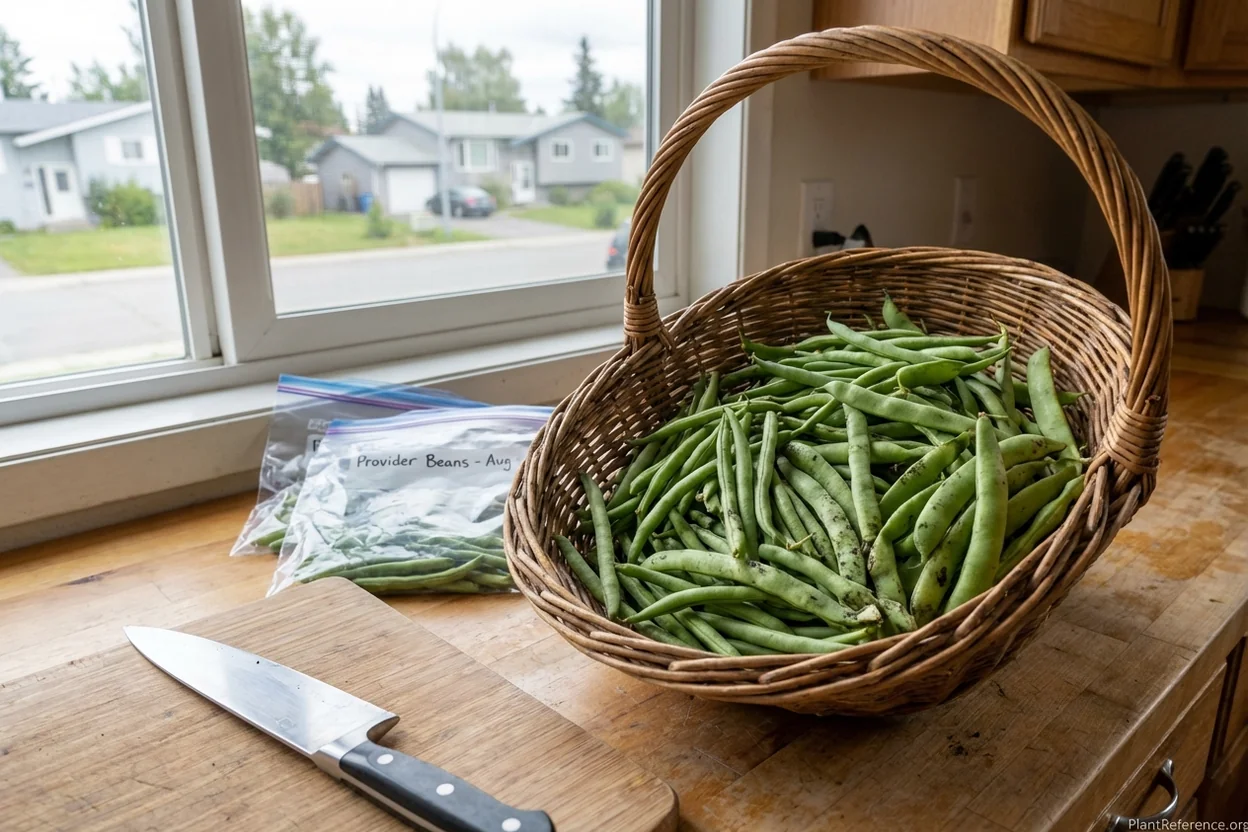
Seed Saving in Alaska
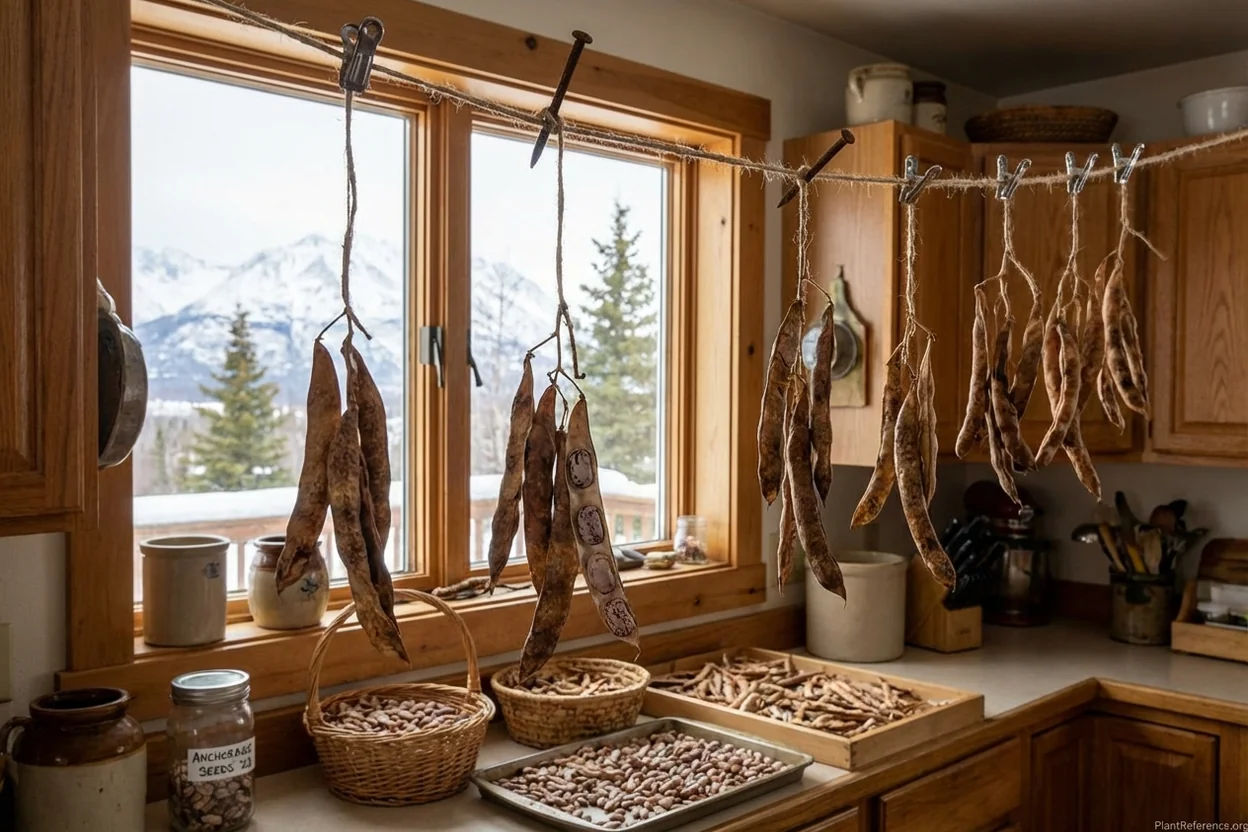
If you want to save seeds for next year's planting, select your best Provider plants and let 10-15 pods mature completely on the vine. Seeds are ready when pods turn brown and rattle. This works only with open-pollinated varieties—hybrid varieties like some Blue Lake strains won't reproduce true to type.
Dry seeds thoroughly before storage and keep them in the freezer over winter to prevent weevil damage during Alaska's long storage season.
Frequently Asked Questions
Reading about plants and recognising them are different skills. These three build the second.
- Daily PlantIdentify the day’s mystery plant from a close-up photograph.
- Keyed OutWork a dichotomous key, lead by lead, to name a hidden specimen.
- Name That PlantName a specimen from botanical clues dealt hardest first.
Free to play, no account needed
Tom is a lifelong Alaskan who gardens in Anchorage, where the growing season is short but intense. He works for the state cooperative extension service and has spent years figuring out what works in a climate where the ground freezes deep, the growing season starts in late May, and you get 19 hours of daylight in June. Tom grows cold-hardy vegetables, maintains a collection of boreal-adapted perennials, and experiments with season extension using cold frames and row covers. He writes about the realities of northern gardening—the unique advantages (those long summer days produce remarkable growth) and the genuine limitations. Tom's tone is calm and practical, with the quiet humor of someone who's gardened through Alaskan winters for decades.