When to Plant Cucumbers in Anchorage: Complete Guide + Best Varieties for Zone 4b
Pets & Toxicity
Recorded toxicity for plants linked in this guide. An unknown status is not a safety assessment.
No linked plant is recorded as toxicDetailsHide
Cucumis sativus 'Marketmore 76' — Toxicity
Non-toxicView Cucumis sativus 'Marketmore 76' plant profileCucumis sativus 'Boston Pickling' — Toxicity
Non-toxicView Cucumis sativus 'Boston Pickling' plant profileCucumis sativus 'Bush Champion' — Toxicity
Non-toxicView Cucumis sativus 'Bush Champion' plant profile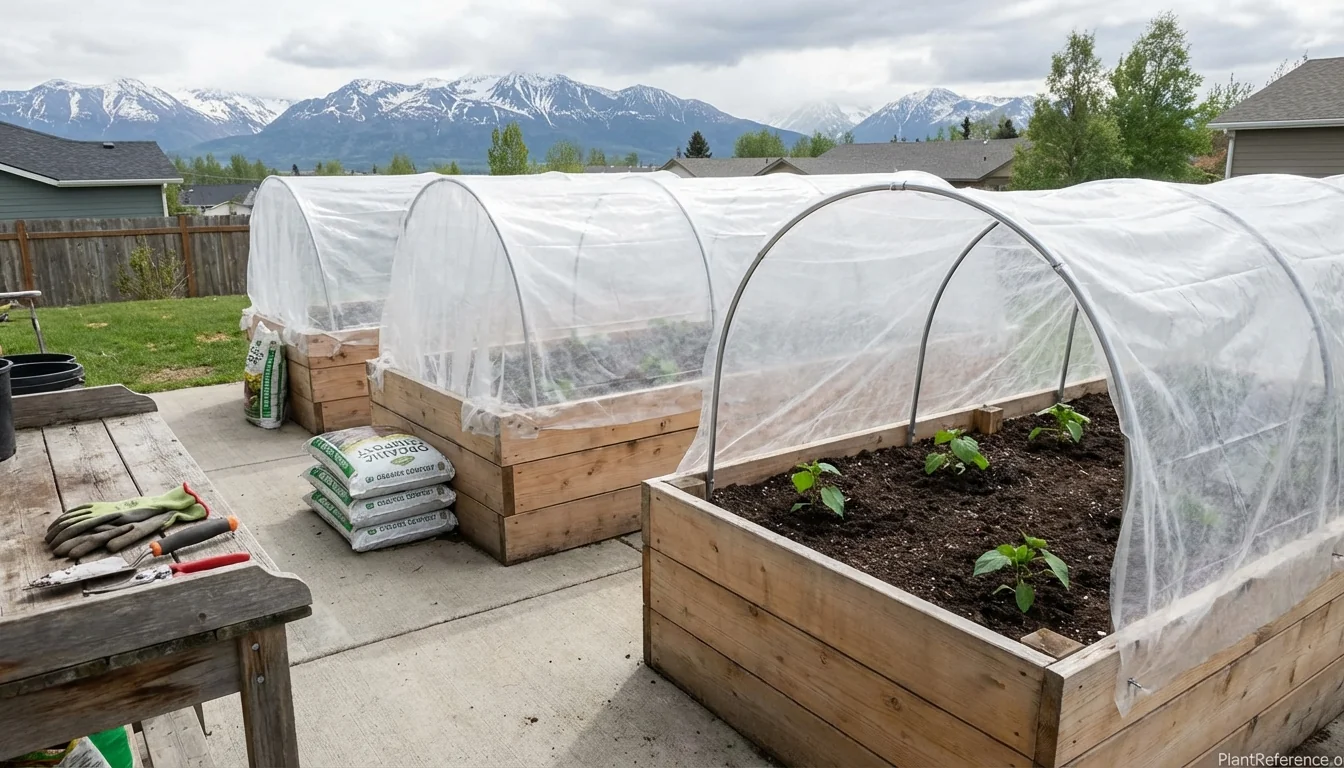
— Image © Plant Reference 2026
Growing cucumbers in Anchorage's Zone 4b climate requires precision timing and cold-hardy varieties to succeed in Alaska's unique 118-day growing season. With the last frost on May 20 and first frost September 15, Anchorage gardeners must maximize every warm day.
Best Cucumber Varieties for Anchorage's Climate
Anchorage's short growing season demands careful variety selection. I've been growing vegetables in northern climates for forty years, and these five varieties consistently produce before September frosts hit.
The key to cucumber success in Zone 4b is selecting varieties that mature quickly and tolerate cooler temperatures. Forget about long-season heirlooms—they won't finish before frost. Focus on these proven performers that mature in 50-65 days.
Variety | Days to Maturity | Best For | Notes for Anchorage |
|---|---|---|---|
55 days | Processing/small slicing | Perfect for Zone 4b short season | |
60-65 days | Fresh eating | Cold-tolerant with disease resistance | |
60 days | Asian cuisine | Heat-loving but early enough for Anchorage | |
55 days | Small gardens | Compact plants for containers | |
Cucumis sativus 'Northern Pickling' | 48-52 days | Quick harvest | Specifically bred for short seasons |
🌿Cucumis sativus 'Boston Pickling': The Anchorage Standard
This 1880 heirloom thrives in Anchorage's cool conditions. At 55 days to maturity, it finishes reliably before September 15. The compact vines produce heavily in a concentrated window—exactly what you need when racing against frost.
I recommend this variety for first-time Anchorage cucumber growers because it's forgiving and productive. The 3-4 inch fruits work perfectly for fresh eating when harvested young or pickling when allowed to mature.
🌿Cucumis sativus 'Marketmore 76': Disease-Resistant Reliability
Cornell's 1976 release offers excellent disease resistance—crucial in Anchorage's humid summers. This variety tolerates cool nights better than heat-loving types, making it ideal for Alaska's temperature swings.
The 60-65 day maturity pushes the limit for Zone 4b, but the superior disease package justifies the risk. Start these indoors without fail—direct sowing rarely works for this variety in Anchorage.
Early-Season Specialty Varieties
Cucumis sativus 'Northern Pickling' at 48-52 days represents the fastest option for Anchorage. This variety was specifically developed for Canadian conditions and handles cool weather exceptionally well.
🌿Cucumis sativus 'Bush Champion' works perfectly for container growing on protected patios. The compact habit means less vine to protect with row covers, and the 55-day maturity fits Anchorage's window perfectly.
Specific Planting Dates for Anchorage
Timing is everything in Zone 4b. Miss your planting window, and frost will claim your crop before harvest. Here's the precise schedule I follow for cucumber success in Anchorage.
Indoor Seed Starting Timeline
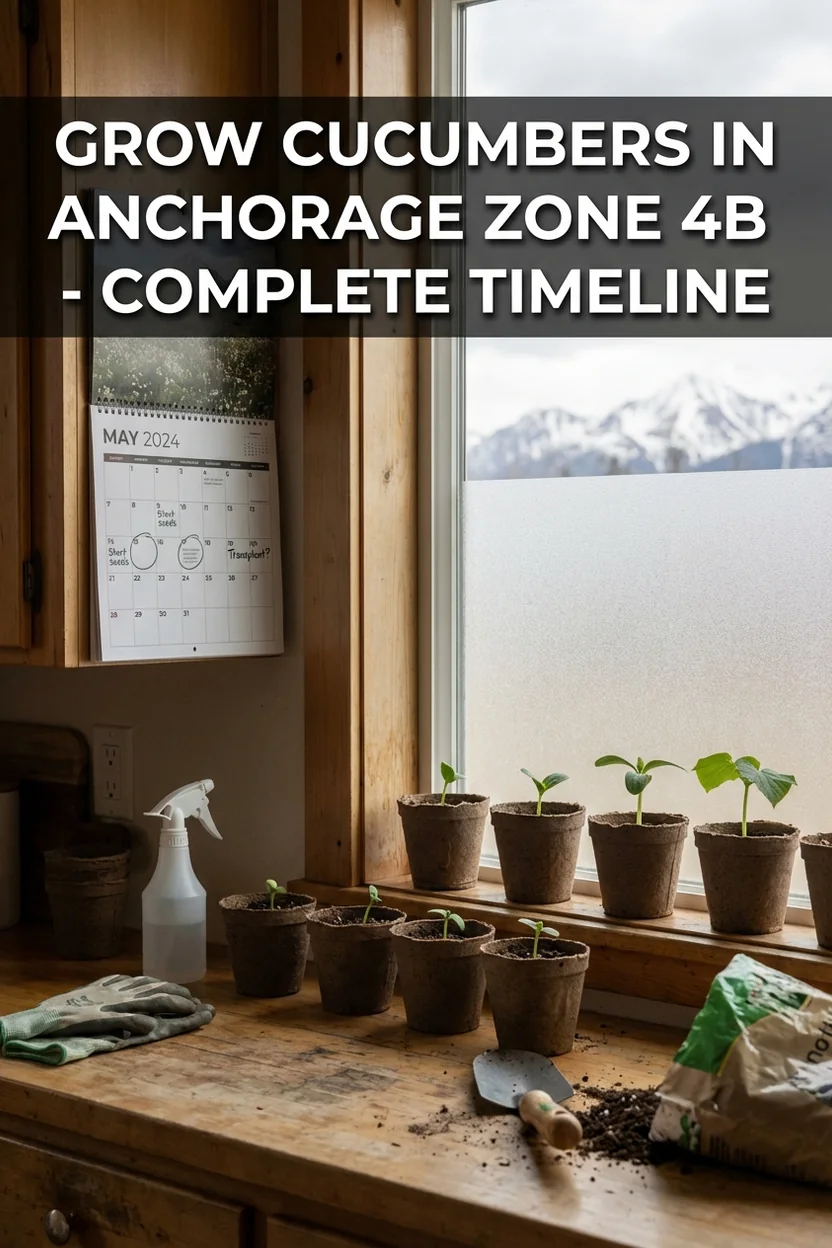
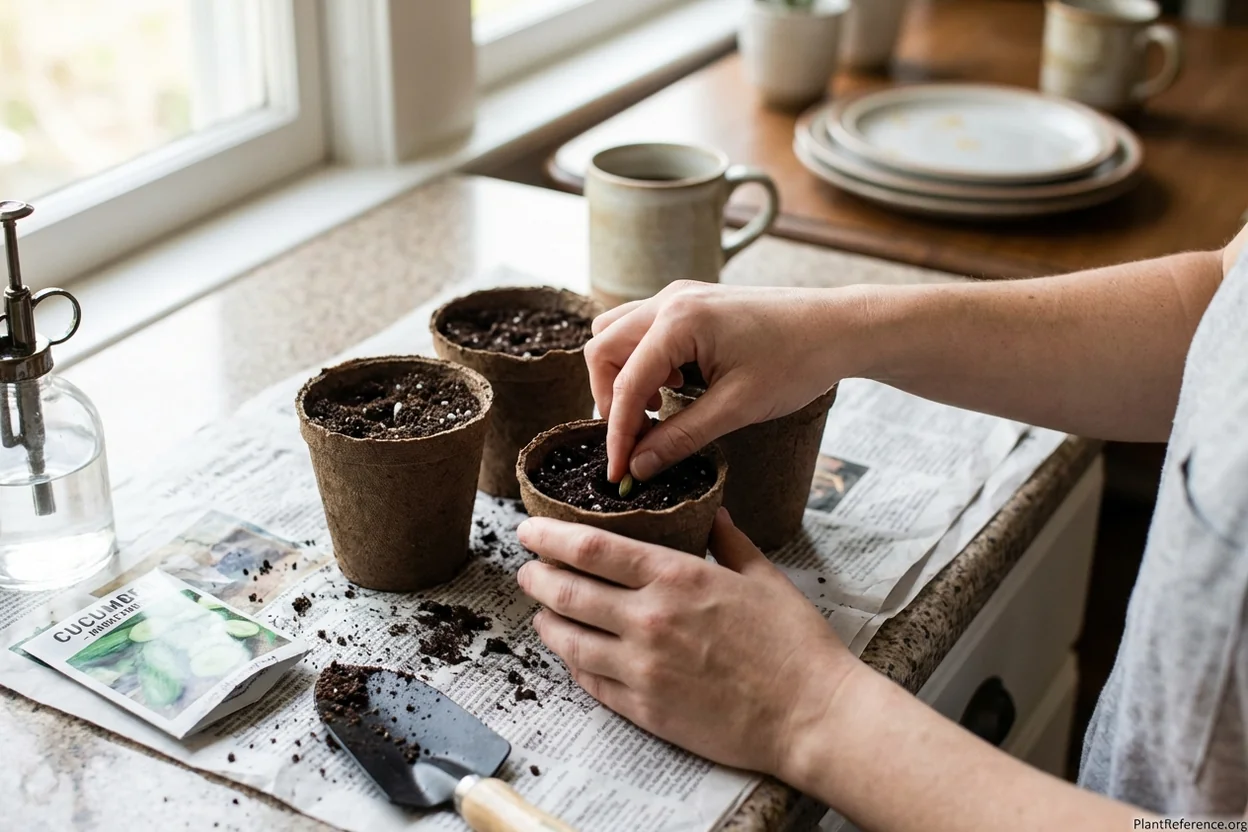
April 25: Start seeds indoors in biodegradable peat pots. Use a heating mat to maintain 70-75°F soil temperature for quick germination.
May 1-7: Seeds germinate. Move to bright south-facing window or under grow lights once sprouted.
May 15-20: Begin hardening off process. Move plants outside for 2-3 hours daily, gradually increasing exposure.
Transplant and Direct Sowing Schedule
May 20-25: Transplant hardened seedlings outdoors after last frost. Soil temperature should reach 55°F minimum.
June 1-15: Direct sowing window opens when soil reaches 60°F consistently. This is your backup option if transplants fail.
Critical Date Calculations
With a September 15 first frost and varieties needing 55-65 days to mature, your absolute latest planting date is July 10 for 65-day varieties or July 20 for 55-day types. However, I recommend finishing all plantings by June 15 to account for potential early frosts.
Succession planting works in Anchorage, but you're limited to two plantings maximum: one at transplant time (May 20-25) and another direct-seeded June 15. Any later plantings risk frost damage before harvest.
Complete Growing Guide for Anchorage
Success with cucumbers in Anchorage requires aggressive season extension techniques. The 118-day growing season leaves no room for mistakes.
Soil Preparation and Site Selection
Choose your sunniest, most protected location. South-facing sites against buildings or fences capture maximum heat and provide wind protection—critical in Alaska's variable weather.
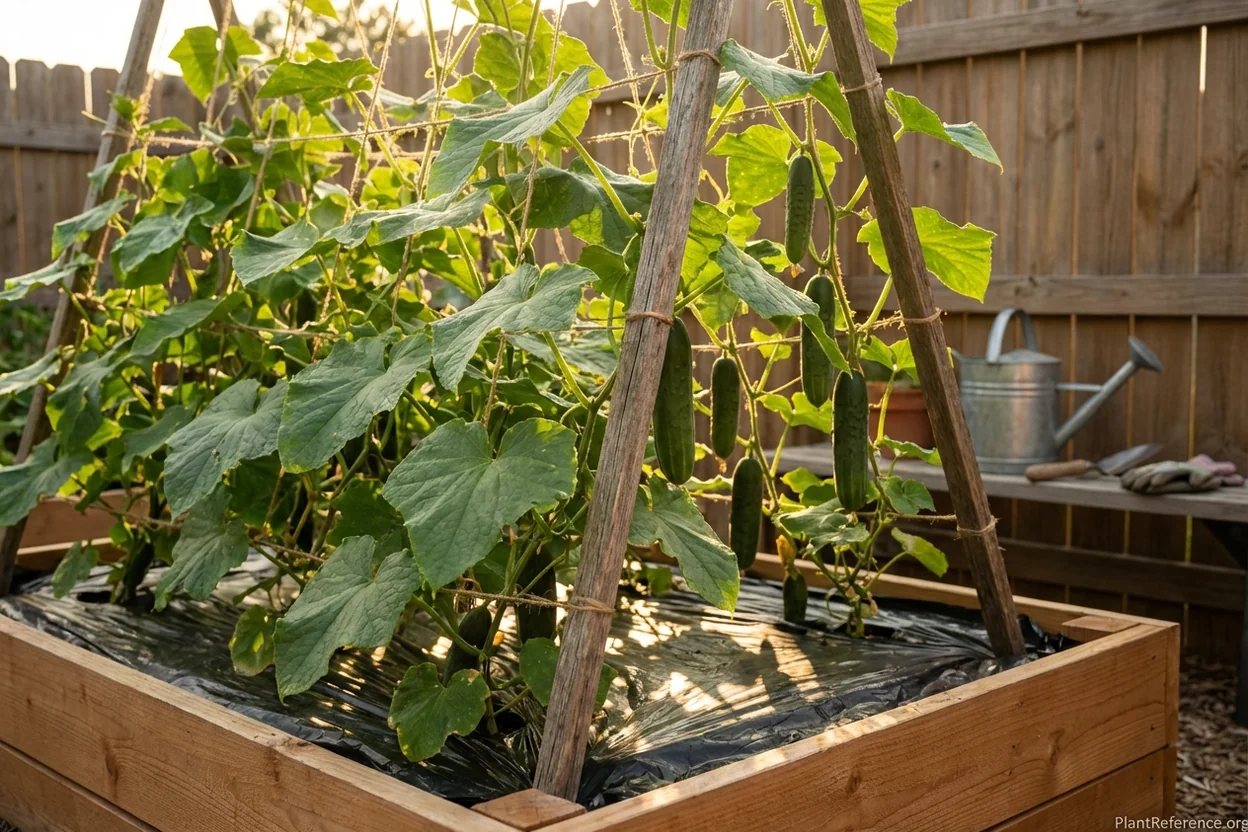
Prepare raised beds or containers for better drainage and soil warming. Black plastic mulch is mandatory in Anchorage. It raises soil temperature 5-10°F and conserves moisture—both essential for cucumber success.
I mix one-third compost into the native soil. Anchorage's clay-heavy soils need organic matter for drainage and nutrient availability. Add granular organic fertilizer at planting—slow-release types work best in cool soils.
Season Extension Essentials
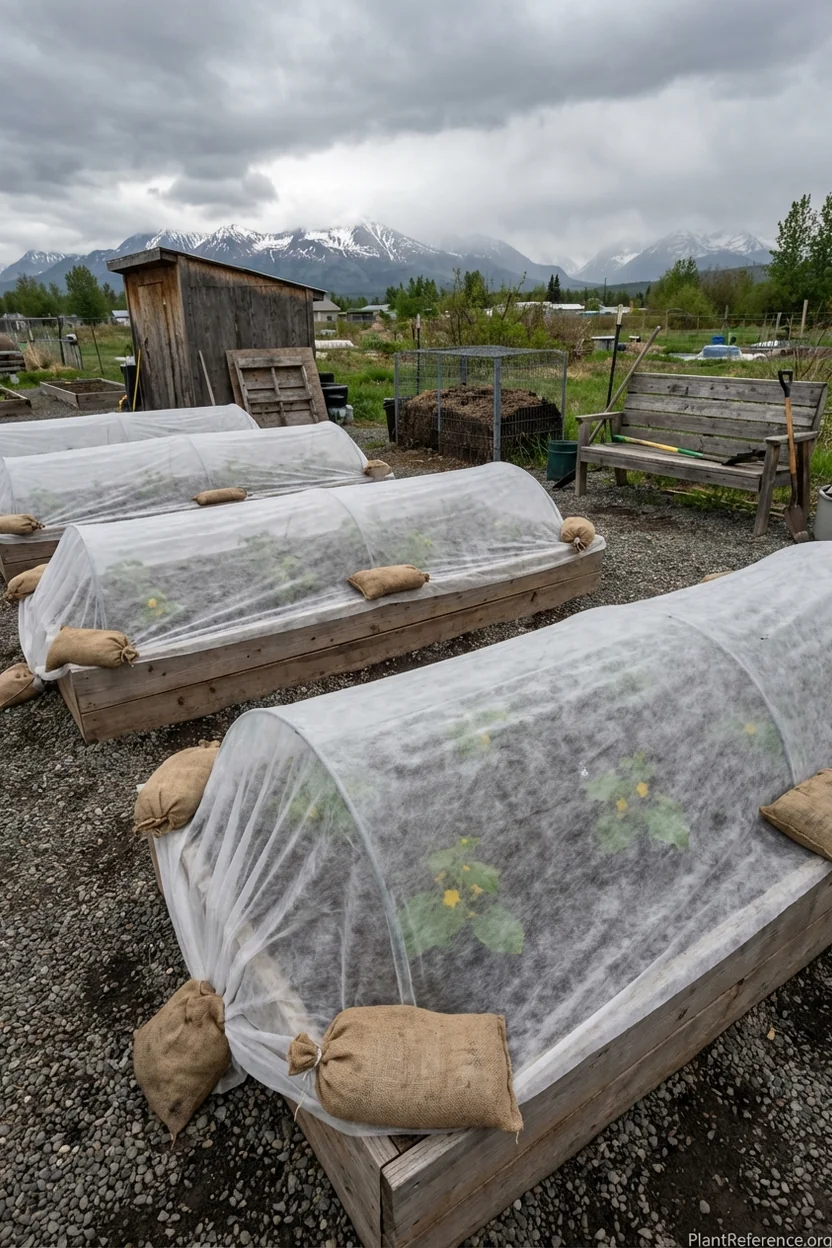
Floating Row Covers: Install immediately after transplanting. These spun-bonded polyester covers trap heat, block wind, and exclude cucumber beetles. Remove only when temperatures consistently exceed 75°F.
Black Plastic Mulch: Install 2-3 weeks before planting to pre-warm soil. Cut planting holes with a sharp knife and secure edges with landscape pins.
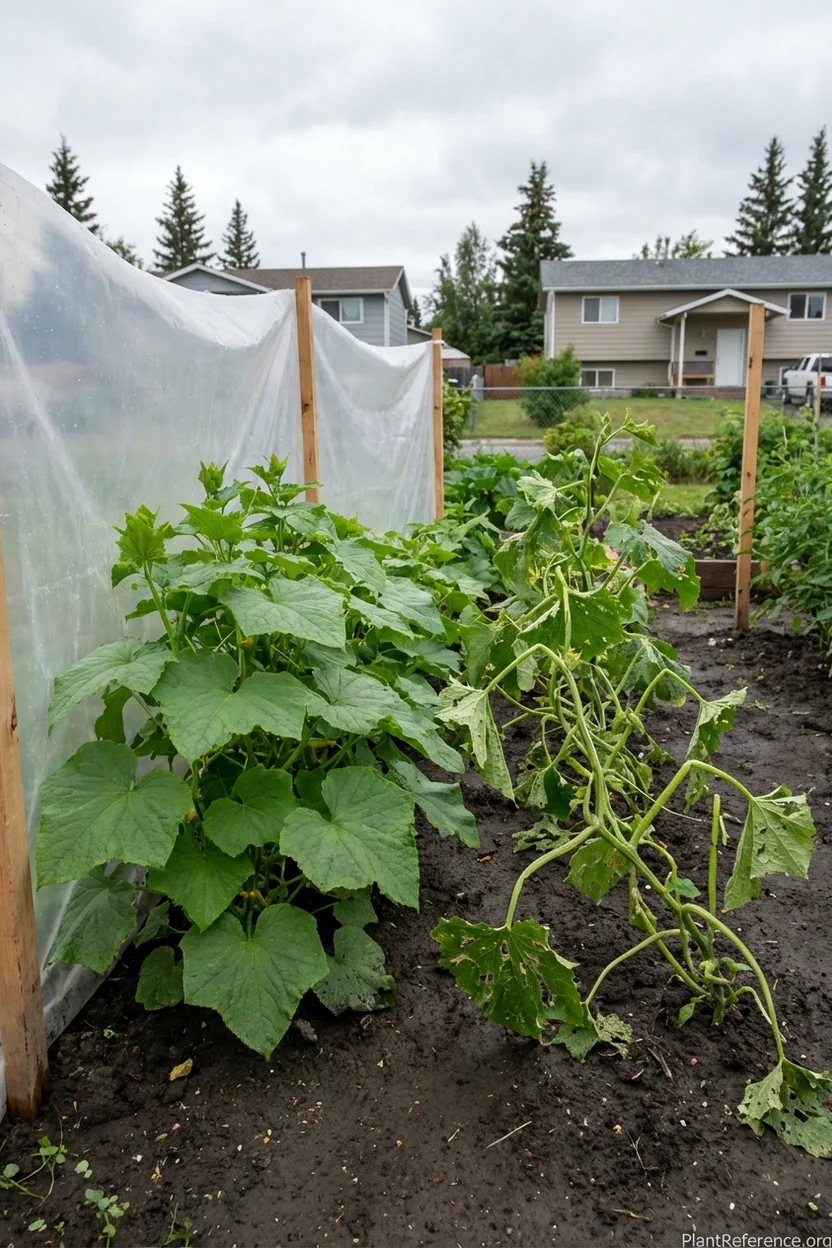
Wind Protection: Anchorage's winds stress plants and lower effective temperatures. Use temporary windbreaks made from burlap or clear plastic sheeting on the north side of plantings.
Water and Fertilizer Management
Cucumbers need consistent moisture but excellent drainage. In Anchorage's cool climate, overwatering kills more plants than drought stress.
Water deeply once weekly when soil feels dry 2 inches (5 cm) down. Morning watering allows leaves to dry before cool evenings, reducing disease pressure.
Apply balanced organic fertilizer at transplanting
Side-dress with compost when first flowers appear
Avoid high-nitrogen fertilizers after mid-July
Stop fertilizing completely after August 15
Feed lightly throughout the season. Cool soils don't release nutrients quickly, so organic amendments work better than synthetic fertilizers. Stop feeding after August 15 to encourage ripening before frost.
Vertical Growing for Maximum Yield
Space is often limited in Anchorage gardens, making vertical growing essential. Trellised cucumbers produce more per square foot and ripen faster due to better light exposure.
Build sturdy trellises before planting. Use 6-foot (180 cm) posts with cattle panels or heavy-duty netting. Anchor securely—Alaska's winds test every garden structure.
Train vines weekly by gently wrapping tendrils around supports. Remove lower leaves that touch the ground to prevent disease and improve air circulation.
Troubleshooting Anchorage-Specific Problems
Anchorage presents unique challenges that differ from typical cucumber growing regions. Here's how to handle the most common issues.
Cool Weather Stress
Symptoms: Slow growth, pale leaves, delayed flowering
Cause: Soil temperatures below 60°F (15°C)
Solution: Install black plastic mulch and floating row covers. Consider relocating containers to warmer microclimates.
Short Season Maturity Issues
Symptoms: Green fruits at first frost, incomplete harvests
Cause: Late planting or slow-maturing varieties
Solution: Start transplants indoors, choose varieties under 60 days, harvest immature fruits for pickling.
High Humidity Disease Problems
Symptoms: White powdery coating on leaves, yellowing and wilting
Cause: Poor air circulation in covered growing environments
Solution: Remove row covers once temperatures stabilize, improve spacing between plants, prune lower leaves.
Wind Damage
Symptoms: Broken stems, torn leaves, stunted growth
Cause: Alaska's persistent winds
Solution: Install windbreaks, stake individual plants, choose sheltered growing locations.
Late Season Ripening
When September frosts threaten, harvest all fruits regardless of size. Small cucumbers make excellent pickles, and partially mature fruits often continue ripening indoors if kept at room temperature.
Cover plants with blankets on frost-warning nights. A few extra days can mean the difference between a full harvest and crop loss.
Harvest & Storage
Harvest timing in Anchorage requires balancing fruit quality with frost risk. Check plants daily once fruits begin sizing—they grow quickly in August's long daylight hours.
Harvest 🌿Cucumis sativus 'Boston Pickling' at 3-4 inches (7-10 cm) for best quality. Larger fruits become seedy and bitter. 🌿Cucumis sativus 'Marketmore 76' reaches peak quality at 6-8 inches (15-20 cm).
Morning harvest provides the crispest texture. Refrigerate immediately for longest storage. Properly harvested cucumbers keep 10-14 days in the refrigerator.
Harvest every 2-3 days to encourage continued production
Cut stems with scissors rather than pulling fruits
Handle gently to avoid bruising thin-skinned varieties
Process or preserve excess harvest immediately
For preservation, 🌿Cucumis sativus 'Boston Pickling' and Cucumis sativus 'Northern Pickling' excel for traditional canning recipes. The concentrated harvest typical of Zone 4b growing makes preservation essential for year-round enjoyment.
FAQ
When is the latest I can plant cucumbers in Anchorage?
July 10 is the absolute latest for 65-day varieties, but I recommend finishing all plantings by June 15. Anchorage's September 15 first frost date means late plantings rarely mature fully. Early frosts can occur, making June plantings much safer.
Can I direct sow cucumber seeds in Anchorage?
Yes, but only from June 1-15 when soil reaches 60°F consistently. Direct sowing works best for Cucumis sativus 'Northern Pickling' and other fast-maturing varieties. Transplants remain the safer option for Zone 4b's short season.
What's the best way to extend the season for cucumbers in Anchorage?
Black plastic mulch and floating row covers are essential. I also use cold frames or small hoop tunnels for extra protection. Plant against south-facing walls or buildings to capture reflected heat. Container growing allows moving plants to protected areas during cool spells.
Do cucumber varieties bred for northern climates really make a difference?
Absolutely. Cucumis sativus 'Northern Pickling' and similar varieties developed for short seasons mature 10-15 days faster than standard varieties. This timing difference often determines success or failure in Zone 4b conditions.
How do I know when soil is warm enough for cucumber planting?
Use a soil thermometer 2-3 inches (5-7 cm) deep. Wait for consistent readings above 55°F for transplants, 60°F for direct seeding. In Anchorage, this typically occurs May 20-25 for transplants and June 1-10 for direct sowing.
Can I grow cucumbers in containers in Anchorage?
Container growing works excellently for Anchorage conditions. Use 5-gallon minimum containers with drainage holes. Black containers absorb heat, warming root zones faster. Choose compact varieties like 🌿Cucumis sativus 'Bush Champion' for best results.
What should I do if early frost threatens my cucumber plants?
Cover plants with blankets, row covers, or plastic sheeting. Harvest all fruits regardless of size—small cucumbers make excellent pickles. Container plants can be moved indoors temporarily. Even one night's protection often provides several extra harvesting days.
Frequently Asked Questions
Reading about plants and recognising them are different skills. These three build the second.
- Daily PlantIdentify the day’s mystery plant from a close-up photograph.
- Keyed OutWork a dichotomous key, lead by lead, to name a hidden specimen.
- Name That PlantName a specimen from botanical clues dealt hardest first.
Free to play, no account needed
Tom is a lifelong Alaskan who gardens in Anchorage, where the growing season is short but intense. He works for the state cooperative extension service and has spent years figuring out what works in a climate where the ground freezes deep, the growing season starts in late May, and you get 19 hours of daylight in June. Tom grows cold-hardy vegetables, maintains a collection of boreal-adapted perennials, and experiments with season extension using cold frames and row covers. He writes about the realities of northern gardening—the unique advantages (those long summer days produce remarkable growth) and the genuine limitations. Tom's tone is calm and practical, with the quiet humor of someone who's gardened through Alaskan winters for decades.