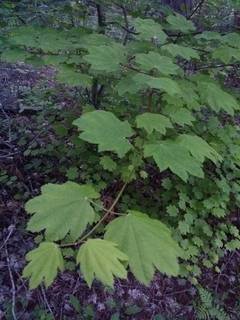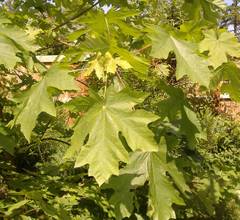
Acer, Genus, palmatum, Species, 'Waterfall', Cultivar,
- Genus & species
- Cultivar
waterfall Japanese maple tree
Overview
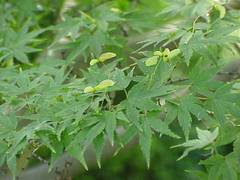
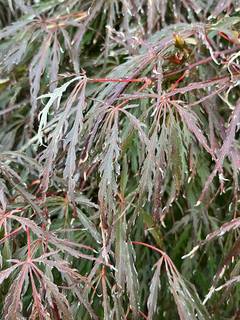
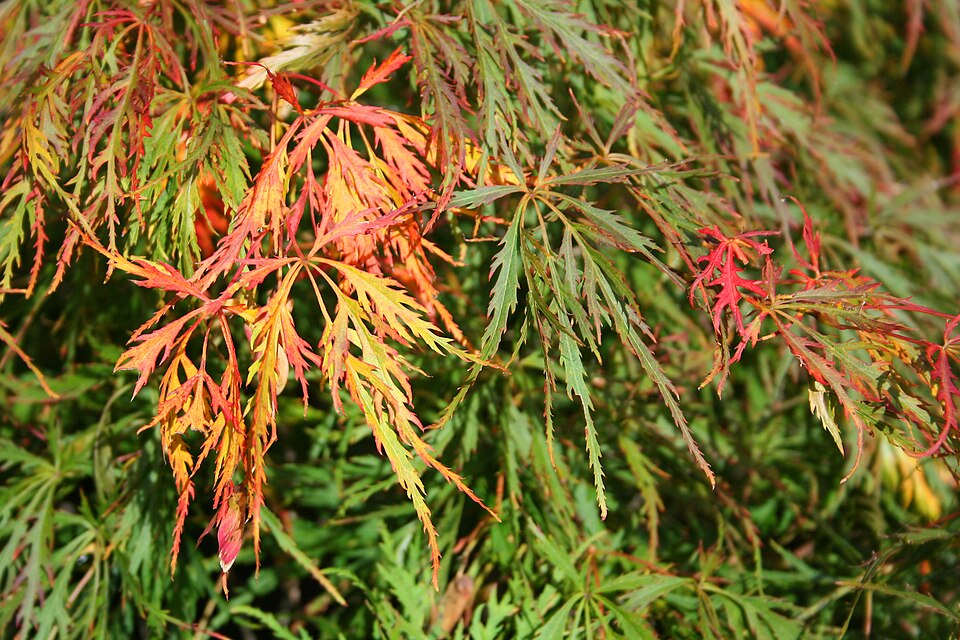
Acer palmatum 'Waterfall' is a deciduous dissectum-type Japanese maple reaching 6-10 feet (1.8-3 m) tall and 8-12 feet (2.4-3.7 m) wide at maturity, with a strongly weeping habit that forms a cascading green dome on a short trunk. Leaves are palmately divided into 7-11 lobes that are themselves further dissected into linear segments, creating a finely cut texture; individual leaves measure 3-5 inches (8-13 cm) across. Spring foliage emerges bright green and matures to medium green through summer; color holds without fading in zones 5-7 and may take on bronze tones under zone 8 heat. Fall color shifts to gold-yellow with orange and red highlights over 2-3 weeks before leaf drop. Small reddish-purple flowers appear in April-May, followed by paired green-tinged samaras 0.5-0.8 inch (1.3-2 cm) long that ripen in late summer. Growth rate is slow at 6-12 inches (15-30 cm) per year, reaching mature size in 15-20 years. Strongly cascading branches reach the ground and trail outward, requiring more horizontal space than upright cultivars. Leaf scorch develops on the south or west sides in zones 7-8 if afternoon shade is absent.
Native Range
The species A. palmatum is native to Japan, Korea, China, and the Russian Far East, occurring in mixed deciduous understory at 600-3,500 feet (180-1,070 m) elevation. The cultivar 'Waterfall' was introduced in the United States in the 1960s and is propagated by grafting onto A. palmatum seedling rootstock.Suggested Uses
Planted as a specimen, near water features, or as a container tree at 12-15 foot (3.7-4.5 m) spacing in zones 5-8. Used in Japanese-style and woodland gardens, and as an understory tree beneath open-canopy oaks or pines in zones 7-8. Container culture in pots of at least 25 gallons (95 L) lasts 8-12 years before root-bound conditions limit plant health; winter protection is required for containers in zones 5-6.How to Identify
Appearance
Size & Dimensions
Height6' - 10'
Width/Spread8' - 12'
Bloom Information
Inconspicuous reddish-purple flowers appear in April through early May in zones 5-7 and from late March through April in zone 8. Bloom occurs concurrent with or just before leaf emergence and lasts 7-14 days. Flowers are wind-pollinated; samaras (paired winged seeds) follow and ripen from August through September.
Detailed Descriptions
Foliage Description
bright green emerging; medium green summer; gold-yellow with orange-red in fallGrowing Conditions
Sun Requirements
Requires 4-6 hours of direct sunlight daily
• Full Sun: 6+ hours of direct sunlight
• Partial Shade: 3-6 hours of direct sunlight
• Full Shade: Less than 3 hours of direct sunlight
Care & Maintenance
Care Guide
Water deeply twice weekly during the first three growing seasons, applying 1-2 inches (2.5-5 cm) per week. Mature trees tolerate 2-3 weeks without rain in zones 5-7 but show leaf curl and crisping in zones 7-8 after one week of drought combined with heat above 90°F (32°C). A 3-4 inch (7.5-10 cm) acidic mulch layer of pine bark or pine needles maintains root moisture and acidifies soil. Verticillium wilt (Verticillium dahliae) causes branch dieback on stressed trees and can kill specimens within 2-5 years; infected wood is removed and pruning tools sterilized between cuts. Aphids and Japanese beetles feed on foliage in summer. Iron chlorosis develops on alkaline soils above pH 7.0; sulfur amendments correct the symptom.Pruning
Pruning is minimal and limited to dead, crossing, or downward-growing inner branches in late winter before bud break. Selective thinning of 10-20% of inner branches every 3-5 years opens the canopy and reveals the cascading branch structure. Heavy pruning into older wood produces water sprouts that disrupt the dome-shaped form. Cuts during active sap flow in spring leak heavily but rarely harm the tree.Pruning Schedule
Prune: February–March
winter
Container Growing
Suitable for container growing
Minimum container size: 25 gallons