Acer, Genus, negundo, Species,
- Genus & species
Box elder
Native across North America from southern Alberta and Manitoba east to Ontario and New England, south through the entire contiguous United States to Florida and Guatemala where the species occurs along streams, floodplains, lake margins, and disturbed ground from sea level to approximately 8,000 ft (2,400 m); the widest-ranging native maple in North America; the species has the only pinnately compound leaf structure among native North American maples, separating it from the simple-leaved maples ({A. saccharum}, {A. rubrum}, {A. saccharinum}) at the leaf level
Overview
Acer negundo is a fast-growing deciduous tree in the soapberry family (Sapindaceae), growing 30-50 ft (9-15 m) tall and 30-40 ft (9-12 m) wide with an irregular rounded to spreading crown. Unlike all other native North American maples, the species carries pinnately compound leaves with 3-7 (usually 3-5) leaflets, each 2-4 inches (5-10 cm) long — the compound leaf structure is specific to A. negundo among native North American maples and frequently causes confusion with Fraxinus (ash) and poison ivy (Toxicodendron radicans) seedlings. Leaflets are ovate, coarsely serrate to shallowly lobed, bright green above. Young twigs are green to purplish-green, often glaucous (waxy). Bark is pale grey, developing shallow interlacing ridges with age. Dioecious — male and female flowers carried on separate trees. Male flowers grow in pendulous clusters of slender reddish-green filaments in early spring before leaf emergence; female flowers develop into paired samaras (winged seeds) 1-1.5 inches (2.5-4 cm) long, produced in large drooping clusters that persist through winter. Female trees produce prolific seed crops, and seedlings establish aggressively in disturbed sites, cracks in pavement, and along waterways. The species has the widest native range of any North American maple, from coast to coast. The species is considered weedy and invasive in many urban settings. Wood is soft, weak, and prone to storm damage. Boxelder bugs (Boisea trivittata) congregate on female trees and on buildings near them in autumn — a significant nuisance in some regions.
Native Range
Acer negundo is native across North America, from southern Alberta and Manitoba east to Ontario and New England, south through the entire contiguous United States to Florida and Guatemala. The species occurs along streams, floodplains, lake margins, and disturbed ground from sea level to approximately 8,000 ft (2,400 m). The widest-ranging native maple in North America.Suggested Uses
In its native range, used for streambank stabilization, windbreaks, and fast-establishing shade on difficult sites. The variegated cultivar 'Flamingo' (pink, white, and green foliage) and 'Auratum' (golden foliage) are planted as ornamental multi-stem specimens managed by annual or biennial coppicing. The straight species is rarely planted intentionally in urban settings due to weak wood, aggressive seeding, and boxelder bug attraction. Native plant restorations on floodplains may include the species as a component of the riparian forest community.How to Identify
Appearance
Size & Dimensions
Height30' - 50'
Width/Spread30' - 40'
Bloom Information
Male trees produce pendulous clusters of reddish-green staminate flowers on slender filaments in March through April before leaf emergence. Female trees produce inconspicuous pistillate flowers that develop into paired samaras 1-1.5 inches (2.5-4 cm) long, ripening from green to tan by September. Samaras persist in drooping clusters through winter. Wind-pollinated.
Detailed Descriptions
Flower Description
Reddish-green inconspicuous flowers; the species is dioecious (male and female on separate trees); male flowers carried in pendulous clusters of slender reddish-green filaments in early spring before leaf emergence; female flowers develop into paired samaras (winged seeds) 1-1.5 inches (2.5-4 cm) long produced in large drooping clusters that persist through winterFoliage Description
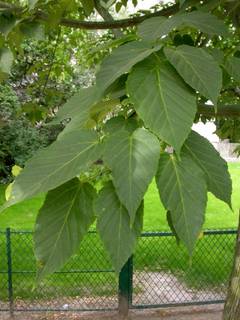
Bright green pinnately compound leaves with 3-5 (sometimes 7) leaflets, each 2-4 inches (5-10 cm) long, ovate, coarsely serrate to shallowly lobed; the compound-leaf form is the only such leaf structure among native North American maplesGrowing Conditions
Sun Requirements
Requires 4-10 hours of direct sunlight daily
• Full Sun: 6+ hours of direct sunlight
• Partial Shade: 3-6 hours of direct sunlight
• Full Shade: Less than 3 hours of direct sunlight
Care & Maintenance
Care Guide
Plant in full sun to partial shade in any moist well-drained soil at pH 5.0-8.0 — the species is highly adaptable to soil type, moisture, and pH. Space 25-30 ft (7.5-9 m) apart. Tolerates drought, flooding, compacted soil, road salt, and urban pollution. Requires little care once established — the species is essentially self-maintaining. The primary management challenge is controlling unwanted seedling establishment from prolific seed production by female trees. To avoid seed and boxelder bug issues, select male cultivars. Susceptible to boxelder bugs on female trees, and to storm damage due to weak wood and included bark in branch crotches.Pruning
Prune in late summer or early autumn to reduce sap bleeding — unlike most trees, this species bleeds heavily if pruned in late winter or spring. Remove dead, crossing, and structurally weak branches. Correct narrow branch crotch angles (common in this species) early to prevent included bark and future splitting. Remove suckers from the base regularly. If used as a hedge or multi-stem form, coppice to ground level every 3-5 years — the variegated cultivar 'Flamingo' is commonly managed this way.Pruning Schedule
Prune: August–September
summerfall