Acer, Genus, palmatum, Species, 'Bloodgood', Cultivar,
- Genus & species
- Cultivar
Bloodgood Japanese maple
Species native to Japan, Korea, and China; 'Bloodgood' is a cultivar of garden origin from the Bloodgood Nursery (Long Island, New York)
Overview
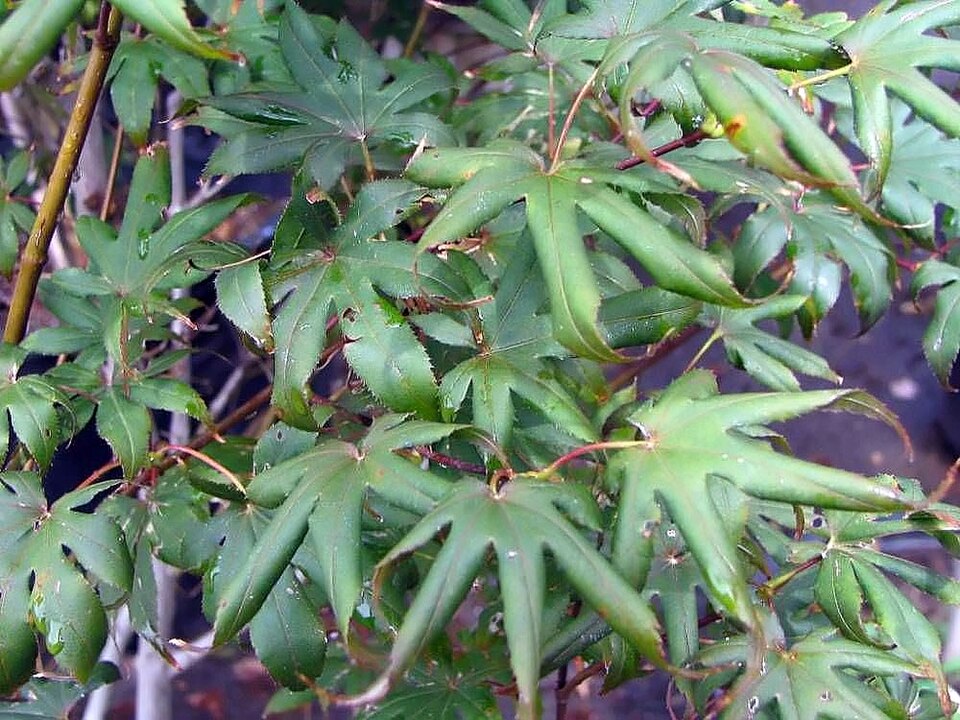
Acer palmatum 'Bloodgood' is an upright deciduous tree growing 15-20 feet (4.5-6 m) tall and wide. Deep red-purple to dark burgundy palmately lobed leaves, 2-4 inches (5-10 cm), with 5-7 pointed lobes hold their color through spring and summer without fading to green-bronze — the color retention is the cultivar trait, since many other red-leaved Japanese maples green out by midsummer. Foliage turns crimson-red in fall. Small reddish-purple inconspicuous flowers appear in pendant clusters in mid-spring (April), followed by paired winged samaras. Bark is smooth and gray. The plant is in the soapberry family (Sapindaceae); the former family Aceraceae has been merged into Sapindaceae based on molecular phylogenetics. 'Bloodgood' has become the standard red-leaved upright Japanese maple in the nursery trade, supported by reliable summer color retention, hardiness to USDA zone 5, and the upright vase-shaped form. The cultivar was named after the Bloodgood Nursery on Long Island, New York. Leaf scorch — brown dry leaf margins — develops in hot afternoon sun, reflected heat from walls or paving, and dry wind, and afternoon shade in zones 7-8 reduces scorch on plants in those climates. The shallow fibrous root system is sensitive to soil compaction and salt. Acidic well-drained soil is required. Consistent moisture is needed — the plant is intolerant of drought. Species A. palmatum is native to Japan, Korea, and China. Non-toxic.
Native Range
Species A. palmatum is native to Japan, Korea, and China. Cultivar 'Bloodgood' was selected at the Bloodgood Nursery, Long Island, New York.Suggested Uses
Grown as a specimen tree, in mixed borders, and in containers of at least 15 gallons (57 L), spaced 15-20 feet (4.5-6 m) from adjacent plants. Summer-long red-purple color retention is the principal cultivar trait. Afternoon shade reduces leaf scorch in warm climates. Pruning is restricted to dormancy because of spring sap bleeding. Consistent moisture is required. Non-toxic. Hardy in zones 5-8.How to Identify
Appearance
Size & Dimensions
Height15' - 20'
Width/Spread15' - 20'
Bloom Information
Mid-spring (April). Small reddish-purple inconspicuous flowers in pendant clusters. Paired winged samaras follow. The deep red-purple foliage (spring-summer) and the crimson-red fall color are the principal seasonal features.
Detailed Descriptions
Flower Description
small reddish-purple, in pendant clusters (inconspicuous); springFoliage Description
deep red-purple to dark burgundy through spring and summer (the cultivar holds color without greening — a trait that separates 'Bloodgood' from many other red-leaved Japanese maples that fade to green-bronze by midsummer); palmately lobed with 5-7 pointed lobes, 2-4 inches (5-10 cm); turns crimson-red in fallGrowing Conditions
Sun Requirements
Requires 4-8 hours of direct sunlight daily
• Full Sun: 6+ hours of direct sunlight
• Partial Shade: 3-6 hours of direct sunlight
• Full Shade: Less than 3 hours of direct sunlight
Care & Maintenance
Care Guide
Site in part sun (4-8 hours direct sun) — afternoon shade in zones 7-8 reduces leaf scorch. Acidic well-drained soil with a pH of 5.5-6.5 is required. Consistent soil moisture is needed; the plant is intolerant of drought. Pruning is restricted to late fall or winter — spring pruning causes heavy sap bleeding from the cuts. The shallow root system is sensitive to soil compaction. Non-toxic. Hardy in zones 5-8.Pruning
Prune only in late fall or early winter (November-December) when fully dormant — spring or summer pruning causes heavy sap bleeding from the cuts. Remove dead, crossing, or inward-growing branches. The natural vase-shaped form develops without heavy pruning.Pruning Schedule
Prune: November–December
fallwinter
Container Growing
Suitable for container growing
Minimum container size: 15 gallons