Vaccinium, Genus, uliginosum, Species,
- Genus & species
bog bilberry
Overview
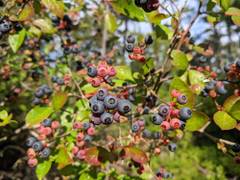
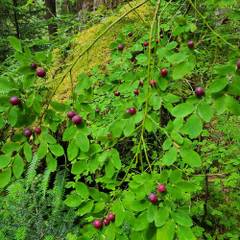
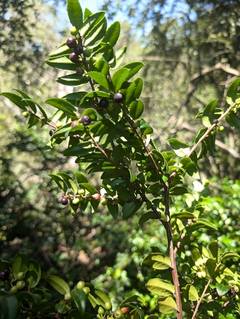
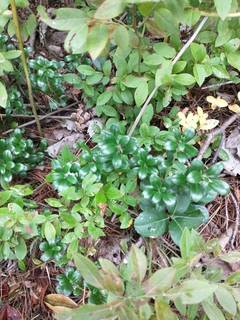
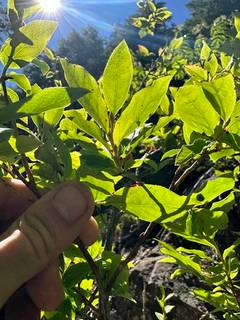
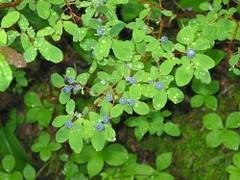
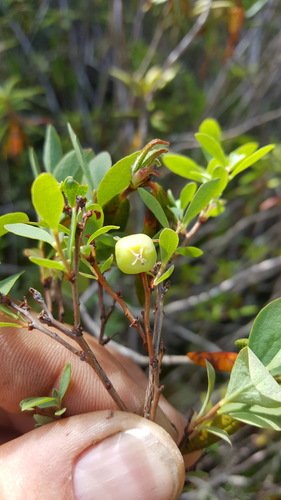
Bog bilberry is a low, deciduous shrub in the heath family, forming a dense, twiggy mound 4-24 inches (10-60 cm) tall and 12-24 inches (30-60 cm) wide, taller in sheltered sites and ground-hugging in exposed ones. The small oval leaves are blue-green, 0.4-1 inch (1-2.5 cm) long, with smooth untoothed edges and a pale, net-veined underside, turning red before they fall. In late spring and early summer it carries nodding, urn-shaped flowers about 0.2 inch (5 mm) long, pale pink to white, singly or in small clusters. These give way to round, blue-black berries with a waxy bloom, 0.25-0.4 inch (6-10 mm) across, edible and sweet though milder than cultivated blueberries. Vaccinium uliginosum spreads slowly by rhizomes to form low thickets on acid, peaty ground. It needs cool, moist, acidic conditions and struggles in heat, alkaline soil, or drought, which limits it to cold and mountain climates. The fall foliage and edible fruit are its main draws, set against a short flowering season and slow growth.
Native Range
Native across the cold Northern Hemisphere, circumboreal through northern Europe, Asia, and North America, and south at high elevation in mountain ranges. Vaccinium uliginosum grows in bogs, heaths, tundra, and open conifer woods on wet, acidic, peaty soils.Suggested Uses
Grown in cool-climate rock gardens, heath and bog gardens, and native plantings on acid soil, and used as a low groundcover among other ericaceous plants. The edible berries suit wildlife and fruit gardens in cold regions. It pairs with heathers, dwarf rhododendrons, and other acid-loving plants.How to Identify
Appearance
Size & Dimensions
Height4" - 2'
Width/Spread1' - 2'
Colors
Bloom Information
Blooms in late spring to early summer, often May to June depending on elevation and latitude. The small urn-shaped flowers nod singly or in twos and threes from the older wood. Bees and other insects pollinate them, and berries ripen from midsummer into autumn.
Detailed Descriptions
Flower Description
pale pink to whiteFoliage Description
blue-greenGrowing Conditions
Sun Requirements
Requires 4-8 hours of direct sunlight daily
• Full Sun: 6+ hours of direct sunlight
• Partial Shade: 3-6 hours of direct sunlight
• Full Shade: Less than 3 hours of direct sunlight
Care & Maintenance
Care Guide
Grows in full sun to part shade in cool, constantly moist, acidic soil with a pH from 4.0 to 5.5. It needs the peaty, humus-rich, low-nutrient ground of bogs and heaths and fails in alkaline or dry soils. A mulch of pine needles, bark, or peat keeps the shallow roots cool and moist and helps hold acidity. It takes little or no feeding, and lime or rich fertilizer harms it. Plants are slow to establish and slow-growing overall, spreading gradually by rhizomes. Cool summers and reliable moisture matter more than winter cold, which it withstands to a severe degree.Pruning
Little pruning is needed for this slow, low shrub beyond removing dead or weak twigs in early spring. Older plants can be thinned lightly after fruiting to let light into the center. Hard cutting is avoided, since regrowth is slow.Container Growing
Suitable for container growing