Vaccinium, Genus, arboreum, Species,
- Genus & species
sparkleberry
Southeastern and south-central United States
Overview
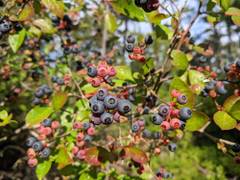
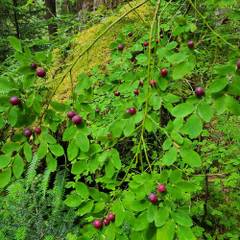
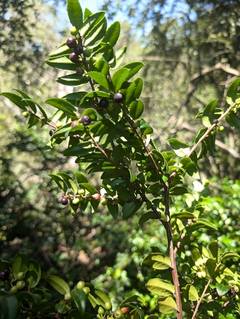
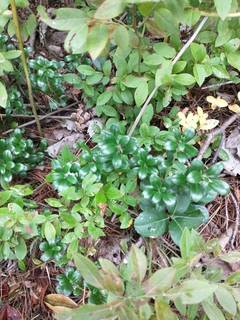
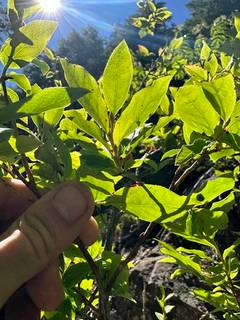
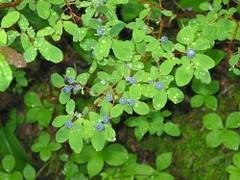
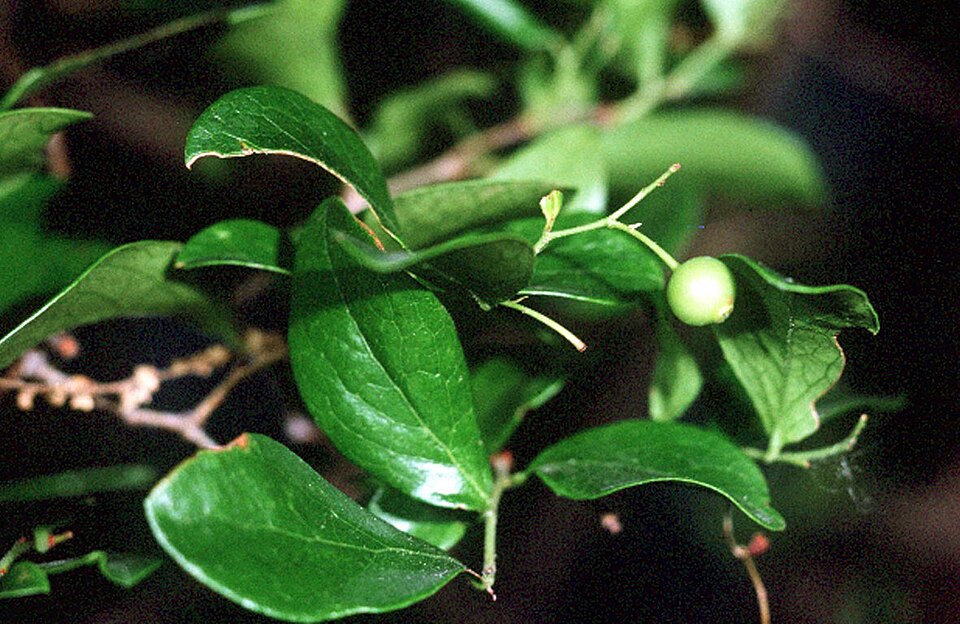
Vaccinium arboreum is a deciduous to semi-evergreen shrub or small tree of the southeastern United States, reaching 8-20 feet (2.4-6 m) tall, occasionally to 30 feet (9 m), with a spread of 6-12 feet (1.8-3.7 m). The glossy oval leaves are 1-2 inches (2.5-5 cm) long, dark green through the season and turning red to purple before many drop in autumn, with some held through mild winters. Small white bell-shaped flowers 0.25 inch (6 mm) long hang in loose clusters in spring. The fruit is a hard black berry 0.25 inch (6 mm) across, dry and mealy rather than juicy, persisting into winter. Older trunks show smooth, reddish-brown bark that peels in thin flakes. The plant grows on dry, sandy or rocky uplands and tolerates a wider pH range than most blueberries. Its slow growth and dry fruit set it apart from cultivated blueberry species. It can develop an irregular, multi-stemmed form that needs training for a single trunk.
Native Range
Native to the southeastern and south-central United States, from Virginia and Missouri south to Florida and Texas, on dry uplands and woodland margins.Suggested Uses
Used as a specimen, in native plant gardens, and in naturalized woodland borders. The peeling bark adds winter interest in mixed plantings. The persistent fruit feeds birds through cold months.How to Identify
Appearance
Size & Dimensions
Height8' - 20'
Width/Spread6' - 12'
Bloom Information
Flowers open from April to June, in loose drooping clusters along the stems. The white bell-shaped blooms are 0.25 inch (6 mm) long. Bloom lasts about 3-4 weeks.
Detailed Descriptions
Foliage Description
dark green turning red to purple in fallGrowing Conditions
Sun Requirements
Requires 6-12 hours of direct sunlight daily
• Full Sun: 6+ hours of direct sunlight
• Partial Shade: 3-6 hours of direct sunlight
• Full Shade: Less than 3 hours of direct sunlight
Care & Maintenance
Care Guide
Grows in full sun to part shade in dry, well-drained sandy or rocky soils, tolerating a pH from 4.5 to 7.0, wider than most blueberries accept. Established plants withstand drought and need little supplemental water. Growth is slow, and plants may take several years to reach flowering size. Soil that stays wet causes root problems on this upland species. Hardy in USDA zones 7-9. Few pests or diseases trouble it in suitable sites.Pruning
Lower branches are removed over several winters to train a single-trunk tree form. Dead or crossing stems are thinned in late winter. The natural multi-stemmed shape needs no pruning if grown as a large shrub.Pruning Schedule
Prune: February
winter