Vaccinium, Genus, pallidum, Species,
- Genus & species
early lowbush blueberry
Overview
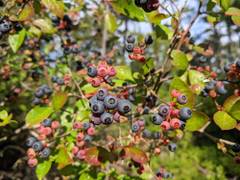
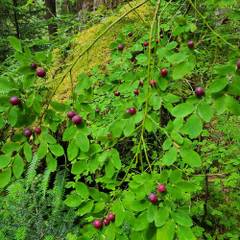
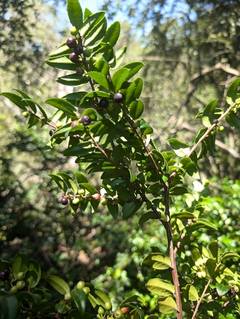
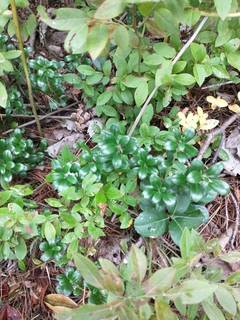
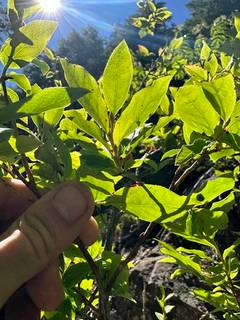
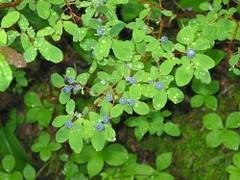
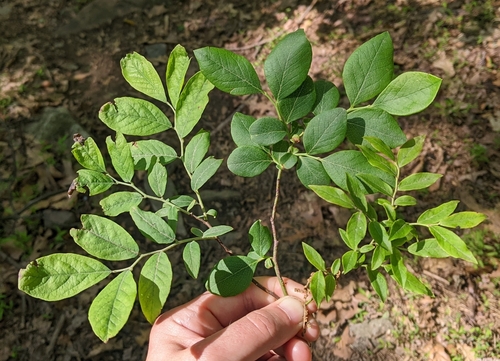
Vaccinium pallidum is a low, colony-forming deciduous shrub in the heath family (Ericaceae), reaching 6-24 inches (15-60 cm) tall and spreading by rhizomes into broad patches. The thin, twiggy stems are green to reddish, and the alternate leaves are oval to elliptic, 1-2.5 inches (2.5-6 cm) long, pale blue-green and often slightly waxy beneath, with finely toothed or smooth margins. Urn-shaped flowers appear in spring in small clusters, white to greenish-white tinged pink and about 0.2 inch (5-6 mm) long. The fruit is a round berry 0.2-0.4 inch (5-10 mm) wide, blue with a pale waxy bloom, edible and sweet. Autumn foliage turns red to bronze before dropping. The species spreads underground, forming patches several feet across over time, which limits its use where a contained shrub is wanted. It grows in dry, acidic upland soils and tolerates poor, rocky ground where many shrubs decline.
Native Range
Native to eastern North America, Vaccinium pallidum ranges from Ontario and Maine south to Georgia and west to Missouri and Wisconsin. It grows in dry oak and pine woods, rocky slopes, clearings, and barrens on acidic soils.Suggested Uses
Used in native plant gardens, woodland edges, naturalized groundcover plantings, and acidic rock gardens. The spreading habit suits erosion control on dry banks and informal edible plantings. Berries draw birds and small mammals, and the foliage supports several native butterfly and moth larvae.How to Identify
Appearance
Size & Dimensions
Height6" - 2'
Width/Spread2' - 4'
Bloom Information
Flowers open in spring, generally April to May, before or as the leaves expand. Bloom lasts about 2-3 weeks. Bumblebees and other native bees pollinate the urn-shaped flowers by buzz pollination, and berries ripen from June to August.
Detailed Descriptions
Flower Description
white to greenish-white, tinged pinkFoliage Description
pale blue-greenGrowing Conditions
Sun Requirements
Requires 4-8 hours of direct sunlight daily
• Full Sun: 6+ hours of direct sunlight
• Partial Shade: 3-6 hours of direct sunlight
• Full Shade: Less than 3 hours of direct sunlight
Care & Maintenance
Care Guide
Grows in full sun to part shade in acidic, well-drained, sandy or rocky soil with a pH around 4.5-5.5. Drier sites and lean soils are tolerated once roots are established, and overly rich or alkaline soil causes weak growth and leaf yellowing. The shallow, fibrous roots benefit from a mulch of pine needles or bark that keeps them cool and moist. Plants spread by rhizomes and widen into colonies over time. Fruiting is heaviest in full sun, though plants persist and flower in light shade. Little supplemental feeding is needed, and high-nitrogen fertilizer reduces fruiting.Pruning
Pruning is minimal. Old, crowded, or weak stems are thinned in late winter while dormant to renew the patch, much as wild stands regenerate after fire. Removing about a quarter of the oldest stems each year keeps colonies productive while sparing the current season berries.Pruning Schedule
Prune: February–March
winterearly spring
Container Growing
Suitable for container growing
Minimum container size: 3 gallons