Vaccinium, Genus, ovalifolium, Species,
- Genus & species
oval-leaf huckleberry
Overview
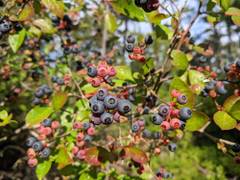
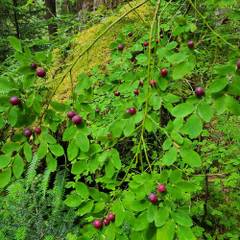
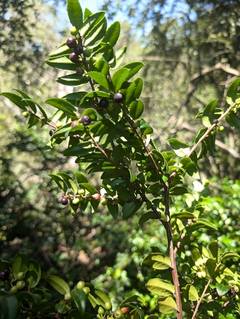
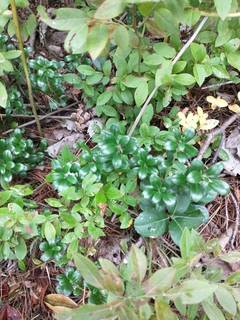
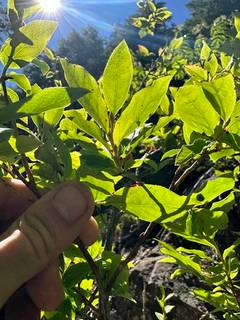
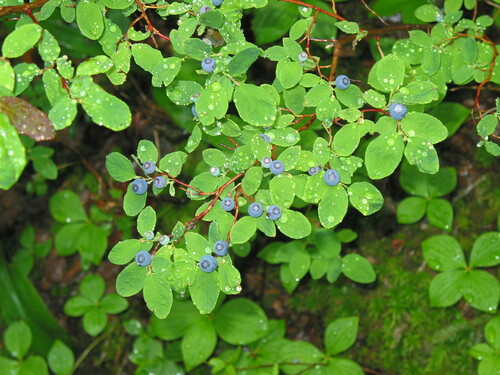
Vaccinium ovalifolium is a deciduous shrub reaching 1.5-6 feet (45-180 cm) tall and 3-5 feet (90-150 cm) wide at maturity, with slender, terete (round) green to reddish stems. Leaves are alternate, oval to broadly elliptic, 0.5-1.5 inches (1.3-3.8 cm) long with rounded tips and entire (untoothed) margins, separating it from the sharply pointed and toothed leaves of V. membranaceum. Foliage is medium green and turns red and bronze in October before drop. Urn-shaped pink to pale-pink flowers 0.25-0.35 inches (6-9 mm) long appear in pairs (rarely singly) from leaf axils in April through June, often before leaves fully expand. Fruit is a round berry 0.25-0.4 inches (6-10 mm) across with a waxy blue-purple bloom, ripening from green through red to deep blue-purple in July and August; berries are sweet at ripeness and used in jam, pie, and direct eating. Plants grow at 4-8 inches (10-20 cm) per year and reach mature size in 6-10 years; lifespan is 20-40 years on suitable sites. The shrub layer dominates large areas of the coastal Pacific Northwest temperate rainforest understory.
Native Range
Native to coastal western North America from southern Alaska south through coastal British Columbia, Washington, Oregon, and into northwestern California, with disjunct populations in northern Idaho and Montana. Found in coniferous forest understory, on bog margins, and along stream banks at sea level to 4,000 feet (1,200 m) elevation. Most abundant in coastal temperate rainforests where summer fog and high winter rainfall maintain consistent soil moisture.Suggested Uses
Used in native plant gardens, woodland edge plantings, and edible landscapes in zones 4-8 with consistent soil moisture and acid pH. Spaced 36-48 inches (90-120 cm) apart for individual specimens or 24-30 inches (60-75 cm) for thicket effect. Berries are eaten by birds, mammals, and humans; the species supports subsistence and ceremonial food gathering for several Pacific Northwest coastal tribes.How to Identify
Appearance
Size & Dimensions
Height1'6" - 6'
Width/Spread3' - 5'
Bloom Information
Pink to pale-pink urn-shaped flowers in pairs from leaf axils appear from mid-April through early June in zones 4-8, often before leaves fully expand. Bloom lasts 3-4 weeks at any single site; bumblebees and Andrena solitary bees are the primary pollinators. The earlier bloom timing compared to V. membranaceum reduces overlap and limits hybridization between the two species.
Detailed Descriptions
Flower Description
pink to pale-pinkFoliage Description
medium greenGrowing Conditions
Sun Requirements
Tolerates up to 6 hours of direct sunlight daily
• Full Sun: 6+ hours of direct sunlight
• Partial Shade: 3-6 hours of direct sunlight
• Full Shade: Less than 3 hours of direct sunlight
Care & Maintenance
Care Guide
Grows in part shade to full shade on cool, acid (pH 4.5-5.5), consistently moist, well-drained soils high in organic matter. Plants are intolerant of summer drought, alkaline soils, and full sun in zones 7+ unless soil moisture is reliable. Mycorrhizal associations are required for vigorous fruit set; container-grown plants need 2-3 years to establish these connections in new sites. Browse from deer and elk shapes wild plants in winter; the colony resprouts from the rhizome after browse damage. Wildlife (bears, grouse, songbirds) commonly removes 50-80% of berry crops in unfenced sites. Lifespan is 20-40 years on suitable sites.Pruning
No regular pruning is required; old stems decline naturally and are replaced by basal sprouts. Every 12-18 years, cutting all stems to within 4-6 inches (10-15 cm) of the ground in late winter rejuvenates declining clumps and increases berry production for the following 3-6 years. Removing dead or damaged stems at the base can be done any time without affecting next season's bloom.Pruning Schedule
Prune: February–March
winterearly spring