Vaccinium, Genus, elliottii, Species,
- Genus & species
mayberry
Overview
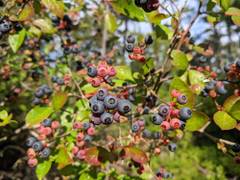
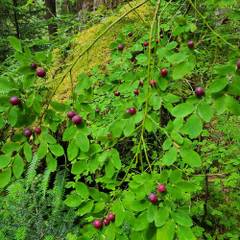
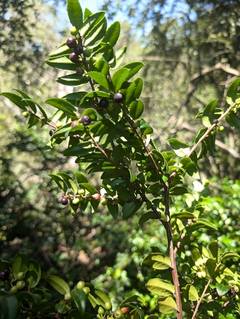
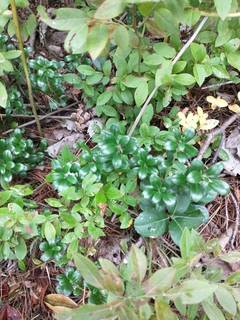
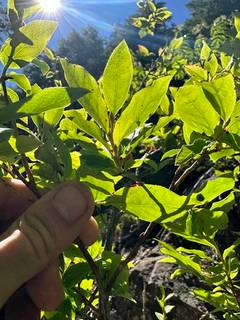
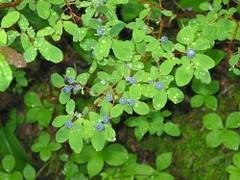
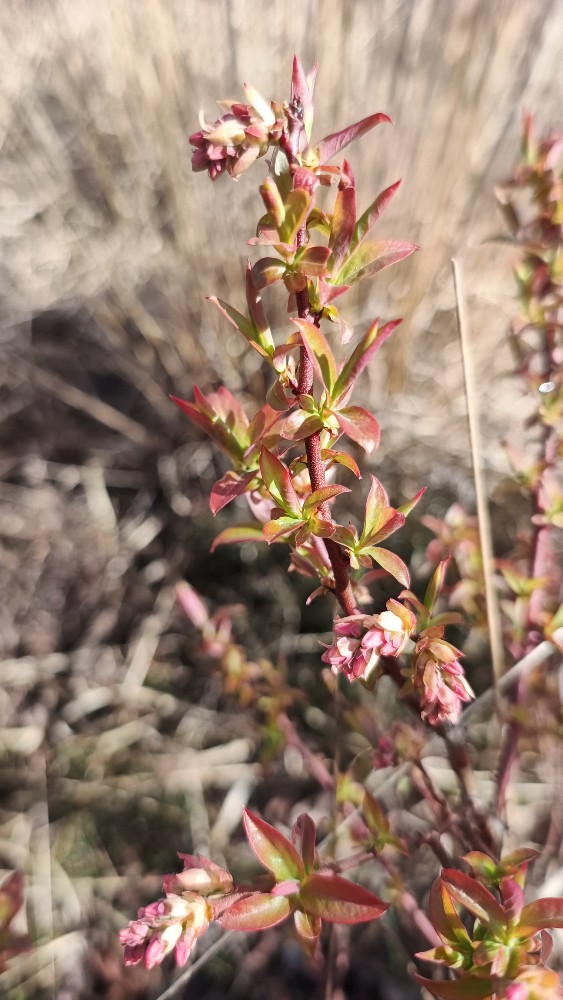
Vaccinium elliottii is a deciduous shrub of the southeastern United States, growing 6-12 feet (1.8-3.7 m) tall and 4-8 feet (1.2-2.4 m) wide with many slender, finely branched green to reddish twigs. The small oval leaves are 0.5-1 inch (1.5-2.5 cm) long, glossy green in summer and turning red to bronze in autumn. From February to March, before or as the leaves expand, it bears clusters of small white to pale pink urn-shaped flowers about 0.25 inch (6 mm) long. These ripen by May and June into black berries 0.25-0.4 inch (6-10 mm) wide that are edible and mildly sweet, though smaller and seedier than commercial blueberries. V. elliottii grows in moist to well-drained acidic soils in bottomland woods, swamp edges, and pine flatwoods across the Coastal Plain and Piedmont. It needs acidic ground and grows poorly where the soil pH rises above about 5.5, developing yellowed leaves from iron chlorosis. Bees pollinate the early flowers, and many birds and mammals eat the fruit. Plants are hardy in USDA zones 7-9, sucker lightly to form loose colonies, and need an extended winter chill to flower and fruit heavily.
Native Range
Vaccinium elliottii is native to the southeastern United States, from Virginia south to Florida and west to eastern Texas and Arkansas, mainly on the Coastal Plain and lower Piedmont. It grows in bottomland hardwood forests, along swamp and stream margins, and in moist pine flatwoods.Suggested Uses
Grown in native and wildlife gardens, edible landscapes, and naturalized woodland edges on acidic soil. It is spaced 4-6 feet (1.2-1.8 m) apart as an informal hedge or massed for fruit and fall color. The early flowers feed pollinators and the berries draw songbirds.How to Identify
Appearance
Size & Dimensions
Height6' - 12'
Width/Spread4' - 8'
Bloom Information
Flowering is among the earliest of the native blueberries, occurring from February to March before the leaves fully expand. The white to pale pink urn-shaped flowers are about 0.25 inch (6 mm) long and hang in small clusters along the twigs. Bees pollinate the flowers, and frost during bloom can reduce fruit set.
Detailed Descriptions
Flower Description
white to pale pinkFoliage Description
green, red to bronze in fallGrowing Conditions
Sun Requirements
Requires 4-8 hours of direct sunlight daily
• Full Sun: 6+ hours of direct sunlight
• Partial Shade: 3-6 hours of direct sunlight
• Full Shade: Less than 3 hours of direct sunlight
Care & Maintenance
Care Guide
Vaccinium elliottii grows in full sun to partial shade with 4-8 hours of light and needs moist, acidic, well-drained soil rich in organic matter at pH 4.5 to 5.5. Above pH 5.5 the leaves yellow from iron chlorosis and growth slows. It responds to steady moisture but tolerates brief flooding and short dry spells once established, and it is hardy in USDA zones 7-9. A mulch of pine bark or leaf litter keeps the root zone cool, moist, and acidic. Heavier fruiting follows full sun and a cold winter that supplies adequate chilling.Pruning
Pruning in late winter, after the worst cold but before bloom, removes the oldest canes and thins crowded stems to keep the shrub productive. Vaccinium elliottii fruits on year-old wood, so removing about a quarter of the oldest canes each year renews the plant without sacrificing the next crop. Suckers can be dug to limit spread.Pruning Schedule
Prune: February
winter