Vaccinium, Genus, myrtillus, Species,
- Genus & species
common bilberry
Overview
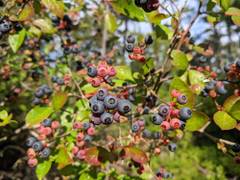
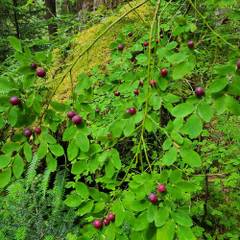
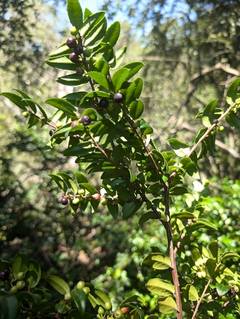
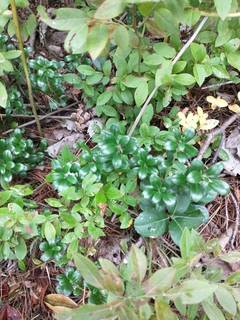
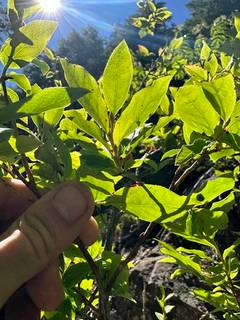
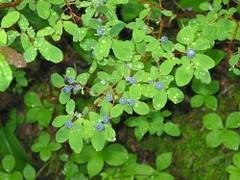
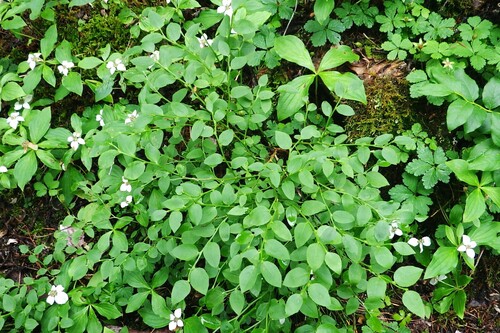
Vaccinium myrtillus is a deciduous dwarf shrub reaching 8-16 inches (20-40 cm) tall and spreading 12-24 inches (30-60 cm) wide by underground rhizomes. Green, sharply angled stems carry bright green, ovate leaves 0.4-1.2 inches (1-3 cm) long with finely toothed margins that turn red before dropping in autumn. Solitary, urn-shaped flowers 0.2-0.3 inch (4-6 mm) long appear in spring, greenish-pink and nodding from the leaf axils. The fruit is a round berry 0.2-0.4 inch (5-10 mm) across, blue-black with a waxy bloom and purple-staining flesh, ripening from mid- to late summer. The species forms low, dense colonies in acidic soils and dominates the ground layer in heathland, coniferous forest, and upland moor across its range. It requires consistently acidic, humus-rich soil and even moisture; on alkaline or dry sites it declines and sets little fruit. Growth is slow, with plants spreading laterally by rhizome rather than upward, building patches over several years. Foliage is browsed by deer and the berries are taken by birds and small mammals, so colonies in exposed sites can be grazed back.
Native Range
Native to Europe and northern Asia, from Ireland and Iceland east across Scandinavia and the Alps to Siberia and Mongolia. It also occurs in montane areas of the Caucasus and northern Iberia. It is not native to North America.Suggested Uses
Grown as a low groundcover in acidic woodland gardens and heath beds, spaced 12-18 inches (30-45 cm) apart. The summer berries are edible and harvested fresh or cooked. The flowers support pollinating insects and the fruit feeds birds in naturalistic plantings.How to Identify
Appearance
Size & Dimensions
Height8" - 1'4"
Width/Spread1' - 2'
Bloom Information
Flowers open from April to June, later at higher elevations and latitudes. Each flower lasts one to two weeks, with the population blooming over about six weeks. Berries ripen from July to September depending on site.
Detailed Descriptions
Foliage Description
Bright green, turning red in autumnGrowing Conditions
Sun Requirements
Requires 4-8 hours of direct sunlight daily
• Full Sun: 6+ hours of direct sunlight
• Partial Shade: 3-6 hours of direct sunlight
• Full Shade: Less than 3 hours of direct sunlight
Care & Maintenance
Care Guide
Grows in acidic soil with a pH of 4.5-5.5 and abundant organic matter. Full sun to part shade suits the species, though fruiting is heavier in more open positions. Soil must stay evenly moist yet freely draining, as waterlogged or chalky ground causes decline. A mulch of pine needles or composted bark maintains acidity and surface moisture. Plants are hardy to roughly -30F (-34C) and need no winter protection within zones 3-7. Established colonies tolerate brief dry spells but drop fruit under prolonged drought.Pruning
Pruning is generally not required for naturalized plantings. To rejuvenate aging, woody colonies, the oldest stems can be cut to ground level in late winter during dormancy. New growth from the rhizomes replaces removed stems within one to two seasons.Container Growing
Suitable for container growing
Minimum container size: 3 gallons