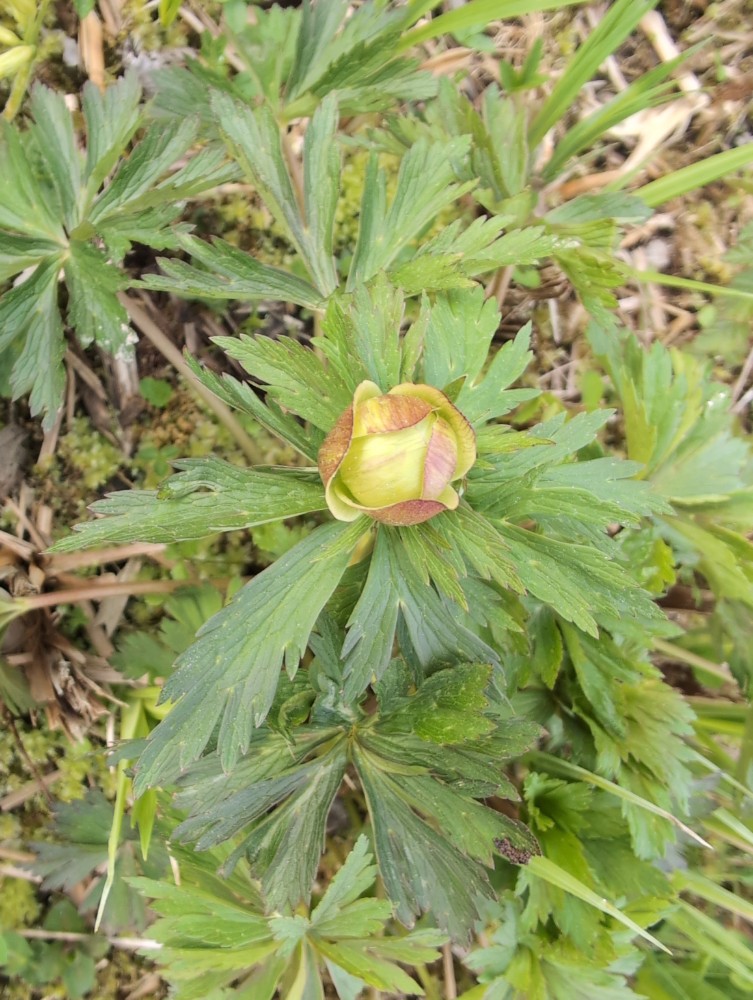
Trollius, Genus, spp., Multiple species,
- Genus
- Multiple species
globeflower
Northern Hemisphere temperate and subarctic zones
Overview
Trollius is a genus of about 30 herbaceous perennials in the buttercup family (Ranunculaceae), native to cool temperate and subarctic regions of the northern hemisphere. Plants form clumps 12-36 inches (30-90 cm) tall and 12-18 inches (30-45 cm) wide from a fibrous crown. The leaves are deeply palmately lobed and toothed, deep green, mostly in a basal mound with smaller leaves up the flowering stems. The flowers are rounded and globe- to bowl-shaped, 1-2.5 inches (2.5-6 cm) across, formed from incurved petal-like sepals in shades of lemon, golden yellow, and orange; in some species the sepals open more widely into a shallow cup. Bloom comes in spring to early summer, with scattered later flowers in cool, moist conditions. The genus needs consistently moist, even boggy soil and resents drought, which scorches the foliage and sends the plant into early dormancy. Foliage dies back in winter. All parts contain irritant compounds that are toxic if eaten and can irritate skin, in common with other buttercup relatives.
Native Range
Native across the cool temperate and subarctic northern hemisphere, including Europe, northern and central Asia, and North America. Species grow in wet meadows, marshes, streamsides, damp woodland, and mountain pastures on consistently moist soils.Suggested Uses
Grown in bog gardens, rain gardens, moist borders, and beside ponds and streams, spaced 15-18 inches (38-45 cm) apart. The early globe flowers suit damp, partly shaded schemes with Primula, Iris, and ferns. It grows in containers kept constantly moist or standing in shallow water.How to Identify
Appearance
Size & Dimensions
Height1' - 3'
Width/Spread1' - 1'6"
Bloom Information
Flowers open in mid- to late spring and early summer, roughly April to June, with the main flush lasting 3-5 weeks. Cutting back after the first bloom can draw a lighter second flush in cool, moist conditions. Bloom is earlier in warm gardens and later at high latitudes and elevations.
Detailed Descriptions
Flower Description
lemon, gold, or orangeFoliage Description
deep greenGrowing Conditions
Sun Requirements
Requires 4-8 hours of direct sunlight daily
• Full Sun: 6+ hours of direct sunlight
• Partial Shade: 3-6 hours of direct sunlight
• Full Shade: Less than 3 hours of direct sunlight
Care & Maintenance
Care Guide
Grows in full sun to part shade in consistently moist to boggy, fertile, humus-rich soil with a pH from 5.5 to 7.0. The genus does not tolerate drought, and dry soil scorches the leaves and forces early dormancy. Steady moisture, heavier soils, and pondside or streamside positions suit it. Light feeding and an organic mulch support growth in spring. Established clumps are long-lived and resent disturbance, so they are divided only when crowded, in early spring or after flowering. Few pests trouble the genus, though powdery mildew can mark the foliage in dry spells.Pruning
Spent flower stems are cut back after bloom to tidy the plant and sometimes draw a second flush. Old foliage is removed to ground level in late autumn or early spring. Division, when needed, is done in early spring or right after flowering, as the genus is slow to settle after disturbance.Pruning Schedule
Prune: March & November
fallearly spring
Container Growing
Suitable for container growing
Minimum container size: 2 gallons