Beesia, Genus, deltophylla, Species,
- Genus & species
beesia
Eastern Himalayas, southeastern Tibet, and Yunnan province (China); moist mountain forests at 6,000-10,000 feet (1,800-3,000 m) elevation
Overview
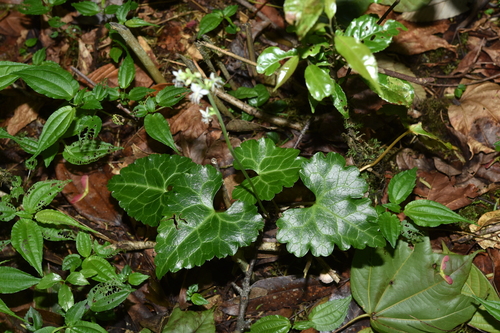
Beesia deltophylla is beesia (Chinese beesia), a low spreading evergreen perennial growing 8-15 inches (20-38 cm) tall and 12-20 inches (30-50 cm) wide. Dark green glossy heart-shaped to deltoid (triangular) leaves 2-4 inches (5-10 cm) with serrated margins and prominent veining. New growth emerges bronze-green. White small star-shaped flowers 0.3 inch (8 mm) in loose upright racemes 6-10 inches (15-25 cm) in May-June. Evergreen — retains glossy foliage year-round. In Ranunculaceae. Deltophylla = delta-shaped leaf. A genus of only 2 species from the eastern Himalayas and southwestern China at 6,000-10,000 feet (1,800-3,000 m) elevation. Primarily grown as an evergreen ground cover for deep shade — the glossy foliage is the feature, not the flowers. Spreads slowly by rhizomes. Not drought-tolerant — requires consistently moist shade. This moisture and deep-shade requirement is the primary limitation. Relatively uncommon in cultivation — available from specialty nurseries. Deer-resistant. Toxicity unknown (related to toxic genera in Ranunculaceae — treat as potentially toxic). Zones 5-9. Part shade to full shade. Growth rate is slow.
Native Range
Native to the eastern Himalayas, southeastern Tibet, and Yunnan province (China). Found in moist mountain forests at 6,000-10,000 feet (1,800-3,000 m) elevation.Suggested Uses
Grown as an evergreen ground cover in deep shade, woodland gardens, and in containers of at least 2 gallons (7.5 L), spaced 12-20 inches (30-50 cm). Glossy year-round foliage. Requires consistent moisture and shade. Specialty plant. Deer-resistant. Zones 5-9.How to Identify
Appearance
Size & Dimensions
Height8" - 1'3"
Width/Spread1' - 1'8"
Bloom Information
Late spring to early summer (May-June). White small star-shaped flowers 0.3 inch (8 mm) in loose upright racemes 6-10 inches (15-25 cm). 4 weeks. Bee-visited. The flowers are secondary to the evergreen foliage.
Detailed Descriptions
Flower Description
White, small, star-shaped, 0.3 inch (8 mm), in loose upright racemes 6-10 inches (15-25 cm) above the foliageFoliage Description
Dark green, glossy, heart-shaped to deltoid (triangular), 2-4 inches (5-10 cm), with serrated margins and prominent veining; new growth emerges bronze-green; evergreen — retains glossy foliage year-roundGrowing Conditions
Sun Requirements
Requires 1-4 hours of direct sunlight daily
• Full Sun: 6+ hours of direct sunlight
• Partial Shade: 3-6 hours of direct sunlight
• Full Shade: Less than 3 hours of direct sunlight
Care & Maintenance
Care Guide
Part shade to full shade (1-4 hours). Moist humus-rich soil pH 5.5-7.0. Not drought-tolerant. Evergreen — remove winter-damaged foliage in early spring (March). Spreads slowly by rhizomes. Specialty nursery plant. Deer-resistant. Toxicity unknown. Zones 5-9.Pruning
Remove winter-damaged or tattered foliage in early spring (March). No other pruning needed. The low spreading form expands slowly by rhizomes.Pruning Schedule
Prune: March
early spring
Container Growing
Suitable for container growing
Minimum container size: 2 gallons