Taxus, Genus, ×, Hybrid, media, Species, 'Hicksii', Cultivar,
- Genus & species
- Hybrid
- Cultivar
hicks yew
Hybrid of horticultural origin; {T. baccata} native to Europe/western Asia, {T. cuspidata} native to Japan/Korea/northeastern China
Overview
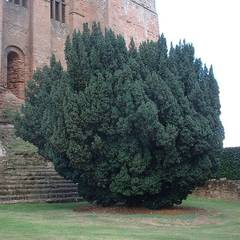
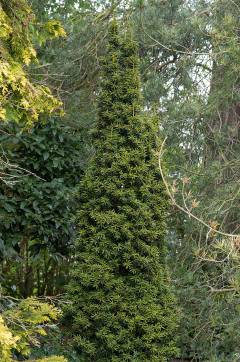
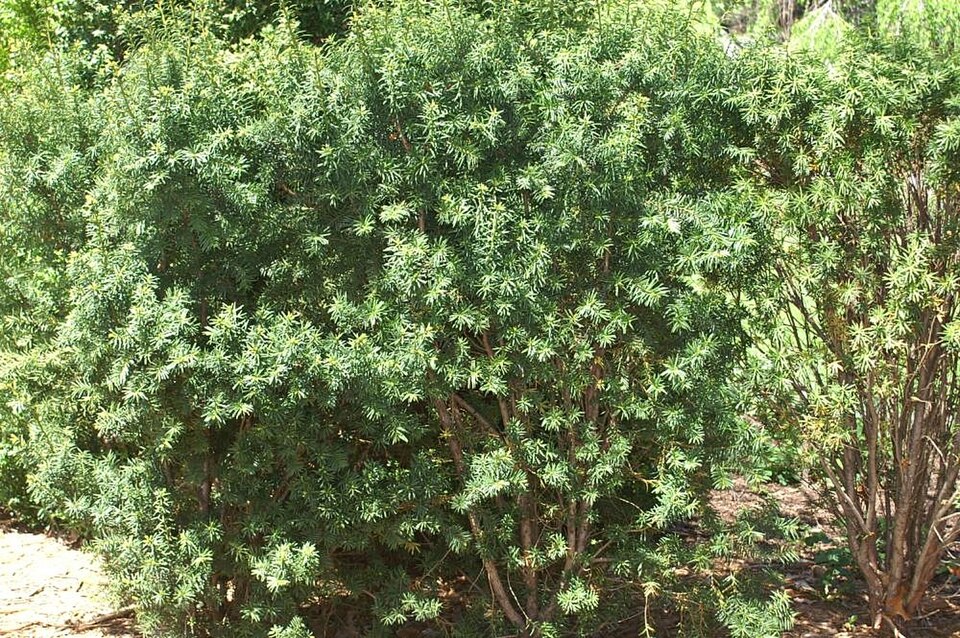
Taxus × media 'Hicksii' is Hicks yew (columnar Anglo-Japanese yew), an upright evergreen coniferous tree growing 10-20 feet (3-6 m) tall and 4-6 feet (1.2-1.8 m) wide. Dark green flat needles 0.8-1.2 inches (2-3 cm) in a narrow columnar form. In Taxaceae. A hybrid between T. baccata and T. cuspidata. 'Hicksii' is a female clone — prolific bright red arils (August-October) when a male pollinator is nearby. Named for Henry Hicks. The narrow columnar form is the primary landscape feature. EXTREMELY TOXIC — taxine alkaloids in all parts except aril pulp. Fatal to humans, horses, dogs, cattle. NOT deer-resistant. Tolerates extreme shade, wide pH range (5.5-7.5), and formal shearing. Root rot in waterlogged soil. The toxicity and deer browsing are the primary limitations. Zones 4-8. Part shade to full sun or full shade. Growth rate is slow to moderate.
Native Range
Hybrid of horticultural origin. T. baccata native to Europe and western Asia; T. cuspidata native to Japan, Korea, and northeastern China.Suggested Uses
Grown as a narrow columnar hedge, screen, foundation planting, and in containers of at least 20 gallons (76 L), spaced 4-6 feet (1.2-1.8 m). Tolerates shade and shearing. EXTREMELY TOXIC. Not deer-resistant. Zones 4-8.How to Identify
Appearance
Size & Dimensions
Height10' - 20'
Width/Spread4' - 6'
Reproduction
Dioecious. This cultivar is female. Bright red fleshy cup-shaped arils 0.3-0.5 inch (8-13 mm) surrounding a single hard toxic seed, ripening August-October. Prolific fruiting when a male pollinator is nearby. Bird-dispersed.
Detailed Descriptions
Foliage Description
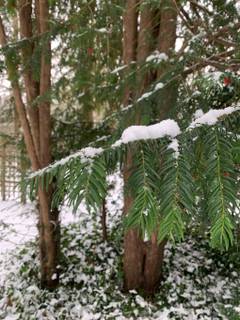
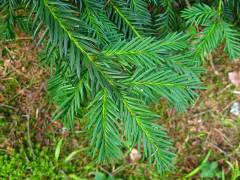
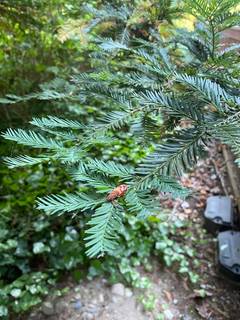
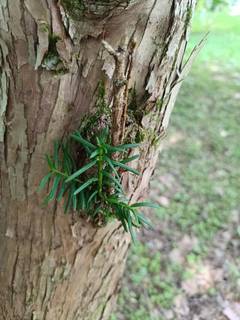
Dark green above with pale yellow-green stomatal bands below, flat needles 0.8-1.2 inches (2-3 cm), in spirals but appearing two-ranked on lateral branchesGrowing Conditions
Sun Requirements
Requires 2-12 hours of direct sunlight daily
• Full Sun: 6+ hours of direct sunlight
• Partial Shade: 3-6 hours of direct sunlight
• Full Shade: Less than 3 hours of direct sunlight
Care & Maintenance
Care Guide
Part shade to full sun or full shade (2-12 hours). Well-drained soil pH 5.5-7.5. Drought-tolerant once established. EXTREMELY TOXIC — all parts except aril pulp. NOT deer-resistant. Root rot in waterlogged soil. Tolerates formal shearing. Prune in late spring, summer, or early fall. Zones 4-8.Pruning
Prune in late spring to early fall (May-September). Tolerates formal shearing as a hedge or columnar screen. Yews regenerate from old wood — tolerates hard renovation pruning. Shear 2-3 times per growing season for formal shape.Pruning Schedule
Prune: May–June & August–September
late springsummerfall
Container Growing
Suitable for container growing
Minimum container size: 20 gallons