Taxus, Genus, baccata, Species, 'Repandens', Cultivar,
- Genus & species
- Cultivar
spreading English yew
Cultivar of horticultural origin; species native from western Europe to western Asia
Overview
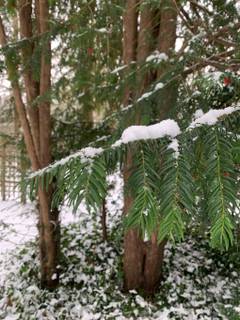
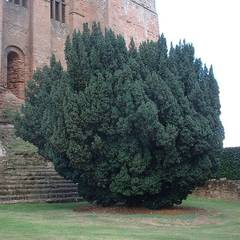
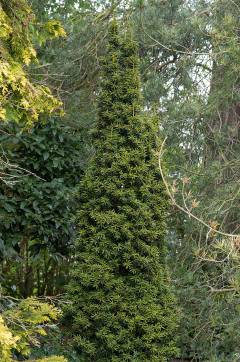
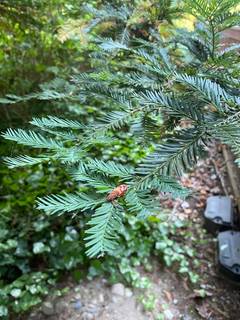
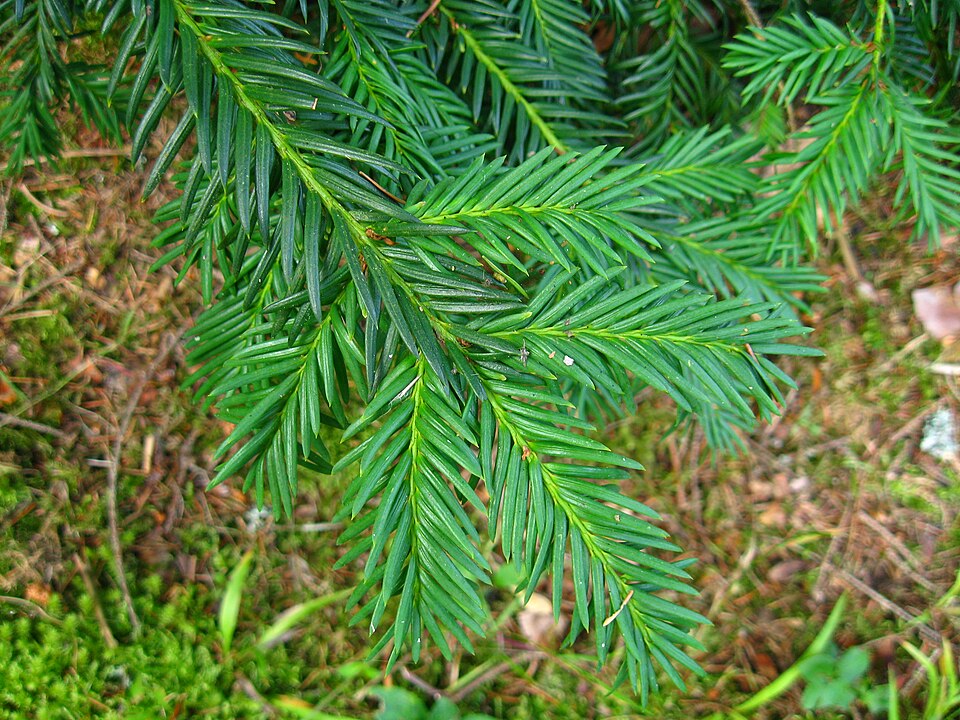
Taxus baccata 'Repandens' is a low-growing spreading cultivar of English yew with arching slightly pendulous branches. Plants reach 2-4 feet (0.6-1.2 m) tall and 10-15 feet (3-4.6 m) wide at maturity over many decades at a growth rate of 3-6 inches (7.5-15 cm) per year. The habit is broadly spreading to mounding, with stems arching outward and slightly downward at the tips. Needles are flat, 0.6-1 inch (15-25 mm), dark green above with pale yellowish-green stomatal bands below, arranged in two flat ranks along the stems — the same foliage arrangement as the species. Female plants produce red arils in autumn, though less prolifically than upright forms. All parts except the red aril flesh are highly toxic to humans, pets, and livestock; ingestion of foliage or seed has caused fatal poisoning in horses and cattle. Deer are not deterred by the toxicity and browse yew foliage readily, so unprotected plants in deer range can be heavily damaged within a single winter. Shade tolerance is higher than most cultivated groundcover shrubs — the plant grows well in deep shade under tree canopy where few other evergreens maintain foliage density.
Native Range
Cultivar of horticultural origin. Species T. baccata is native from western Europe east through the Mediterranean to western Asia.Suggested Uses
Grown as a groundcover, bank planting, or low-spreading shrub in shaded and partly shaded sites, spaced 8-10 feet (2.4-3 m) apart to allow mature spread. The combination of deep-shade tolerance, spreading habit, and wide soil adaptability suits difficult low-light positions where other evergreen groundcovers thin out. Red arils on female plants give autumn interest. Sites where livestock, horses, or unsupervised pets can reach the foliage are not suitable. Deer fencing is required in deer-browsed areas. Hardy in zones 6-9.How to Identify
Appearance
Size & Dimensions
Height2' - 4'
Width/Spread10' - 15'
Colors
Bloom Information
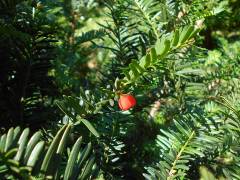
Female plants produce seeds enclosed in bright red fleshy arils 0.3-0.4 inch (8-10 mm), ripening in August-October and distributed along the arching branches. The red aril flesh is edible; all other parts including the seed inside the aril are highly toxic.
Detailed Descriptions
Flower Description
bright red fleshy arils on female plants; all other parts including the seed inside the aril are highly toxicFoliage Description
dark green above, yellowish-green stomatal bands below; needles flat, 0.6-1 inch (15-25 mm), arranged in two flat ranks along arching stemsGrowing Conditions
Sun Requirements
Requires 2-12 hours of direct sunlight daily
• Full Sun: 6+ hours of direct sunlight
• Partial Shade: 3-6 hours of direct sunlight
• Full Shade: Less than 3 hours of direct sunlight
Care & Maintenance
Care Guide
Site in dappled to deep shade or morning sun (2-12 hours direct sun) in well-drained soil with a pH of 5.5-7.5; a wide range of soils is tolerated including clay, chalk, and slightly alkaline substrates. Waterlogged sites are not suitable — good drainage is required. Water weekly during the first two growing seasons; established plants tolerate moderate drought. The spreading habit fills space slowly, so 10-15 feet (3-4.6 m) of horizontal clearance is set at planting. All parts except the red aril flesh are highly toxic to humans, pets, and livestock; sites where livestock or unsupervised pets can reach the foliage are not suitable. Deer are not deterred by the toxicity and browse the foliage readily. Hardy in zones 6-9.Pruning
No pruning is required to maintain the spreading form. Wayward stems extending beyond desired boundaries can be cut back in late spring (May-June). The plant regenerates vigorously from old wood if a size reduction is needed — a feature not shared by most conifers. Shearing produces an artificial appearance that conflicts with the natural arching habit. Dead wood can be removed at any time.Pruning Schedule
Prune: May–June
late springsummer
Container Growing
Suitable for container growing
Minimum container size: 20 gallons