Taxus, Genus, baccata, Species, 'Fastigiata', Cultivar,
- Genus & species
- Cultivar
Irish yew
Cultivar discovered in Ireland c.1780; species native from western Europe to western Asia
Overview
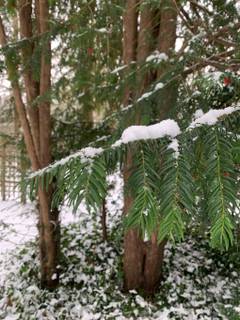
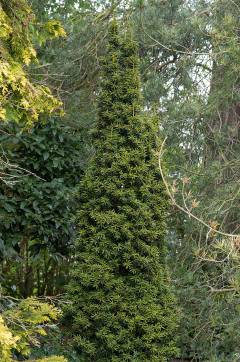
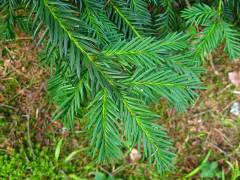
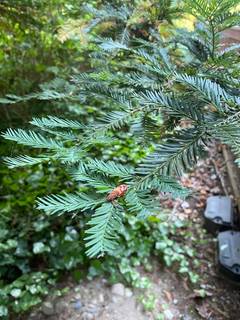
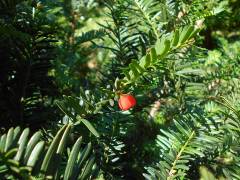
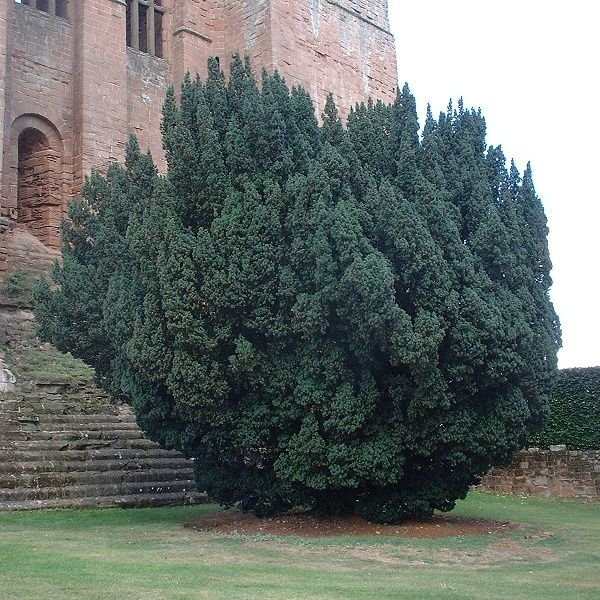
Taxus baccata 'Fastigiata' is a narrowly columnar cultivar of English yew selected from a plant discovered in County Fermanagh, Ireland, around 1780. All plants in cultivation are propagated vegetatively from the original clone or from sister clones of the original discovery. Trees reach 15-20 feet (4.6-6 m) tall and 4-6 feet (1.2-1.8 m) wide at maturity over many decades at a growth rate of 4-6 inches (10-15 cm) per year. The crown is tightly columnar with multiple upright stems arising from the base, all strongly vertical. Needles are arranged spirally around the stems, radiating in all directions rather than lying in flat two-ranked sprays as in the species; the spiral arrangement is the primary identification difference from the species. Needles are dark green above with pale yellowish-green stomatal bands below, 0.5-1 inch (12-25 mm). The original clone and most propagated material is female, so trees produce bright red fleshy arils in autumn. All parts except the red aril flesh are highly toxic to humans, pets, and livestock. With age the crown may splay open at the top under heavy snow or wind load, so multiple stems can be bound together with cable or rubber straps in late autumn to maintain the columnar silhouette through winter.
Native Range
Cultivar discovered in County Fermanagh, Ireland, around 1780; propagated vegetatively since. Species T. baccata is native from western Europe east through the Mediterranean to western Asia.Suggested Uses
Grown as a vertical accent in formal gardens, churchyards, and institutional settings, spaced 5-6 feet (1.5-1.8 m) from adjacent plants. The narrow 4-6 foot (1.2-1.8 m) mature spread fits confined sites between structures where wider forms would not. The bright red arils on female plants give autumn and winter interest. Sites where livestock, horses, or unsupervised pets can reach the foliage are not suitable — all parts except the red aril flesh are toxic. Hardy in zones 6-9.How to Identify
Appearance
Size & Dimensions
Height15' - 20'
Width/Spread4' - 6'
Colors
Bloom Information
The original 'Fastigiata' clone is female. Female plants produce seeds enclosed in bright red fleshy arils 0.3-0.4 inch (8-10 mm), ripening in August-October. The red aril flesh is edible; all other parts including the seed inside the aril are highly toxic.
Detailed Descriptions
Flower Description
bright red fleshy arils on female plantsFoliage Description
dark green above with yellowish-green stomatal bands below; needles 0.5-1 inch (12-25 mm), arranged spirally around the stems (radiating in all directions rather than lying in flat two-ranked sprays as in the species)Growing Conditions
Sun Requirements
Requires 2-12 hours of direct sunlight daily
• Full Sun: 6+ hours of direct sunlight
• Partial Shade: 3-6 hours of direct sunlight
• Full Shade: Less than 3 hours of direct sunlight
Care & Maintenance
Care Guide
Site in full sun to deep shade (2-12 hours direct sun) in well-drained soil with a pH of 5.5-7.5; a wide range of soil types is tolerated, including clay, chalk, and slightly alkaline substrates. Waterlogged sites are not suitable — good drainage is required. Water weekly during the first two growing seasons; established plants tolerate moderate drought. The columnar form is held by natural fastigiate growth, but multiple stems may splay open under heavy snow or wind, so cable or rubber straps can be wrapped around the crown in late autumn as a preventive measure. All parts except the red aril flesh are highly toxic to humans, pets, and livestock; sites where livestock or unsupervised pets can reach the foliage are not suitable. Hardy in zones 6-9.Pruning
No pruning is required to maintain the columnar form. Light trimming of wayward shoots in late spring (May-June) keeps the silhouette tidy. Heavy pruning is rarely needed, but the plant regenerates from old wood if required. Strapping multiple stems together in autumn prevents snow-damage splaying. Dead wood can be removed at any time.Pruning Schedule
Prune: May–June
late springsummer
Container Growing
Suitable for container growing
Minimum container size: 20 gallons