Image 1 of 9
1 / 9
Plant Reference
Taxus, Genus, brevifolia, Species,
- Genus & species
Pacific yew
Alaska south through British Columbia, Washington, Oregon, California, and the northern Rocky Mountains; moist forest understories
Overview
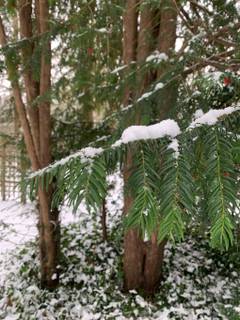
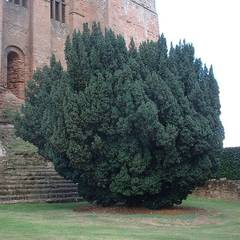
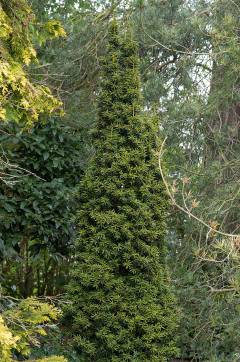
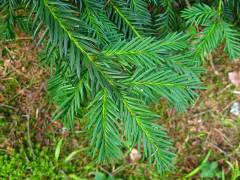
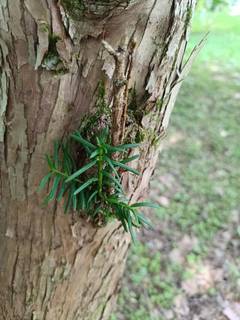
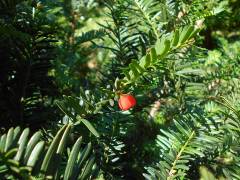
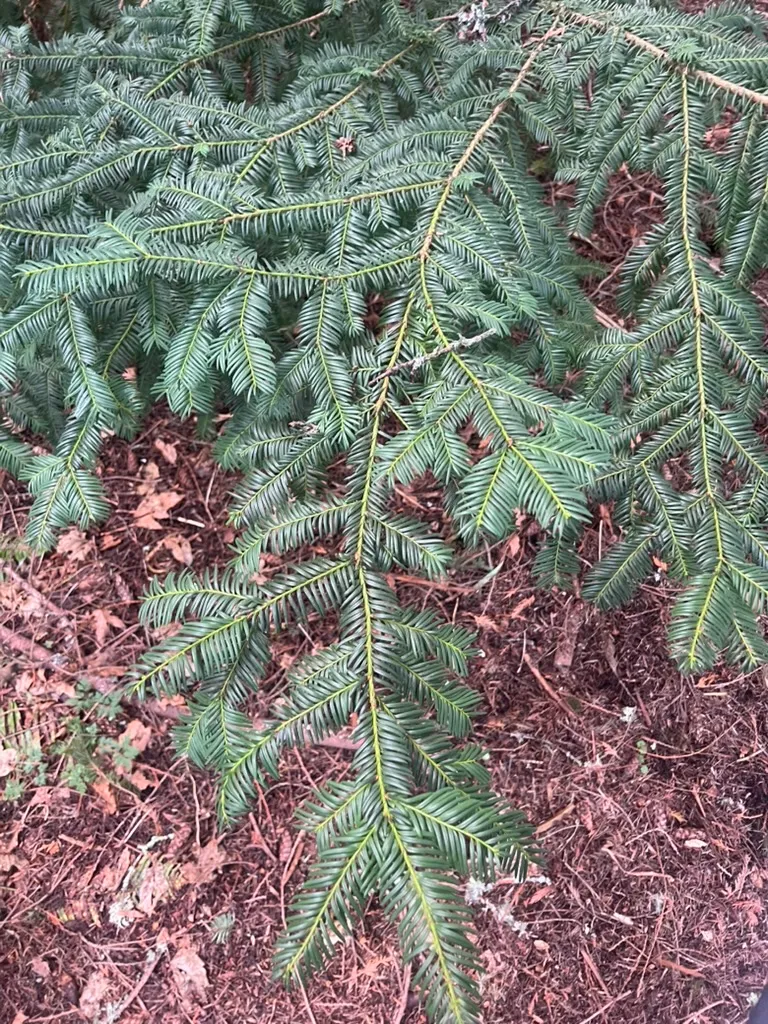
Taxus brevifolia is an upright coniferous evergreen tree growing 15-50 feet (4.6-15 m) tall and 10-25 feet (3-7.6 m) wide. Dark green flat needles, 0.5-0.9 inch (1.3-2.3 cm), are arranged in two horizontal ranks along the twigs. The specific epithet brevifolia means short-leaved, reflecting shorter needles than T. baccata. Shade tolerance exceeds that of other native Pacific Northwest conifers — the species grows as a forest understory tree beneath dense canopy where other conifers fail to establish. Paclitaxel (Taxol), a cancer chemotherapy drug, was first isolated from the bark in 1971, and the resulting demand led to significant overharvesting of wild populations in the 1980s before the compound was synthesized from more sustainable sources. Papery reddish-purple exfoliating bark peels to reveal reddish-orange inner bark — a feature not found in other native Pacific Northwest conifers. Plants are dioecious; female plants produce bright red fleshy arils 0.3-0.5 inch (8-13 mm) in August-October, dispersed by thrushes and waxwings. All parts except the red aril flesh contain taxine alkaloids and are extremely toxic to humans, horses, dogs, and cattle — fatal ingestions are documented in livestock. Deer are not deterred by the toxicity and will browse foliage. Growth rate is extremely slow. The species is rarely available in the nursery trade and is primarily encountered as a wild forest species rather than a cultivated ornamental.
Native Range
Native from Alaska south through British Columbia, Washington, Oregon, California, and the northern Rocky Mountains. Found in moist forest understories.Suggested Uses
Grown as a native understory tree in shaded woodland gardens where the slow growth and shade tolerance are assets, spaced 10-25 feet (3-7.6 m) apart. Shade tolerance exceeds that of other native Pacific Northwest conifers, which makes this species suitable for positions beneath dense canopy. All parts except the aril pulp are extremely toxic — sites where livestock or unsupervised pets can reach the foliage are not suitable. Not deer-resistant. Rarely available in commerce. Mature size exceeds typical container dimensions. Hardy in zones 5-9.How to Identify
Appearance
Size & Dimensions
Height15' - 50'
Width/Spread10' - 25'
Reproduction
Dioecious. Male plants produce small yellow globular pollen structures at leaf axils in February-April. Female plants produce a single ovule that develops into a seed surrounded by a bright red cup-shaped fleshy aril 0.3-0.5 inch (8-13 mm), ripening August-October. Bird-dispersed by thrushes and waxwings.
Detailed Descriptions
Foliage Description
dark green above, yellow-green beneath; flat needles 0.5-0.9 inch (1.3-2.3 cm), arranged in two horizontal ranks (two-ranked); the specific epithet brevifolia means short-leaved, reflecting shorter needles than T. baccataGrowing Conditions
Sun Requirements
Requires 1-6 hours of direct sunlight daily
• Full Sun: 6+ hours of direct sunlight
• Partial Shade: 3-6 hours of direct sunlight
• Full Shade: Less than 3 hours of direct sunlight
Care & Maintenance
Care Guide
Site in full shade to partial shade (1-6 hours direct sun) in well-drained soil with a pH of 5.0-7.0. Drought-tolerant once established. Shade tolerance exceeds that of other native Pacific Northwest conifers, and the species will establish beneath dense forest canopy where other conifers fail. All parts except the aril pulp contain taxine alkaloids and are extremely toxic to humans, horses, dogs, and cattle; sites where livestock or unsupervised pets can reach the foliage are not suitable. Deer are not deterred by the toxicity. Growth rate is extremely slow, and the species is rarely available commercially. Hardy in zones 5-9.Pruning
Prune in early spring (March-April) if shaping is required. The species tolerates pruning but grows so slowly that recovery from significant cuts is measured in years. Removal of dead or damaged branches is usually the only pruning undertaken on landscape specimens.Pruning Schedule
Prune: March–April
early spring