Taxus, Genus, baccata, Species,
- Genus & species
English yew
Native to western Europe from Britain and Ireland east through France, Germany, Italy, and the Balkans to western Asia and northwest Africa, at elevations from near sea level to 5,900 feet (1,800 m)
Overview
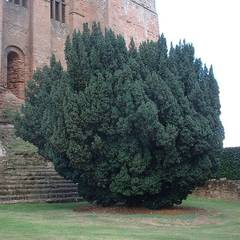
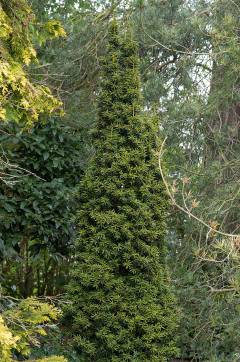
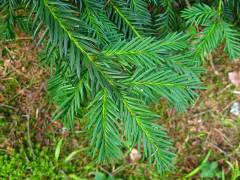
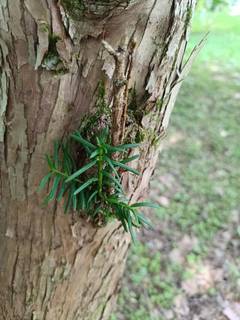
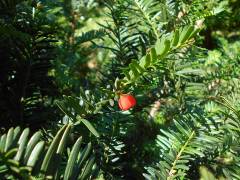
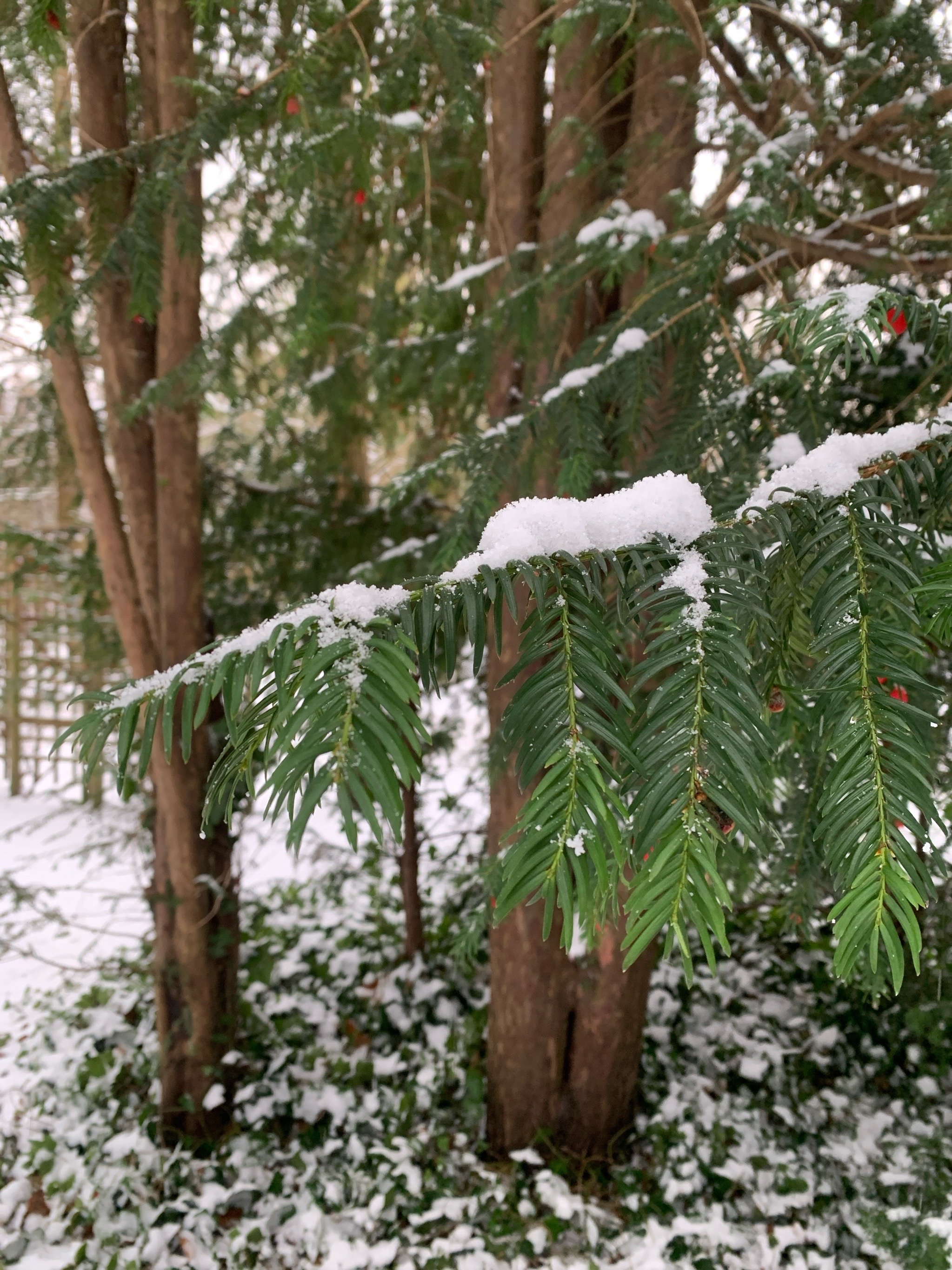
Taxus baccata is English yew (common yew), a slow-growing long-lived evergreen coniferous tree in the yew family Taxaceae growing 20-40 feet (6-12 m) tall and 15-25 feet (4.6-7.6 m) wide in cultivation across many decades to reach mature stature, with documented individuals in European churchyards living 1,000-2,000 years or more (the Fortingall Yew in Perthshire, Scotland, is estimated at 2,000-9,000 years old and ranks with the oldest living trees in Europe). Growth rate is 6-12 inches (15-30 cm) per year. The specific epithet baccata is from Latin bacca (berry) and refers to the bright red fleshy aril that encloses each seed on female plants — the aril is botanically a modified seed-bearing structure rather than a true fruit, but visually resembles a berry. The crown is broadly irregular to widely spreading, becoming massive with age as the lower lateral branches root where they touch the soil and the resulting layered regrowth produces a multi-trunked architectural silhouette over centuries. Bark is reddish-brown, thin, and scaly, flaking in irregular plates to reveal pinkish inner bark. Needles are flat, linear, 0.5-1.2 inches (12-30 mm) long, dark green above with two pale yellowish-green stomatal bands below, arranged in two flat ranks along the lateral stems and spiraling around the erect leader shoots. Plants are dioecious; female plants produce single seeds each enclosed in a bright red fleshy cup-shaped aril 0.3-0.4 inch (8-10 mm) long that ripens in August through October and supplies food to European blackbirds, song thrushes, mistle thrushes, and other berry-eating birds that serve as the seed dispersers. Limitation: all parts of the plant EXCEPT the red aril flesh are highly toxic to humans, pets, livestock, and horses — including the seeds within the arils, the foliage, the bark, the wood, and the pollen, with toxicity due to taxine alkaloids (particularly taxine A and taxine B) that are potent cardiotoxic compounds causing rapid cardiac arrest at low ingested doses. Documented fatalities in livestock that browse yew prunings or hedge trimmings are common across the European native range, and the species ranks among the more dangerous plants in European flora. Cultivation in gardens where livestock, horses, or unsupervised children and pets may access foliage is unsuitable. Phytophthora root rot associated with waterlogged soil is the dominant disease pressure in cultivation. The species tolerates shade more deeply than most other conifers in cultivation and accepts soil conditions (including clay, chalk, and slightly alkaline substrates to pH 7.5) that exclude most competing conifers — the shade tolerance and the soil adaptability combine with the species' capacity to regenerate from heavy pruning (a regeneration capacity not shared by most coniferous species) to support the species' long-established use as formal hedge, topiary, and churchyard planting across European horticultural history.
Native Range
Native to western Europe from Britain and Ireland east through France, Germany, Italy, and the Balkans to western Asia and northwest Africa, at elevations from near sea level to 5,900 feet (1,800 m). Long-established churchyard specimens across Britain and France are documented as 1,000-2,000 years old, and the Fortingall Yew in Perthshire, Scotland is estimated at 2,000-9,000 years of age — ranking with the oldest living trees in Europe. The species is not native to North America. The specific epithet baccata is from Latin bacca (berry) and records the bright red fleshy aril on female plants.Suggested Uses
Used as a formal hedge or topiary subject in clipped geometric or sculptural forms at 24-36 inch (60-90 cm) spacing between plants, as a specimen tree on open garden sites with adequate lateral space for the 15-25 foot mature width at 10-15 foot (3-4.6 m) spacing, as a churchyard or historic-garden feature tree reflecting the species' centuries-long cultivation history in European ecclesiastical and manor-house plantings, as a deep-shade-tolerant screen planting under canopy trees where most other conifers decline, and as a container specimen in containers of at least 20 gallons (76 L) at the smaller clipped scale in USDA zones 6 through 9. The response to shearing and heavy pruning (a regeneration capacity not shared by most coniferous species), the tolerance of deep shade through full sun, the adaptability across soil types including alkaline clay and chalk substrates, the slow growth that preserves a clipped silhouette for decades between major renovations, and the documented multi-century lifespans support the species' long-established role as the foundation hedge and topiary conifer of formal European garden design. Sites accessible to livestock, horses, or unsupervised pets and children are unsuitable because of the severe taxine alkaloid toxicity of all plant parts except the red aril flesh. Deer-pressured sites face browse losses of the foliage. Waterlogged soils are unsuitable because of the Phytophthora root rot pressure.How to Identify
Appearance
Size & Dimensions
Height20' - 40'
Width/Spread15' - 25'
Colors
Bloom Information
Not applicable — the species is a dioecious conifer with separate male and female plants. Male plants bear small globose yellow pollen cones in clusters on the undersides of the lateral shoots in February through March across a 2-3 week wind-pollinated release period. Female plants produce single seeds each enclosed in a bright red fleshy cup-shaped aril 0.3-0.4 inch (8-10 mm) long that ripens in August through October and persists on the branches into winter. The red aril flesh is the only non-toxic tissue of the plant; all other parts including the seed inside the aril are highly toxic due to taxine alkaloids. European blackbirds, song thrushes, mistle thrushes, and other berry-eating birds pass the intact toxic seeds through the digestive tract without releasing the taxine alkaloids and serve as the seed dispersers across the native range.
Detailed Descriptions
Foliage Description
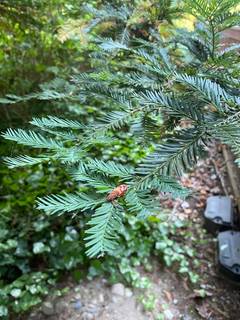
dark green above and yellowish-green below (with two pale yellowish-green stomatal bands on the underside of each needle), with flat linear needles 0.5-1.2 inches (12-30 mm) long arranged in two flat ranks along the lateral stems and spiraling around the erect leader shoots; the 2-ranked flat needle arrangement on lateral shoots paired with the spiraling arrangement on leaders is a species-level diagnostic character of the genus Taxus; evergreen year-round with individual needles retained 4-8 years before sheddingGrowing Conditions
Sun Requirements
Requires 2-12 hours of direct sunlight daily
• Full Sun: 6+ hours of direct sunlight
• Partial Shade: 3-6 hours of direct sunlight
• Full Shade: Less than 3 hours of direct sunlight
Care & Maintenance
Care Guide
Site in full shade through full sun with 2-12 hours of direct sun per day — the species tolerates deeper shade than most coniferous species in cultivation, and accepts almost any light regime from deep woodland understory through full exposed sun. Site in well-drained loam, clay, or chalk soil with a pH of 5.5-7.5 (including the slightly alkaline substrates that exclude most competing conifers). Water weekly during the first two growing seasons to establish the root system; established plants tolerate moderate drought. Phytophthora root rot is the dominant disease pressure and is associated with waterlogged soil — drainage is the primary cultural defense and sites with seasonal standing water are unsuitable. The species responds to shearing and heavy pruning more vigorously than most coniferous species — the regeneration capacity from old leafless wood (a capacity not matched by the pine, spruce, fir, or juniper genera in cultivation) supports the use of the species in formal hedges, topiary, and heavy-reduction renovation pruning on overgrown specimens. All parts EXCEPT the red aril flesh are highly toxic to humans, pets, livestock, and horses due to taxine alkaloids that cause rapid cardiac arrest at low doses — cultivation in gardens where livestock, horses, or unsupervised children and pets may access the foliage is unsuitable, and hedge trimmings are disposed of off-site rather than being left where grazing animals can reach them. Not deer-resistant — browsing deer consume yew foliage in winter when other forage is scarce, and deer that consume large amounts of yew foliage are occasionally killed by the taxine alkaloids. Hardy in USDA zones 6-9.Pruning
The species tolerates shearing and heavy pruning more vigorously than almost any other conifer in cultivation, and this regeneration capacity from old leafless wood is a species-level character not matched by the pine, spruce, fir, or juniper genera. Formal hedges and topiary are sheared in late spring (May through June) and again in late summer (August through September) as shape maintenance. Specimens that have outgrown their allotted space can be reduced to near-bare wood and will regenerate from dormant buds on the older trunks over 2-3 growing seasons — this heavy renovation pruning is used on overgrown historic hedges and neglected garden specimens to restore a compact silhouette. The natural broadly irregular spreading form requires no pruning on open sites where space permits. Dead wood is removed at any time. All pruned material is disposed of off-site rather than being left where grazing animals or curious children can reach it, because the cut foliage retains the taxine alkaloid toxicity and ingested trimmings have caused fatal poisonings in horses and cattle.Pruning Schedule
Prune: May–June & August–September
late springsummerfall
Container Growing
Suitable for container growing
Minimum container size: 20 gallons