Berberis, Genus, thunbergii, Species, 'Maria', Cultivar,
- Genus & species
- Cultivar
Sunjoy golden pillar barberry
Overview
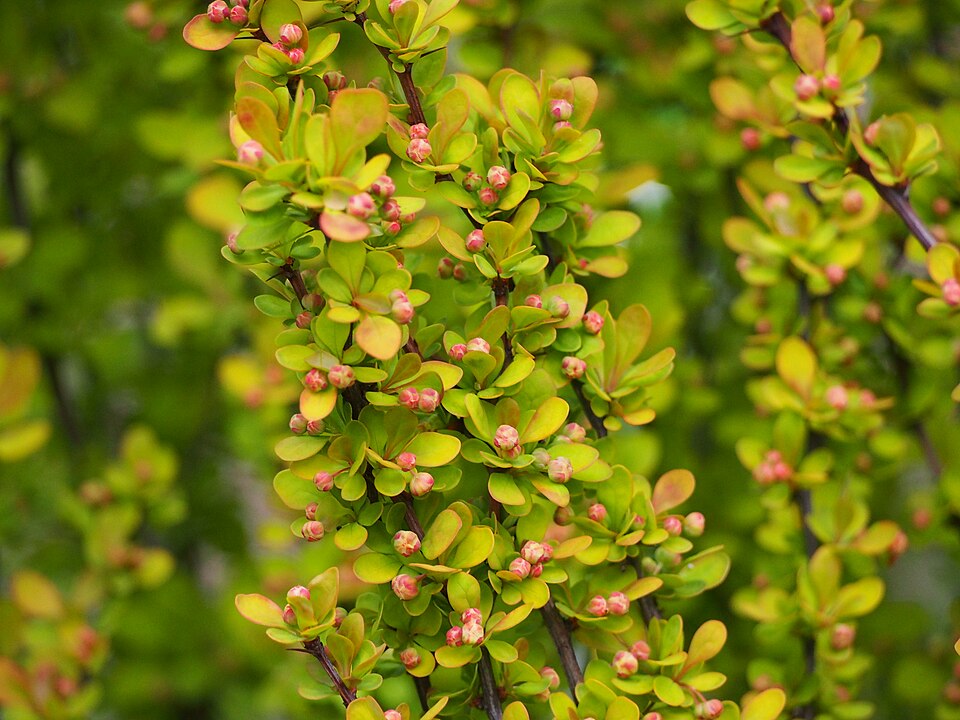
'Maria' is an upright, columnar deciduous shrub of Berberis thunbergii reaching 4-5 feet (1.2-1.5 m) tall and 1.5-2.5 feet (45-75 cm) wide at maturity, producing a narrow vertical silhouette. Foliage emerges bright yellow in spring, becoming golden-yellow through summer; mature leaves remain yellow in full sun and shift toward chartreuse-green in part shade. Leaves are obovate, 0.5-1 inch (1.3-2.5 cm) long, with smooth margins, arranged in clusters at short spurs along the stems. Stems bear single sharp spines 0.2-0.4 inch (5-10 mm) long at each leaf node. Fall foliage shifts to red and orange in zones 5-7 and is less pronounced in warmer zones. Small pale yellow flowers tinged with red appear in mid-spring; flowers are 0.25 inch (6 mm) across and partially hidden by emerging foliage. Bright red oblong berries 0.3-0.4 inch (8-10 mm) develop in late summer and persist into winter on the bare stems. The species B. thunbergii is regulated as invasive in New York, Pennsylvania, Massachusetts, and several other northeastern states; cultivars including 'Maria' produce fertile seed.
Native Range
The species Berberis thunbergii is native to Japan, occurring in mountain forests and along forest edges at 300-6,500 feet (90-2,000 m) elevation. 'Maria', marketed under the Sunjoy Golden Pillar trade name, is a cultivated selection introduced through the Proven Winners ColorChoice program and does not occur in the wild.Suggested Uses
Used as a vertical accent, in narrow foundation plantings, and as a low hedge or hedge punctuation, spaced 2-3 feet (60-90 cm) apart for a continuous mass. Cultivation is restricted in several US states where B. thunbergii is regulated as invasive. Container culture in pots of at least 7 gallons (26 L) is feasible in zones 4-8 with adequate drainage and full-sun exposure for foliage color.How to Identify
Appearance
Size & Dimensions
Height4' - 5'
Width/Spread1'6" - 2'6"
Bloom Information
Pale yellow flowers tinged with red open from mid-April through May in zones 5-7, with peak bloom lasting 2-3 weeks. In zone 8, bloom may begin in late March and finish by late April. Individual flowers are partially hidden by emerging foliage and last 7-10 days. Bright red berries develop in late summer and persist into winter on the bare stems after leaf drop.
Detailed Descriptions
Flower Description
Pale yellow tinged with redFoliage Description
Bright golden-yellow in summer, red and orange in fallGrowing Conditions
Sun Requirements
Requires 6-12 hours of direct sunlight daily
• Full Sun: 6+ hours of direct sunlight
• Partial Shade: 3-6 hours of direct sunlight
• Full Shade: Less than 3 hours of direct sunlight
Care & Maintenance
Care Guide
Water weekly during the first growing season; established plants tolerate 4-6 weeks of drought. Foliage color is most intense in full sun with at least 6 hours of direct light; in shade the leaves shift toward chartreuse-green. Few significant pests or diseases occur in cultivation; Verticillium wilt has been reported on stressed plants in heavy soils. Fertile seed germinates in surrounding landscapes, and managed sites require seedling removal to limit spread. Plants typically live 25-40 years, retaining the columnar form with annual or biennial light pruning.Pruning
Light shearing in late winter or very early spring before bud break maintains the narrow columnar habit. Stem thorns 0.2-0.4 inch (5-10 mm) long are present at each leaf node and can puncture skin during pruning. Renewal pruning every 5-7 years removes one-third of the oldest stems at ground level. Removing flower clusters at petal fall reduces seed production and unwanted seedling establishment in surrounding landscapes.Pruning Schedule
Prune: February–March
winterearly spring
Container Growing
Suitable for container growing
Minimum container size: 7 gallons
Toxicity
Non-toxicRelated Berberis species
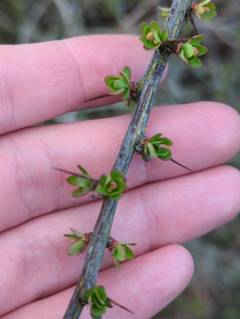 Japanese barberryBerberis thunbergii
 Golden Japanese barberryBerberis thunbergii 'Aurea'
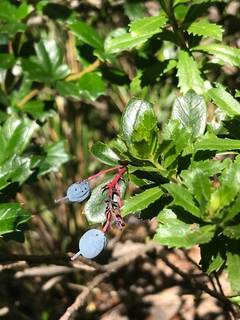 Darwin's barberryBerberis darwinii
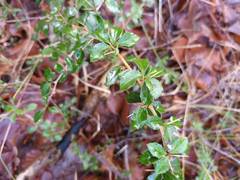 Warty barberryBerberis verruculosa
- Purpleleaf or redleaf Japanese barberryBerberis thunbergii f. atropurpurea
- Helmond Pillar Japanese barberryBerberis thunbergii f. atropurpurea 'Helmond Pillar'