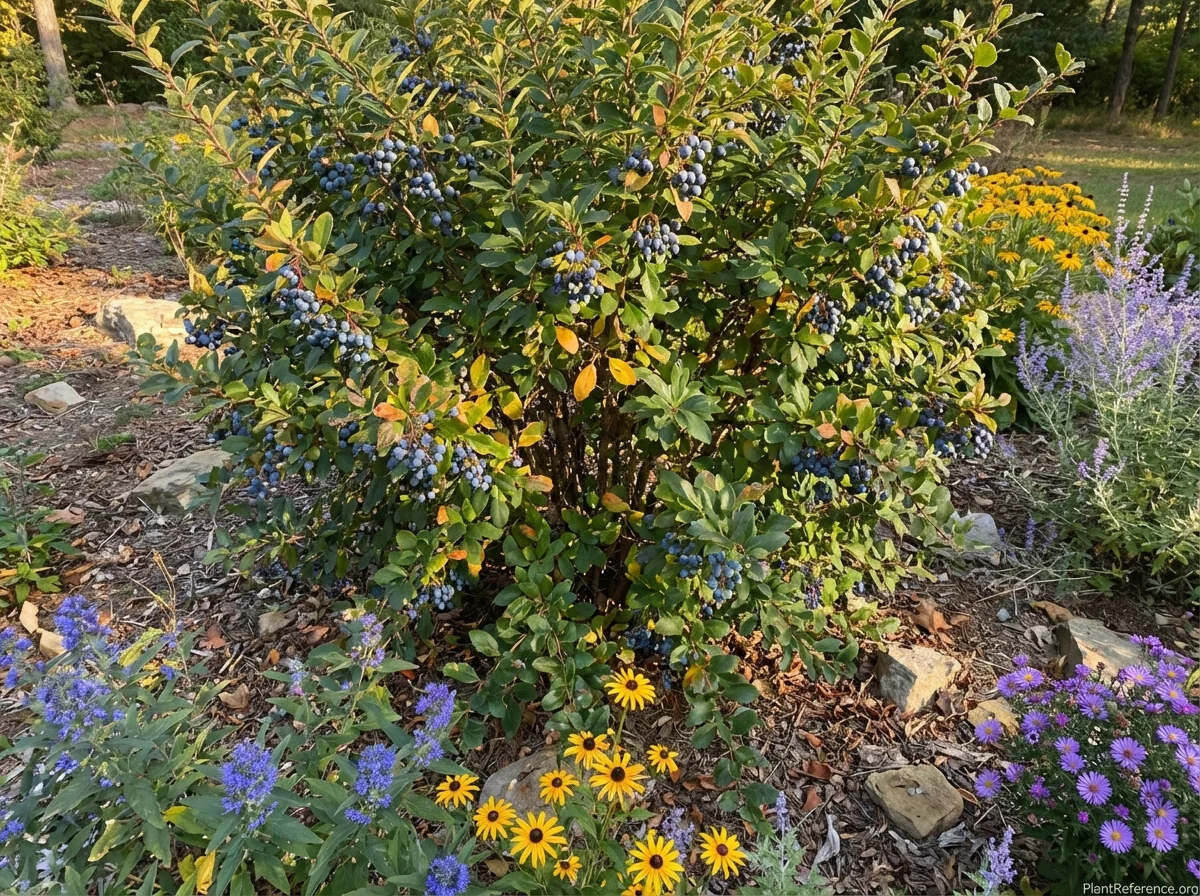
Image 1 of 2
Plant Reference
1 / 2
Berberis, Genus, ×, Hybrid, gladwynensis, Species, 'William Penn', Cultivar,
- Genus & species
- Hybrid
- Cultivar
William Penn barberry
Hybrid of garden origin (B. julianae × B. verruculosa); selected at Henry Foundation, Gladwyne, Pennsylvania
Overview
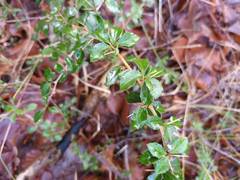
Berberis × gladwynensis 'William Penn' is a Gladwyne barberry hybrid produced from a cross of B. julianae × B. verruculosa, growing 36-48 inches (90-120 cm) tall and 48-72 inches (120-180 cm) wide; mature plants are wider than tall with a dense mounding form. Leaves are dark green, glossy, leathery, oval, 1-1.5 inches (2.5-4 cm) long with a few spiny teeth along the margins. The cultivar 'William Penn' was selected for foliage that retains dark green color through winter with light bronze tinting; parent species show stronger winter discoloration. Yellow flowers 0.3 inch (8 mm) across appear in small clusters at the leaf nodes in mid-spring, followed by blue-black berries 0.3 inch (8 mm) in fall. Triple spines 0.5-1 inch (1.3-2.5 cm) long emerge at each leaf node. The cultivar reaches mature size of 36-48 inches (90-120 cm), more compact than B. julianae at 6-10 feet (1.8-3 m) and similar in scale to B. verruculosa at 36-60 inches (90-150 cm). The cultivar was selected at the Henry Foundation for Botanical Research in Gladwyne, Pennsylvania. All parts contain berberine and are mildly toxic to humans and animals. Adapts to clay. Drought-tolerant once established. Growth rate is moderate, with shrubs reaching mature size in 5-7 years.
Native Range
Hybrid of garden origin produced from a cross of B. julianae (central China) and B. verruculosa (western China). The cultivar 'William Penn' was selected at the Henry Foundation for Botanical Research in Gladwyne, Pennsylvania.Suggested Uses
Grown as a low hedge, barrier planting, or foundation shrub in zones 5 to 9 at 36-48 inch (90-120 cm) spacing. The dense mounding form holds shape with minimal pruning. Foliage holds dark green color through winter. Triple spines deter deer and rabbits. All parts mildly toxic.How to Identify
Appearance
Size & Dimensions
Height3' - 4'
Width/Spread4' - 6'
Bloom Information
Mid-spring (April), with bloom lasting 1-2 weeks. Yellow flowers 0.3 inch (8 mm) across in small clusters at leaf nodes. Blue-black berries 0.3 inch (8 mm) develop in fall and persist 4-6 weeks before being eaten by birds.
Detailed Descriptions
Foliage Description
Dark green glossy, holds color through winterGrowing Conditions
Sun Requirements
Requires 4-8 hours of direct sunlight daily
• Full Sun: 6+ hours of direct sunlight
• Partial Shade: 3-6 hours of direct sunlight
• Full Shade: Less than 3 hours of direct sunlight
Care & Maintenance
Care Guide
Tolerates full sun to partial shade. Adapts to clay soils. Drought-tolerant once established. Foliage retains dark green color through winter with light bronze tinting in zones 5 to 7; coloration is darker in zones 6 to 7 than in zone 5. Triple spines 0.5-1 inch (1.3-2.5 cm) make handling difficult. All parts contain berberine and are mildly toxic if ingested. Deer and rabbits avoid the foliage. Hardy in USDA zones 5 to 9.Pruning
Prune for shape after flowering in late spring to retain next year's flower buds. The dense mounding form requires minimal shaping in informal plantings. Tolerates clipping for formal hedging at 30-36 inches (75-90 cm) tall. Triple spines make handling difficult during pruning work.Pruning Schedule
Prune: May
spring
Container Growing
Suitable for container growing
Minimum container size: 3 gallons
Toxicity Warning
Toxic to pets and humansRelated Berberis species
 Japanese barberryBerberis thunbergii
 Golden Japanese barberryBerberis thunbergii 'Aurea'
 Darwin's barberryBerberis darwinii
 Warty barberryBerberis verruculosa
- Purpleleaf or redleaf Japanese barberryBerberis thunbergii f. atropurpurea
- Helmond Pillar Japanese barberryBerberis thunbergii f. atropurpurea 'Helmond Pillar'