Image 1 of 17
1 / 17
Plant Reference
Berberis, Genus, julianae, Species,
- Genus & species
wintergreen barberry
Overview
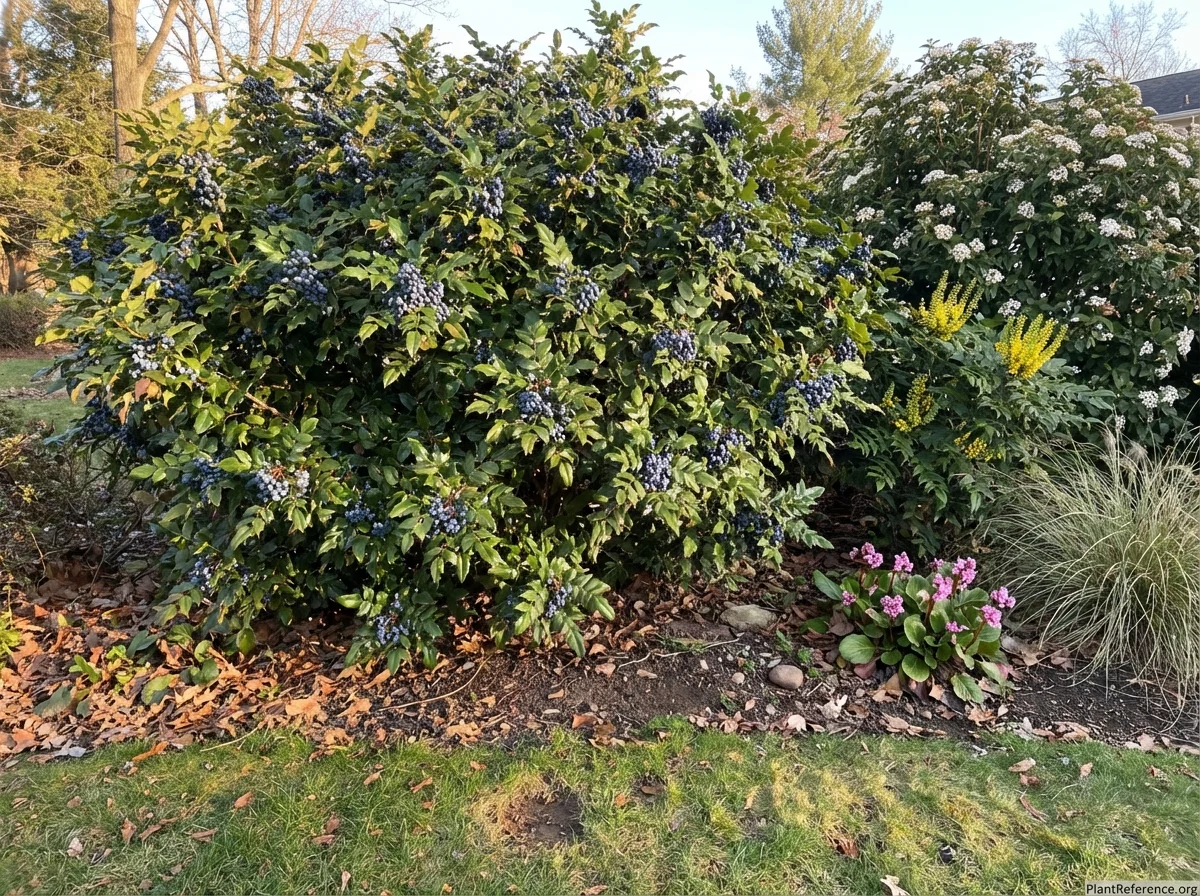
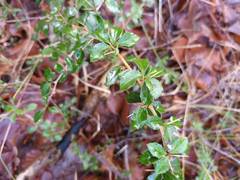
Berberis julianae is wintergreen barberry, an evergreen shrub growing 6-10 feet (1.8-3 m) tall and 4-8 feet (1.2-2.4 m) wide. Leaves are dark green, glossy, narrow lance-shaped, 2-3 inches (5-7.5 cm) long with spiny-toothed margins; bronze-red tints develop in winter foliage. Yellow flowers appear in dense pendant clusters 1-2 inches (2.5-5 cm) long in mid to late spring, followed by blue-black berries 0.3 inch (8 mm) across with a waxy bloom in fall. Triple spines 1-1.5 inches (2.5-4 cm) long emerge at each leaf node. The species tolerates winter temperatures to -20°F (-29°C) in USDA zone 5, while many evergreen Berberis species suffer foliage damage at temperatures below 0°F (-18°C). The species was first described in 1907 from collections in Hubei province, China. B. julianae is one parent of the hybrid B. × gladwynensis, the other parent being B. verruculosa. All parts contain berberine, a yellow isoquinoline alkaloid that is mildly toxic to humans and animals; inner bark is yellow. Adapts to clay soils and tolerates drought once established. Growth rate is moderate, with shrubs reaching mature size in 5-8 years.
Native Range
Native to central China (Hubei province) at elevations of 3,000-5,500 feet (900-1,700 m), growing on rocky slopes and in mountain scrub.Suggested Uses
Grown as a barrier hedge and specimen shrub in zones 5 to 9 at 4-6 foot (1.2-1.8 m) spacing. Triple spines deter deer, rabbits, and large mammals. Used in zone 5 plantings where many evergreen Berberis species lack winter hardiness. All parts mildly toxic.How to Identify
Appearance
Size & Dimensions
Height6' - 10'
Width/Spread4' - 8'
Bloom Information
Mid to late spring (April to May), with bloom lasting 1-2 weeks. Yellow flowers in dense pendant clusters 1-2 inches (2.5-5 cm) long. Blue-black berries with waxy bloom develop in fall and persist 4-6 weeks before being eaten by birds.
Detailed Descriptions
Foliage Description
Dark green glossy with bronze-red winter tintsGrowing Conditions
Sun Requirements
Requires 4-8 hours of direct sunlight daily
• Full Sun: 6+ hours of direct sunlight
• Partial Shade: 3-6 hours of direct sunlight
• Full Shade: Less than 3 hours of direct sunlight
Care & Maintenance
Care Guide
Tolerates full sun to partial shade. Adapts to clay soils. Drought-tolerant once established. Triple spines 1-1.5 inches (2.5-4 cm) make handling difficult; sap and crushed leaves cause skin irritation in some individuals. All parts contain berberine and are mildly toxic if ingested. Deer and rabbits avoid the foliage. Hardy in USDA zones 5 to 9.Pruning
Prune for shape after flowering in early summer to retain the next year's flower buds. Triple spines 1-1.5 inches (2.5-4 cm) make handling difficult during pruning. Tolerates hard renovation pruning back to woody framework, with regrowth filling within 2-3 years.Pruning Schedule
Prune: June
summer
Container Growing
Minimum container size: 5 gallons
Toxicity Warning
Toxic to pets and humansRelated Berberis species
 Japanese barberryBerberis thunbergii
 Golden Japanese barberryBerberis thunbergii 'Aurea'
 Darwin's barberryBerberis darwinii
 Warty barberryBerberis verruculosa
- Purpleleaf or redleaf Japanese barberryBerberis thunbergii f. atropurpurea
- Helmond Pillar Japanese barberryBerberis thunbergii f. atropurpurea 'Helmond Pillar'