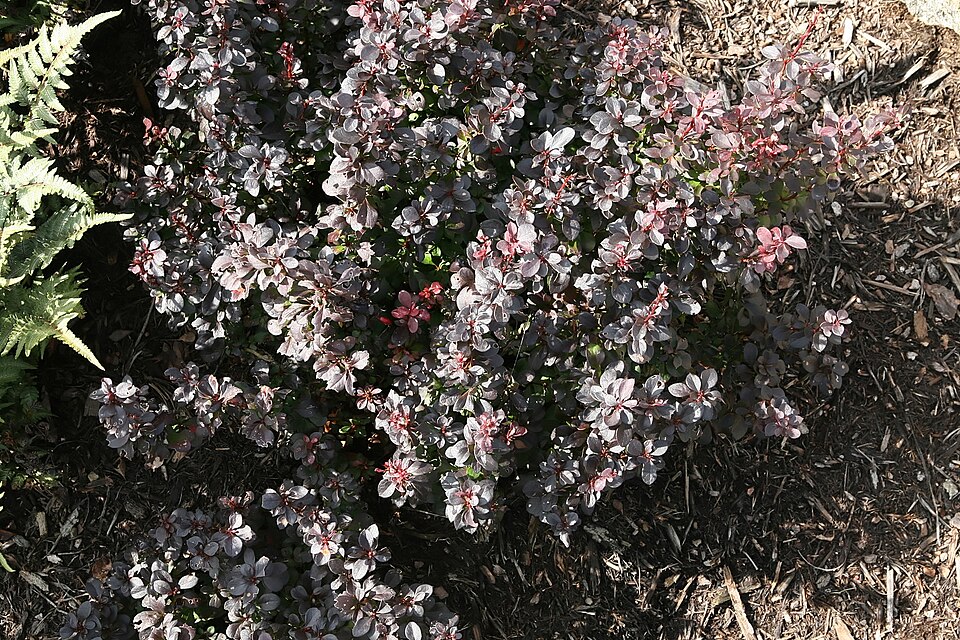
Berberis, Genus, thunbergii, Species, f., Form, atropurpurea, Form, 'Concorde', Cultivar,
- Genus & species
- Form
- Cultivar
Concorde barberry
Parent species {Berberis thunbergii} native to Japan; the cultivar 'Concorde' was selected in the Netherlands
Overview
Berberis thunbergii 'Concorde' is a compact rounded deciduous shrub cultivar in the family Berberidaceae, reaching 18-24 inches (45-60 cm) tall with a spread of 24-30 inches (60-75 cm) and forming a dense low mounding habit. The cultivar is slightly larger than B. thunbergii 'Bagatelle' and holds a denser form. Leaves are small, obovate, 0.5-1 inch (1.3-2.5 cm) long, and deep velvet-purple to nearly black-purple — among the darkest foliage of any B. thunbergii cultivar. The dark coloring holds through summer without the bronze or green cast that develops in some other purple-leaved barberries. New spring growth emerges bright crimson-red before hardening to the dark purple of mature leaves. Stems carry single sharp spines at each node. Small pale yellow flowers 0.2-0.3 inch (5-8 mm) across open in April and May, sparse and largely concealed within the dense foliage. Small red berries develop occasionally. Growth is slow at 2-4 inches (5-10 cm) per year. Fall foliage turns bright reddish-orange. The dense rounded habit is naturally self-maintaining. In part shade the purple darkens further but can develop a greenish overtone. The parent species B. thunbergii is classified as invasive in several U.S. states and planting is regulated or prohibited in those jurisdictions.
Native Range
Berberis thunbergii is native to Japan and possibly eastern China, where it grows on mountain slopes, forest margins, and rocky areas. The cultivar 'Concorde' was selected in the Netherlands and does not occur in wild populations.Suggested Uses
Planted in low borders, rock gardens, edging, and container plantings at 24-30 inch (60-75 cm) spacing. The dark purple foliage contrasts strongly with silver, chartreuse, or bright green companions in border compositions. Combined with Stachys byzantina, Heuchera cultivars with lime-green foliage, and Sedum cultivars for color contrast in zones 4-8. Grown in containers of 3 gallons (11 L) or more with a well-drained mix. Not suited to jurisdictions where B. thunbergii is prohibited as invasive, sites adjacent to natural areas where seedling escape is a concern, or high-traffic positions where the sharp node spines conflict with regular pedestrian contact.How to Identify
Appearance
Size & Dimensions
Height1'6" - 2'
Width/Spread2' - 2'6"
Bloom Information
Sparse pale yellow flowers 0.2-0.3 inch (5-8 mm) across open in April and May, averaging 2 weeks of bloom. Individual flowers are largely concealed within the dense dark purple foliage and are not an ornamental display. Fruit set is minimal and occasional small red berries ripen in September and October.
Detailed Descriptions
Flower Description
pale yellow; 0.2-0.3 inch (5-8 mm) across; sparse and concealed within dense foliageFoliage Description
deep velvet-purple to near-black-purple from summer through fall; crimson-red new spring growth; obovate leaves 0.5-1 inch (1.3-2.5 cm) long; reddish-orange in late fallGrowing Conditions
Sun Requirements
Requires 5-10 hours of direct sunlight daily
• Full Sun: 6+ hours of direct sunlight
• Partial Shade: 3-6 hours of direct sunlight
• Full Shade: Less than 3 hours of direct sunlight
Care & Maintenance
Care Guide
Plant in well-drained soil with a pH of 5.5-8.0 in full sun where the purple foliage color holds darkest. In part shade the foliage can develop a greenish overtone while remaining very dark overall. Tolerated soil types include loam, clay, sand, and chalk, including alkaline conditions. Established plants are drought-tolerant. The naturally compact dense habit calls for little to no shaping. The parent species B. thunbergii is classified as invasive in several U.S. states and planting is regulated or prohibited in those jurisdictions; local invasive-species regulations govern whether the cultivar is legal in a given area. No serious pest or disease concerns once established.Pruning
Minimal pruning is required; the naturally dense mounding habit is self-maintaining. Dead or damaged stems are removed in early spring (March). Light shearing in late spring tightens the silhouette where wanted. Stems carry single sharp spines at each node and pruning debris commonly causes minor puncture wounds during handling.Pruning Schedule
Prune: March
early spring
Container Growing
Suitable for container growing
Minimum container size: 3 gallons
Toxicity
Non-toxicRelated Berberis species
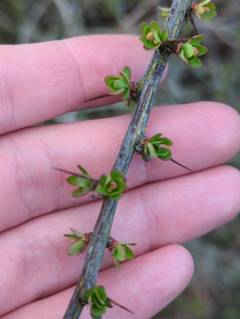 Japanese barberryBerberis thunbergii
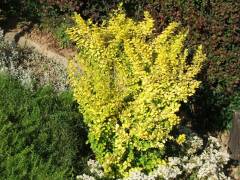 Golden Japanese barberryBerberis thunbergii 'Aurea'
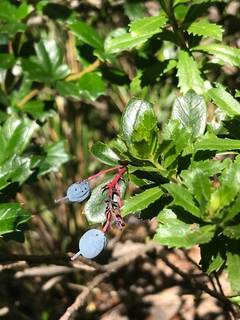 Darwin's barberryBerberis darwinii
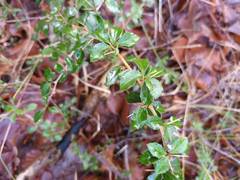 Warty barberryBerberis verruculosa
- Purpleleaf or redleaf Japanese barberryBerberis thunbergii f. atropurpurea
- Helmond Pillar Japanese barberryBerberis thunbergii f. atropurpurea 'Helmond Pillar'