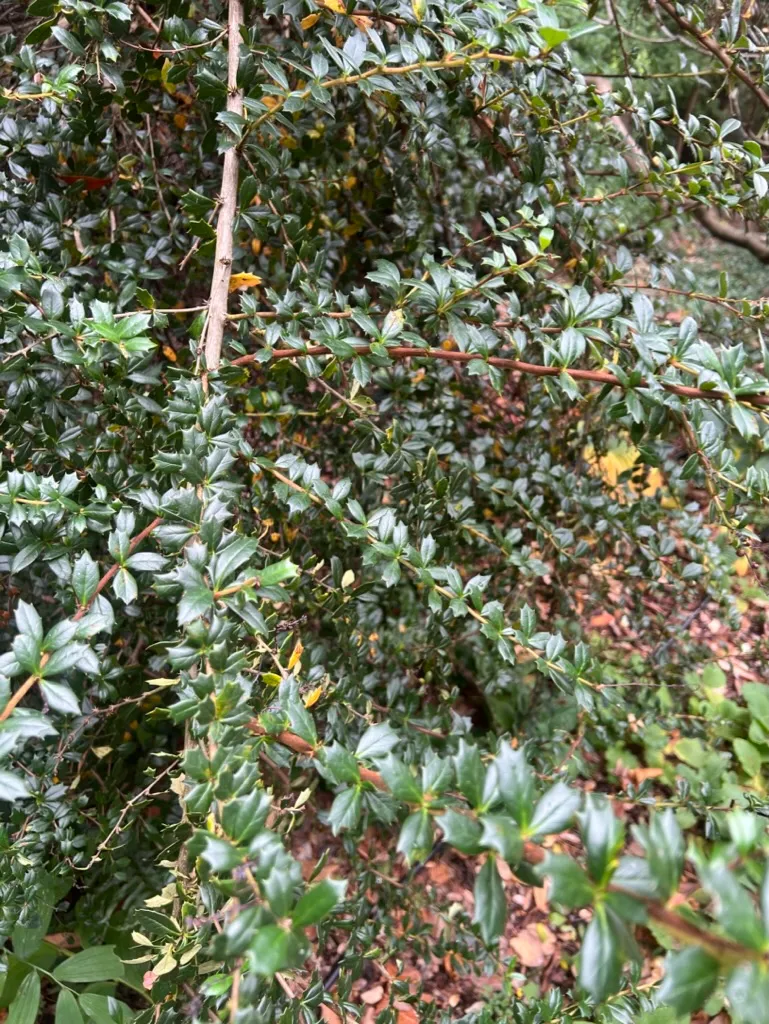
Image 1 of 16
1 / 16
Plant Reference
Berberis, Genus, darwinii, Species,
- Genus & species
Darwin's barberry
Chile and Argentina (Patagonia); forest margins, rocky slopes, and open scrub at low to middle elevations in the southern Andes
Overview
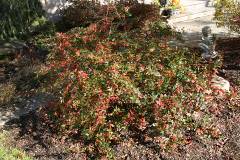
Berberis darwinii is an upright dense broadleaf evergreen shrub in the barberry family Berberidaceae growing 60–120 inches (150–300 cm) tall and 60–120 inches (150–300 cm) wide from a multi-stemmed base that develops a dense rounded canopy armed with triple spines at each leaf node. The species is named after Charles Darwin (1809–1882), who collected the first botanical specimens during the voyage of HMS Beagle along the coast of Chile in 1835, and the specific epithet darwinii commemorates that collection. Leaves are dark green and glossy, small, 0.5–1 inch (12–25 mm) long, with 3–5 spiny marginal teeth that give each leaf an outline similar to a miniature holly (Ilex) leaf, and the spiny foliage is held through the full year as a dense evergreen canopy. Deep orange flowers open in pendant racemes 2–3 inches (5–7 cm) long along the branches in April and May across a 2–3 week bloom period — the deep orange flower color is uncommon among temperate flowering shrubs where yellow and white dominate the spring palette, and this saturated orange coloration is the main reason the species is grown for its spring bloom display. Blue-black berries 0.3 inch (8 mm) develop in fall and are consumed by birds, which disperse the seed into surrounding habitats — this bird-dispersed seed spread is the mechanism behind the invasive behavior of the species in New Zealand and parts of Australia, where self-sown seedlings colonize native bush margins and displace indigenous vegetation. The species is classified as an invasive plant in several jurisdictions in New Zealand and Australia, and regional invasive species lists should be consulted before planting in areas where the species is restricted. All parts of the plant contain berberine, a yellow isoquinoline alkaloid that stains the inner bark and wood yellow and is mildly toxic to humans and animals (gastrointestinal irritation if ingested). The triple spines at each leaf node are 0.5–1 inch (12–25 mm) long and create an impenetrable thorny barrier that makes the species a suited barrier hedge plant — thick leather gloves and long sleeves are warranted during pruning and maintenance work around the plant. Native to Chile and Argentina (Patagonia), growing at forest margins, rocky slopes, and open scrub in the southern Andes. Limitation: the species is damaged by sustained temperatures below 10 °F (−12 °C), which restricts cultivation to USDA zones 7 through 9. Drought-tolerant once established. Deer-resistant because of the thorny habit and the berberine content.
Native Range
Native to Chile and Argentina (Patagonia), growing at forest margins, rocky slopes, and open scrub at low to middle elevations in the southern Andes. The species was first collected for western botanical science by Charles Darwin during the voyage of HMS Beagle in 1835, and the specimens were described and named by William Jackson Hooker at the Royal Botanic Gardens Kew, who honored Darwin with the specific epithet darwinii.Suggested Uses
Used as a barrier hedge, boundary screen, and in mixed shrub borders in USDA zones 7 through 9 at 60–120 inch (150–300 cm) spacing between plants. The dense thorny habit and the triple spines create an impenetrable barrier hedge that deters pedestrian and animal passage, and the deep orange spring flowers and the blue-black fall berries carry the species through two seasons of ornamental interest beyond the year-round evergreen foliage. The berries are consumed by birds and the species contributes to winter food supply for songbirds in mild-climate gardens. Jurisdictions where the species is listed as invasive (New Zealand, parts of Australia) are unsuitable, and gardens adjacent to native bush or woodland are unsuitable because of the bird-dispersed seed spread into native habitats. Cold-exposed positions in USDA zones 6 and colder are unsuitable because of the 10 °F (−12 °C) damage threshold.How to Identify
Appearance
Size & Dimensions
Height5' - 10'
Width/Spread5' - 10'
Bloom Information
Deep orange flowers open in pendant racemes 2–3 inches (5–7 cm) long along the branches in April and May across a 2–3 week bloom period. Honeybees and bumblebees work the flowers for nectar during the spring bloom window, and the deep orange color draws pollinators from a distance because the saturated orange is highly visible against the dark green evergreen foliage background. Blue-black berries 0.3 inch (8 mm) develop through summer and ripen in fall, persisting on the branches into early winter where they are consumed by birds that disperse the seed.
Detailed Descriptions
Flower Description
deep orange flowers carried in pendant racemes 2-3 inches (5-7 cm) long along the branches in mid to late spring; the deep orange flower color is uncommon among temperate flowering shrubs where yellow and white dominate the spring paletteFoliage Description
dark green and glossy; small holly-like leaves 0.5-1 inch (12-25 mm) long with 3-5 spiny marginal teeth that give the leaf an outline similar to a miniature holly (Ilex) leaf; evergreen year-roundGrowing Conditions
Sun Requirements
Requires 4-8 hours of direct sunlight daily
• Full Sun: 6+ hours of direct sunlight
• Partial Shade: 3-6 hours of direct sunlight
• Full Shade: Less than 3 hours of direct sunlight
Care & Maintenance
Care Guide
Site in full sun to partial shade with 4–8 hours of direct sun per day in well-drained soil with a pH of 5.5–7.5. The species adapts to loam and clay soils without significant decline and is drought-tolerant once the root system is established after the first or second growing season. The triple spines at each leaf node are 0.5–1 inch (12–25 mm) long, and thick leather gloves and long sleeves are warranted during pruning and maintenance work. Pruning for shape is done after flowering in early summer (June), and the species tolerates clipping for formal and informal hedging. The species is classified as invasive in New Zealand and parts of Australia because bird-dispersed seed colonizes native bush margins — regional invasive species lists should be consulted before planting in jurisdictions where the species is restricted. All parts contain berberine (isoquinoline alkaloid) — mildly toxic to humans and animals if ingested. Damaged by sustained temperatures below 10 °F (−12 °C). Deer-resistant. Hardy in USDA zones 7–9.Pruning
Pruning for shape is done after flowering in early summer (June) by cutting back overlength stems to a bud or side branch. The species tolerates clipping for formal and informal barrier hedging, and the dense evergreen growth regenerates a full canopy after shearing cuts. Thick leather gloves and long sleeves are warranted during pruning because the triple spines at each leaf node puncture unprotected skin. Hard renovation pruning (cutting the shrub to 12–18 inches / 30–45 cm from the ground) can be done in early summer if the shrub has become overgrown, and the crown regrows a full canopy within 1–2 growing seasons.Pruning Schedule
Prune: June
summer
Toxicity Warning
Toxic to pets and humansRelated Berberis species
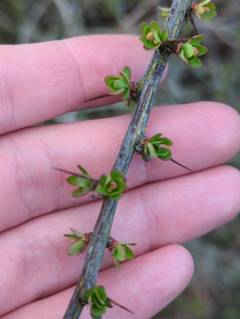 Japanese barberryBerberis thunbergii
 Golden Japanese barberryBerberis thunbergii 'Aurea'
 Warty barberryBerberis verruculosa
 Gladwyne barberryBerberis × gladwynensis
- Purpleleaf or redleaf Japanese barberryBerberis thunbergii f. atropurpurea
- Helmond Pillar Japanese barberryBerberis thunbergii f. atropurpurea 'Helmond Pillar'