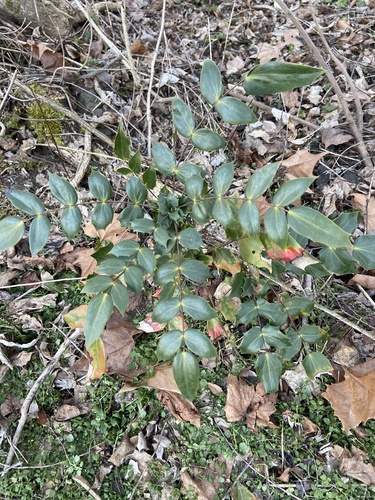
Berberis, Genus, bealei, Species,
- Genus & species
leatherleaf mahonia
Overview
Berberis bealei (also known as Mahonia bealei) is an evergreen shrub reaching 4-10 feet (1.2-3 m) tall and 3-6 feet (0.9-1.8 m) wide, with stiff, upright, sparsely branched stems. Leaves are pinnate, 12-16 inches (30-40 cm) long, with 9-15 thick, leathery, blue-green leaflets edged with several large spine-tipped teeth. Erect to spreading clusters of yellow flowers, each raceme 3-7 inches (8-18 cm) long, open in late winter and early spring and are fragrant. Powdery blue-black berries about 0.3 inch (8 mm) long follow in spring, hanging in grape-like clusters. The shrub spreads slowly and keeps its foliage year-round, the leaflets sometimes turning reddish in cold winters. It grows in shade to part sun on moist soils and tolerates dry shade once established. It self-seeds where birds carry the berries, and has naturalized and become invasive in parts of the southeastern United States.
Native Range
Native to central and southern China, where it grows in forests, thickets, and ravines on moist, shaded slopes. Widely planted in temperate gardens for its winter flowers and evergreen foliage. Naturalized in the southeastern United States, where it is listed as invasive in several states and spreads into woodland from bird-sown seed.Suggested Uses
Planted in shaded and woodland borders, against walls, and in winter gardens for its cold-season flowers and evergreen foliage, spaced 3-4 feet (0.9-1.2 m) apart. The spiny leaves are used in low barrier plantings. In the southeastern United States its spread into woodland limits its use, and it is often removed from plantings near natural areas.How to Identify
Appearance
Size & Dimensions
Height4' - 10'
Width/Spread3' - 6'
Bloom Information
Flowers from late winter into early spring, often January to March, earlier in mild areas. The yellow flowers are fragrant and are visited by early bees and other insects on warm days. Blue-black berries ripen in spring and are taken by birds, which spread the seed.
Detailed Descriptions
Foliage Description
blue-greenGrowing Conditions
Sun Requirements
Requires 2-6 hours of direct sunlight daily
• Full Sun: 6+ hours of direct sunlight
• Partial Shade: 3-6 hours of direct sunlight
• Full Shade: Less than 3 hours of direct sunlight
Care & Maintenance
Care Guide
Grows in part to full shade on moist, fertile, well-drained soils, and tolerates dry shade and a range of soil types once established. Establishes slowly over the first year or two, then needs little care. Tolerates drought once rooted but grows fuller with steady moisture and shelter from cold drying wind, which can scorch the leaflets. Few pests trouble it, though rust and leaf spot occur in damp, crowded conditions. Birds spread the seed widely, and self-sown seedlings appear in nearby beds and woodland. In the southeastern United States it spreads into natural woodland and is regulated as invasive.Pruning
Old or leggy stems are cut back to the base after flowering to encourage new shoots and keep the shrub bushy. Spent flower clusters can be removed before berries form to reduce self-seeding. Plants left uncut become tall, bare at the base, and top-heavy.Pruning Schedule
Prune: April–May
late spring
Container Growing
Suitable for container growing
Minimum container size: 7 gallons
Toxicity Warning
Toxic to pets and humansRelated Berberis species
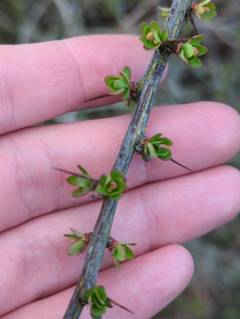 Japanese barberryBerberis thunbergii
 Golden Japanese barberryBerberis thunbergii 'Aurea'
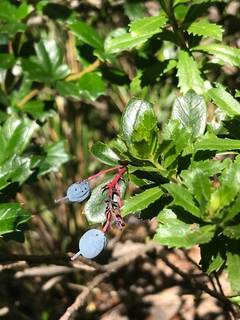 Darwin's barberryBerberis darwinii
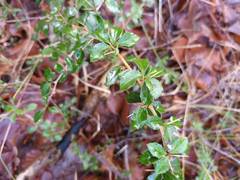 Warty barberryBerberis verruculosa
- Purpleleaf or redleaf Japanese barberryBerberis thunbergii f. atropurpurea
- Helmond Pillar Japanese barberryBerberis thunbergii f. atropurpurea 'Helmond Pillar'