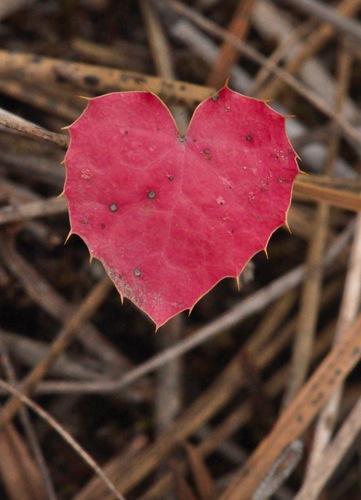
Berberis, Genus, spp., Multiple species,
- Genus
- Multiple species
barberries
Temperate and subtropical Northern Hemisphere and the South American Andes
Overview
Berberis is a genus of roughly 450 to 500 species of evergreen and deciduous shrubs in the family Berberidaceae, distributed across the temperate and subtropical Northern Hemisphere and the South American Andes. Plants range from low mounds 1–3 ft (0.3–0.9 m) tall to upright shrubs reaching 8–10 ft (2.4–3 m), with stems usually armed with sharp spines that are modified leaves. The true leaves are small, simple or compound, and clustered on short shoots; in evergreen species they are leathery and often spine-toothed, while deciduous species color red and orange in autumn. Small yellow to orange flowers, 0.2–0.4 in (5–10 mm) across, hang singly or in drooping clusters in spring, followed by red or blue-black berries 0.2–0.5 in (5–13 mm) long that persist into winter. The wood, roots, and inner bark contain the yellow alkaloid berberine. Several species, especially Japanese barberry B. thunbergii, are listed as invasive and are regulated or banned for sale in parts of the northeastern United States. The common barberry B. vulgaris is an alternate host of wheat stem rust and has been cleared from grain-growing regions. The genus grows in woodland, scrub, rocky slopes, and hedgerows.
Native Range
Berberis is native across temperate Eurasia, North Africa, and the Americas, with a major center of diversity in the Andes of South America and another in eastern Asia. North American native species include American barberry B. canadensis and, under the merged classification, Oregon grape B. aquifolium. Japanese barberry B. thunbergii and common barberry B. vulgaris are widely naturalized introductions.Suggested Uses
Berberis species are grown as barrier and boundary hedges, where the spines deter passage, and as specimen and foundation shrubs. Low and colored-leaf forms are used in borders and mixed plantings, though Japanese barberry is restricted in regions where it has become invasive. The flowers draw bees and the berries feed birds.How to Identify
Appearance
Size & Dimensions
Height1' - 10'
Width/Spread1' - 8'
Bloom Information
Most Berberis species flower in spring, roughly April to May, with small yellow to orange flowers in drooping clusters. Flowering lasts 2 to 3 weeks and is followed by berries that ripen red or blue-black by late summer and persist through winter. Evergreen species often flower slightly earlier than deciduous species. The berries draw birds, which spread the seeds widely.
Detailed Descriptions
Flower Description
yellow to orangeFoliage Description
green to purple-red in colored-leaf formsGrowing Conditions
Sun Requirements
Requires 4-10 hours of direct sunlight daily
• Full Sun: 6+ hours of direct sunlight
• Partial Shade: 3-6 hours of direct sunlight
• Full Shade: Less than 3 hours of direct sunlight
Care & Maintenance
Care Guide
Berberis species grow in full sun to part shade in almost any well-drained soil with a pH around 5.5 to 7.5, and most tolerate poor and dry ground. Established plants are drought tolerant and need little supplemental water. They are hardy across USDA zones 4 to 8 depending on the species and need minimal feeding. Plants tolerate hard pruning and shearing, which makes them suited to clipped hedges. Birds spread the seeds of fruiting species, and Japanese barberry seeds heavily into woodland, which has driven its regulation in several states. The spines make handling and weeding around the plants difficult.Pruning
Berberis species tolerate pruning and shearing at almost any time, though shaping after flowering preserves the berry display. Deciduous species are renewed by removing a portion of the oldest stems at the base each year. Formal hedges are clipped once or twice in the growing season.Container Growing
Suitable for container growing
Minimum container size: 3 gallons
Toxicity
Non-toxicRelated Berberis species
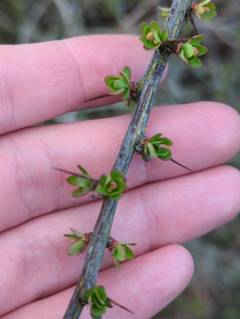 Japanese barberryBerberis thunbergii
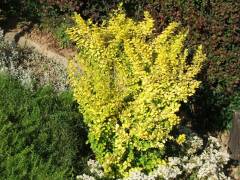 Golden Japanese barberryBerberis thunbergii 'Aurea'
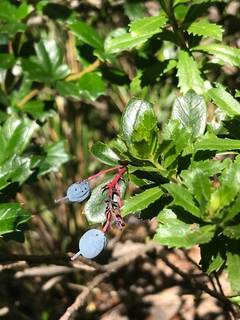 Darwin's barberryBerberis darwinii
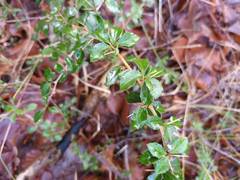 Warty barberryBerberis verruculosa
- Purpleleaf or redleaf Japanese barberryBerberis thunbergii f. atropurpurea
- Helmond Pillar Japanese barberryBerberis thunbergii f. atropurpurea 'Helmond Pillar'