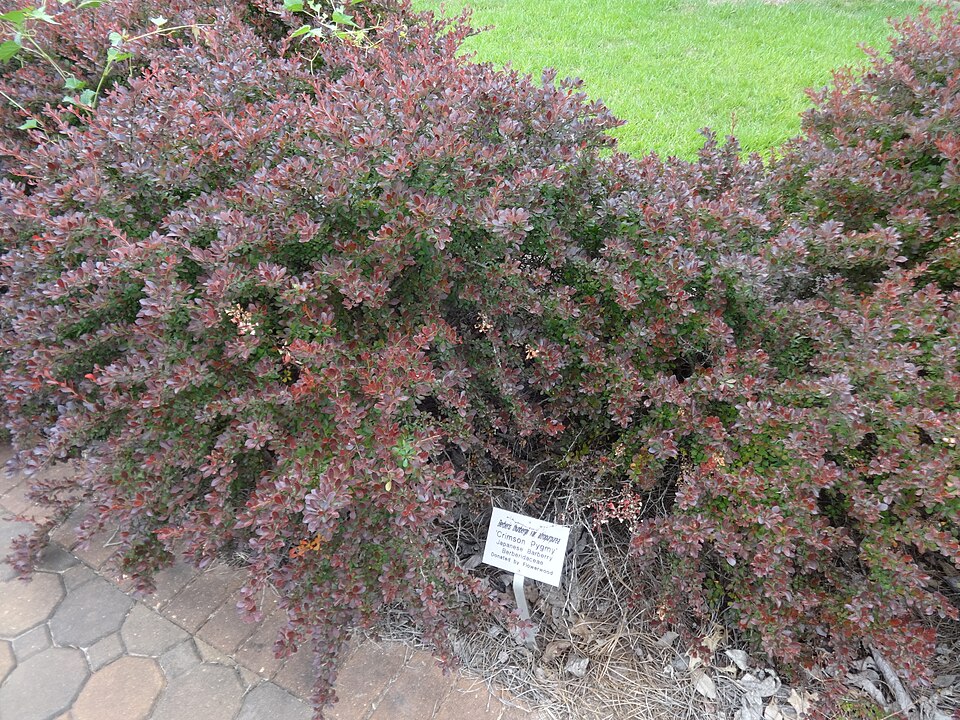
Berberis, Genus, thunbergii, Species, 'Crimson Pygmy', Cultivar,
- Genus & species
- Cultivar
crimson pygmy barberry
Overview
Berberis thunbergii 'Crimson Pygmy' is a deciduous dwarf shrub reaching 18-24 inches (45-60 cm) tall with a 24-36 inch (60-90 cm) spread, forming a dense rounded mound. Stems carry single 1/4 to 1/2 inch (6-13 mm) spines at each node. Leaves are obovate to spatulate, 1/2 to 1 inch (1.3-2.5 cm) long, and emerge a deep red-purple in spring, holding the color through summer in full sun and fading to greenish-bronze in shade. Foliage turns red to crimson before drop in October-November. Pale yellow flowers, 1/4 inch (6 mm) across, hang singly or in small clusters along the stems in April-May. Bright red oblong berries, 1/3 inch (8 mm) long, ripen in September and persist into winter. Annual growth is 2-3 inches (5-7.5 cm); plants reach mature size in 5-7 years. B. thunbergii is listed as invasive in over 20 US states, and several New England jurisdictions restrict the sale of B. thunbergii cultivars under state nursery regulations. Spines make hand-weeding within the canopy difficult.
Native Range
Berberis thunbergii is native to Japan, where it grows in scrub, mountain slopes, and forest margins from sea level to 8,000 feet (2,440 m) elevation across Honshu, Shikoku, and Kyushu. The species was introduced to North America in the late 19th century as an ornamental and for hedging. B. thunbergii has since naturalized in disturbed forests and old fields across the eastern and midwestern United States.Suggested Uses
Used as a low hedge, edging, or foundation planting at 24-36 inch (60-90 cm) spacing. Grows in 5-gallon (19 L) or larger containers with annual topdressing. Sale and planting of B. thunbergii cultivars is prohibited or restricted in New York, Maine, New Hampshire, Pennsylvania, Massachusetts, and several other US states under nursery and invasive species regulations.How to Identify
Appearance
Size & Dimensions
Height1'6" - 2'
Width/Spread2' - 3'
Bloom Information
Pale yellow flowers, 1/4 inch (6 mm) across, appear in April through early May in zones 4-6 and late March through April in zones 7-8. Individual flowers last 5-7 days; the full bloom period spans 2-3 weeks. Flowers hang singly or in 2-4 flowered clusters along the previous year wood. Red oblong berries follow, ripening in September and persisting on the stems through winter into the following spring.
Detailed Descriptions
Foliage Description
Deep red-purple, turning crimson in fallGrowing Conditions
Sun Requirements
Requires 6-10 hours of direct sunlight daily
• Full Sun: 6+ hours of direct sunlight
• Partial Shade: 3-6 hours of direct sunlight
• Full Shade: Less than 3 hours of direct sunlight
Care & Maintenance
Care Guide
Plants establish in 1-2 growing seasons with weekly watering during the first summer. Mature shrubs tolerate 3-4 weeks without rain in zones 5-7 and benefit from supplemental water during prolonged drought in zones 8 and warmer. Foliage color is deepest in 6 or more hours of direct sun; in less than 4 hours of sun, leaves turn bronze-green. Verticillium wilt occurs occasionally in heavy clay soils with poor drainage and causes branch dieback. Aphids may colonize new growth in May-June; populations decline as foliage hardens. Replacement is typical at 15-20 years as plants become woody at the base and flowering decreases.Pruning
Cut overall size back by one-third in late winter (February-March) before bud break to maintain a compact mound. Removal of 2-3 of the oldest stems at ground level every 3-4 years renews flowering wood. Light shaping after spring flowering preserves the natural rounded form. Stems carry sharp spines at each node, and pruning generates substantial spiny debris.Pruning Schedule
Prune: February–March
winterlate spring
Container Growing
Suitable for container growing
Minimum container size: 5 gallons
Toxicity
Non-toxicRelated Berberis species
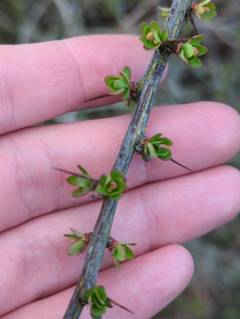 Japanese barberryBerberis thunbergii
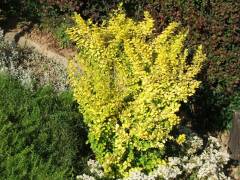 Golden Japanese barberryBerberis thunbergii 'Aurea'
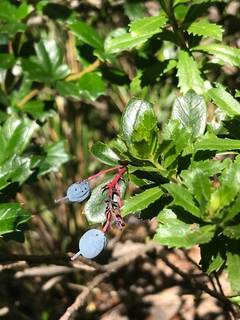 Darwin's barberryBerberis darwinii
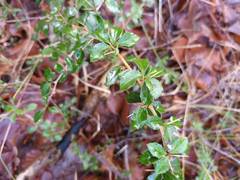 Warty barberryBerberis verruculosa
- Purpleleaf or redleaf Japanese barberryBerberis thunbergii f. atropurpurea
- Helmond Pillar Japanese barberryBerberis thunbergii f. atropurpurea 'Helmond Pillar'