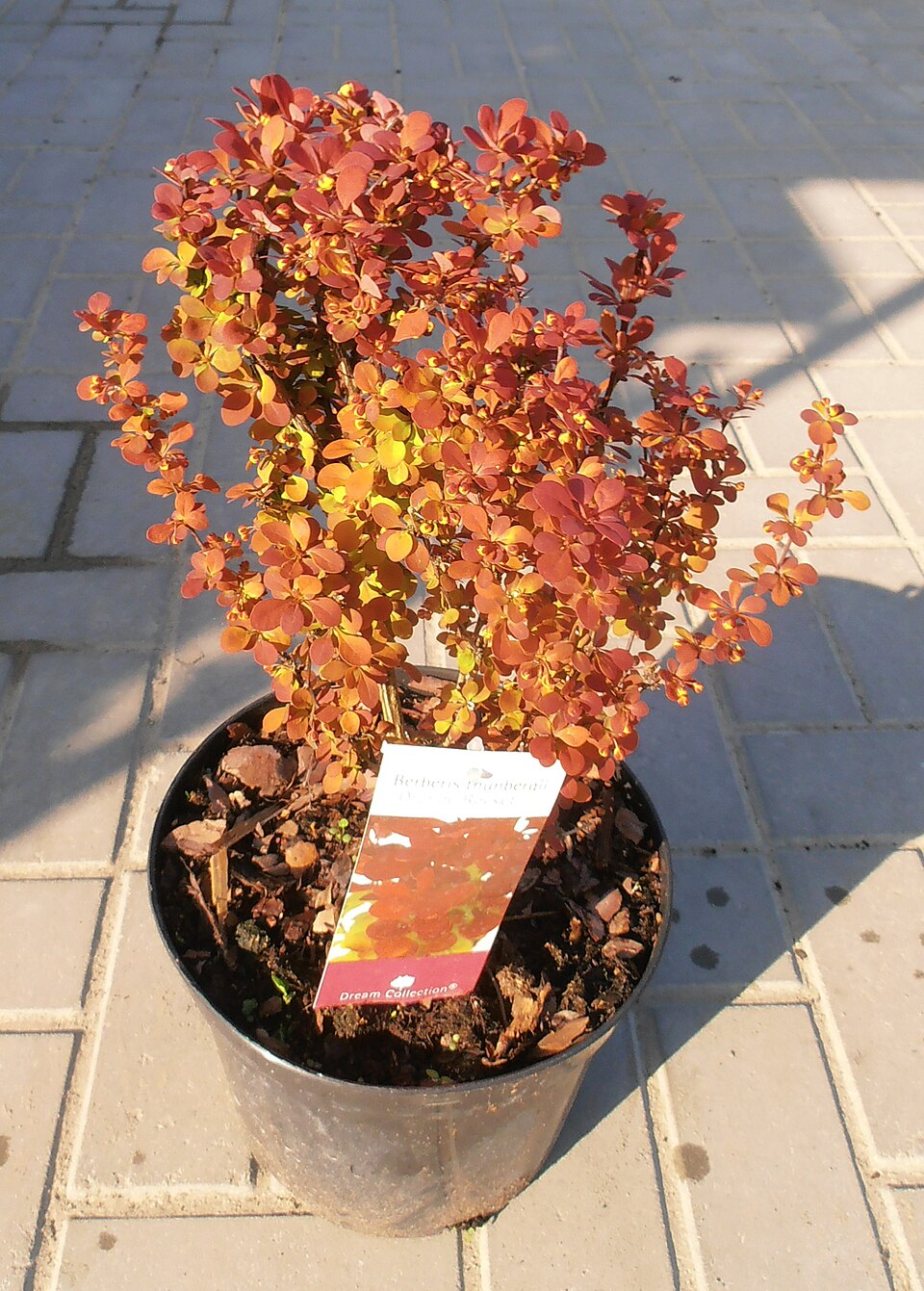
Berberis, Genus, thumbergii, Species, 'Orange Rocket', Cultivar,
- Genus & species
- Cultivar
orange rocket barberry
Species native to Japan; cultivar selected in the Netherlands
Overview
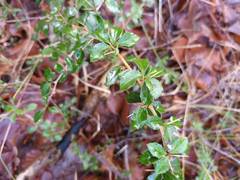
Berberis thunbergii 'Orange Rocket' is a narrow, columnar deciduous shrub reaching 48–60 inches (120–150 cm) tall with a spread of 18–24 inches (45–60 cm), producing a height-to-width ratio of approximately 3:1 at maturity — among the narrowest forms in commercial B. thunbergii. Leaves are small, obovate, 0.5–1 inch (1.3–2.5 cm) long, densely packed along upright stems. Foliage color shifts through three stages: new spring growth emerges coral-orange to bright orange-red, matures to reddish-purple through summer, and shifts to red-orange in fall. Single sharp spines occur at each leaf node. Pale yellow flowers 0.2–0.3 inch (5–8 mm) across appear singly or in clusters of 1–3 in April–May, largely concealed by the dense foliage. Red oval berries 0.3 inch (8 mm) long ripen in September–October. Growth rate is moderate at 6–10 inches (15–25 cm) per year. The narrow columnar form holds through the first several years; older specimens may widen at the top to 24–30 inches (60–75 cm). B. thunbergii is listed as invasive in Massachusetts, Maine, New Hampshire, New York, Pennsylvania, Ohio, Wisconsin, and Minnesota; cultivars are restricted under those state regulations.
Native Range
The species Berberis thunbergii is native to Japan and possibly eastern China, occurring on mountain slopes, forest margins, and rocky areas from near sea level to 5,000 feet (1,500 m) elevation. 'Orange Rocket' was selected by Van der Bom Nurseries in the Netherlands.Suggested Uses
Planted as a vertical accent in borders, foundation plantings, and along walkways at 18–24 inch (45–60 cm) spacing in zones 4–8. The narrow footprint suits planting strips as narrow as 2 feet (60 cm). Grows in containers of at least 5 gallons (19 L). Not suited to states where B. thunbergii cultivars are restricted under invasive species regulations, including Massachusetts, Maine, New Hampshire, New York, Pennsylvania, Ohio, Wisconsin, and Minnesota.How to Identify
Appearance
Size & Dimensions
Height4' - 5'
Width/Spread1'6" - 2'
Bloom Information
Pale yellow flowers appear singly or in clusters of 1–3 along the stems in April–May, lasting 1–2 weeks. Individual flowers are 0.2–0.3 inch (5–8 mm) across and largely concealed by the dense foliage. Bright red oval berries 0.3 inch (8 mm) long ripen in September–October and persist into early winter.
Detailed Descriptions
Foliage Description
coral-orange new growth maturing to reddish-purple through summer; red-orange in fallGrowing Conditions
Sun Requirements
Requires 6-10 hours of direct sunlight daily
• Full Sun: 6+ hours of direct sunlight
• Partial Shade: 3-6 hours of direct sunlight
• Full Shade: Less than 3 hours of direct sunlight
Care & Maintenance
Care Guide
Plant in well-drained soil with a pH of 5.5–8.0 in full sun for the most saturated orange and purple foliage color. In partial shade, foliage color is muted and the habit becomes more open. Tolerates clay, sand, chalk, and alkaline conditions. Drought-tolerant once established. The columnar form develops without shaping for the first several years. B. thunbergii is listed as invasive in Massachusetts, Maine, New Hampshire, New York, Pennsylvania, Ohio, Wisconsin, and Minnesota; cultivars are restricted under those state regulations. No serious pest or disease problems in cultivation.Pruning
Outward-splaying stems can be removed in early spring (March) to maintain the columnar form. Light shearing after flowering tightens the silhouette. Hard pruning into bare wood produces slow regrowth. Single spines on stems warrant protective handling during pruning work.Pruning Schedule
Prune: March
early spring
Container Growing
Suitable for container growing
Minimum container size: 5 gallons
Toxicity
Non-toxicRelated Berberis species
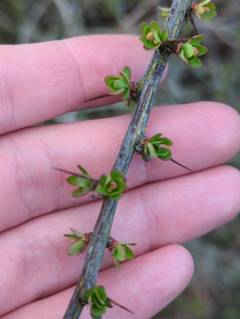 Japanese barberryBerberis thunbergii
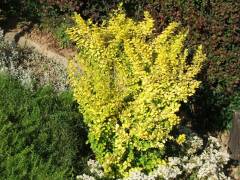 Golden Japanese barberryBerberis thunbergii 'Aurea'
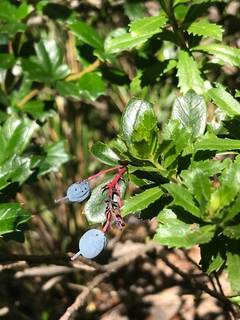 Darwin's barberryBerberis darwinii
 Warty barberryBerberis verruculosa
- Purpleleaf or redleaf Japanese barberryBerberis thunbergii f. atropurpurea
- Helmond Pillar Japanese barberryBerberis thunbergii f. atropurpurea 'Helmond Pillar'