Image 1 of 2
Plant Reference
1 / 2
Berberis, Genus, buxifolia, Species, 'Nana', Cultivar,
- Genus & species
- Cultivar
dwarf magellan barberry
Southern Chile and Argentina (Patagonia, Tierra del Fuego, Strait of Magellan region)
Overview
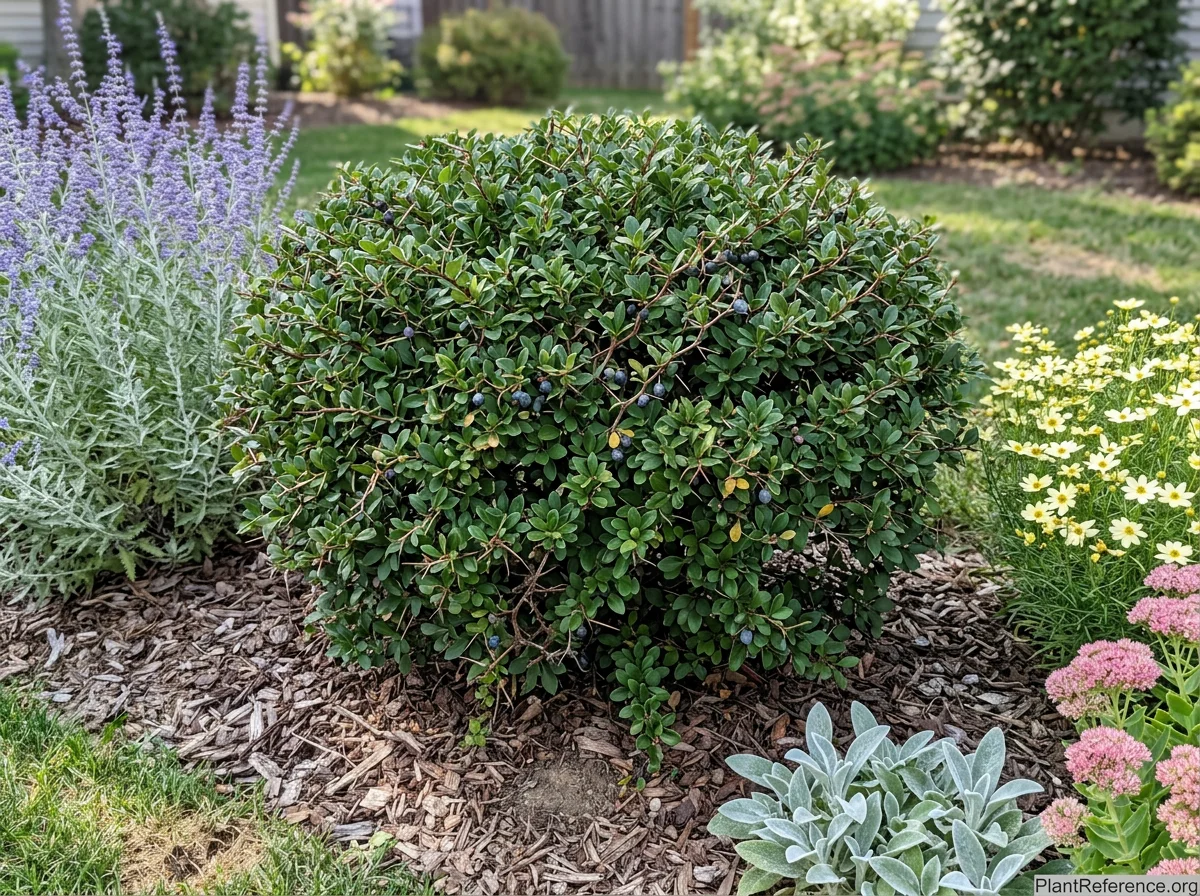
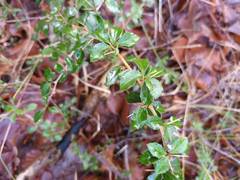
Berberis buxifolia 'Nana' is a compact evergreen shrub reaching 12–24 inches (30–60 cm) tall and 18–30 inches (45–75 cm) wide with a dense mounding habit. 'Nana' is the dwarf form of the species; the species type reaches 60–96 inches (150–240 cm). Leaves are oval, leathery, dark green, 0.5–1 inch (12–25 mm) long, and resemble boxwood (Buxus) — the species epithet 'buxifolia' means 'boxwood-leaved.' Single sharp spines occur at the leaf nodes; spine density is lower than in multi-spined species such as B. darwinii. Small orange-yellow flowers 0.3 inch (8 mm) across appear in mid-spring, solitary or in pairs along the stems. Small dark purple berries 0.3 inch (8 mm) in diameter may develop in fall, though 'Nana' flowers and fruits less reliably than the species type. Growth rate is slow at 1–3 inches (2.5–8 cm) per year. All parts of Berberis species contain berberine alkaloid, visible as the bright yellow color of cut inner bark and roots, which is toxic to dogs and cats if ingested. Berberis species serve as an alternate host for wheat stem rust (Puccinia graminis), and several US states regulate the sale and planting of species in the genus as a result.
Native Range
Native to southern Chile and Argentina, occurring in Patagonia and Tierra del Fuego, including the Strait of Magellan region. This is the southernmost-ranging species in the genus Berberis. Grows in open scrub, rocky slopes, and cool temperate grasslands.Suggested Uses
Planted as a low hedge or formal edge at 18–24 inch (45–60 cm) spacing, in rock gardens as a compact evergreen anchor, and in containers of at least 3 gallons (11 L). Evergreen foliage and spines deter deer browsing. Not suited to planting in states where Berberis species are regulated or prohibited, or to locations where contact with the spines would be problematic.How to Identify
Appearance
Size & Dimensions
Height1' - 2'
Width/Spread1'6" - 2'6"
Bloom Information
Small orange-yellow flowers 0.3 inch (8 mm) across appear in mid-spring (April–May) in zones 6–9, solitary or in pairs along the stems. Bloom duration is 1–2 weeks. Flowers develop into small dark purple berries 0.3 inch (8 mm) in fall on a sporadic basis in this dwarf cultivar.
Detailed Descriptions
Flower Description
Orange-yellow, small, 0.3 inch (8 mm)Foliage Description
Dark green, oval, leathery, 0.5-1 inch (12-25 mm), resembling boxwoodGrowing Conditions
Sun Requirements
Requires 4-8 hours of direct sunlight daily
• Full Sun: 6+ hours of direct sunlight
• Partial Shade: 3-6 hours of direct sunlight
• Full Shade: Less than 3 hours of direct sunlight
Care & Maintenance
Care Guide
Plant in full sun to partial shade in well-drained soil. Tolerates drought once established and suits poor, rocky, or lean soils. Growth rate is slow, and plants take 2–3 years to fill in as a low edge. Berberine alkaloid content makes foliage and stems toxic to dogs and cats if ingested. Berberis species are listed as regulated or prohibited in several US states due to their role as an alternate host for wheat stem rust (Puccinia graminis), and local regulations govern whether B. buxifolia may be sold or planted. Few insect pests or diseases affect established plants.Pruning
Prune for shape after flowering in early summer (June). Tolerates clipping for low formal edging and holds a trimmed outline for 2–3 months. The compact dwarf form requires minimal pruning beyond occasional shaping. Sharp spines at the nodes can puncture skin during pruning.Pruning Schedule
Prune: June
summer
Container Growing
Suitable for container growing
Minimum container size: 3 gallons
Toxicity Warning
Toxic to petsRelated Berberis species
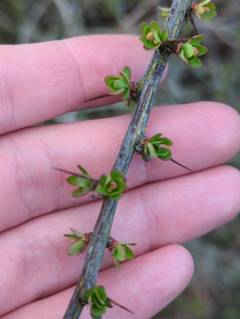 Japanese barberryBerberis thunbergii
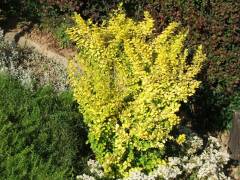 Golden Japanese barberryBerberis thunbergii 'Aurea'
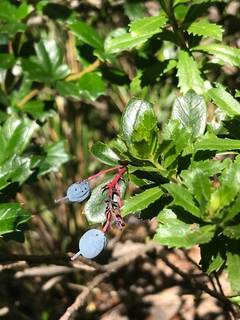 Darwin's barberryBerberis darwinii
 Warty barberryBerberis verruculosa
- Purpleleaf or redleaf Japanese barberryBerberis thunbergii f. atropurpurea
- Helmond Pillar Japanese barberryBerberis thunbergii f. atropurpurea 'Helmond Pillar'