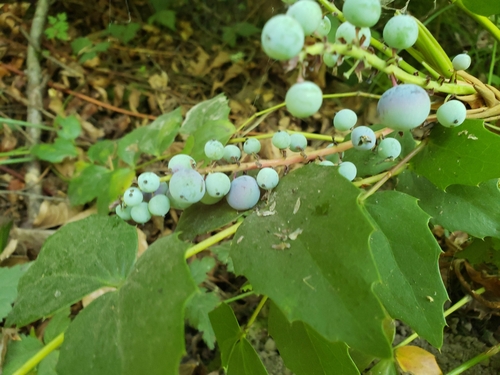
Berberis, Genus, nervosa, Species,
- Genus & species
Oregon-grape
British Columbia south through Washington and Oregon to California; conifer forest understory up to about 5,000 feet (1,500 m) elevation
Overview
Berberis nervosa is low Oregon-grape (Cascade Oregon-grape), a low spreading evergreen shrub growing 1-3 feet (30-90 cm) tall and 2-4 feet (60-120 cm) wide; spreads by underground rhizome. Bright yellow 6-petaled flowers form in dense erect terminal racemes 3-6 inches (7.5-15 cm) in April-May (4 weeks); blue-black powdery berries follow in July-August. Long pinnately compound leaves 12-20 inches (30-50 cm) with 9-19 pairs of holly-like spine-toothed leaflets bronze to dark red-maroon in winter cold. Family Berberidaceae; some authorities reclassify the species as Mahonia nervosa. Native to British Columbia south through Washington and Oregon to California; the species occurs in conifer forest understory up to about 5,000 feet (1,500 m) elevation, particularly beneath Douglas-fir and western hemlock. Distinguished from tall Oregon-grape (B. aquifolium) by smaller stature, much longer pinnate leaves with more leaflet pairs, and longer flower racemes. Spreads slowly by rhizomes. Used as a ground cover in dry deep shade beneath conifers, where few other species establish. Drought-tolerant once established. Spiny holly-like leaves can cause physical injury during handling. Berries contain berberine and oxalates; quantities are toxic to pets but berries are edible in moderation for humans (used in jellies). Deer-resistant. Susceptible to leaf spot and rust. Hardy in zones 5-9. Grown in full to partial shade. Growth rate is slow.
Native Range
Native to British Columbia south through Washington and Oregon to California. Found in conifer forest understory up to about 5,000 feet (1,500 m) elevation, particularly beneath Douglas-fir and western hemlock.Suggested Uses
Berberis nervosa is grown as a native ground cover in dry shade beneath conifers, woodland gardens, native plant gardens, and as a low evergreen accent, spaced 2-4 feet (60-120 cm) apart. Establishes in dry deep shade beneath conifers where few other species succeed. Spiny holly-like leaves cause injury during handling. Berries are toxic to pets in quantity. Hardy in zones 5-9.How to Identify
Appearance
Size & Dimensions
Height1' - 3'
Width/Spread2' - 4'
Bloom Information
Spring (April-May). Bright yellow 6-petaled flowers form in dense erect terminal racemes 3-6 inches (7.5-15 cm) for about 4 weeks. Visited by bees as an early-season nectar source. Blue-black powdery berries follow in July-August.
Detailed Descriptions
Flower Description
Bright yellow, small 6-petaled, in dense erect terminal racemes 3-6 inches (7.5-15 cm) — flower racemes longer than those of tall Oregon-grape; April-May; followed by clusters of blue-black powdery (waxy bloom) berries in July-August.Foliage Description
Deep glossy green in summer, bronzing to dark red-maroon in winter sun and cold; pinnately compound with 9-19 pairs of holly-like spine-toothed leathery leaflets per leaf; the long pinnate leaves are 12-20 inches (30-50 cm) — much longer than tall Oregon-grape (B. aquifolium) leaves, with many more leaflet pairs.Growing Conditions
Sun Requirements
Tolerates up to 4 hours of direct sunlight daily
• Full Sun: 6+ hours of direct sunlight
• Partial Shade: 3-6 hours of direct sunlight
• Full Shade: Less than 3 hours of direct sunlight
Care & Maintenance
Care Guide
Grown in full to partial shade with 0-4 hours of direct sun. Soil tolerates clay, peat, sand, or loam with a pH of 5.0-7.0. Drought-tolerant once established. Spreads by rhizome to form colonies in dry deep shade beneath conifers. Spiny holly-like leaves cause physical injury during handling. Berries contain berberine alkaloids and are toxic to pets in quantity. Hardy in zones 5-9.Pruning
Pruned in late winter to early spring (February-March) to remove damaged or oldest stems. Tolerates light shaping. Minimal pruning is required; the natural low spreading habit is the typical goal.Pruning Schedule
Prune: February–March
early spring
Toxicity Warning
Toxic to petsRelated Berberis species
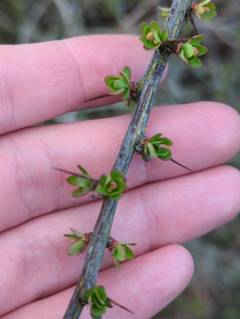 Japanese barberryBerberis thunbergii
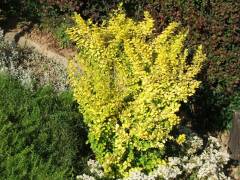 Golden Japanese barberryBerberis thunbergii 'Aurea'
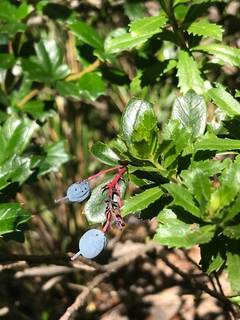 Darwin's barberryBerberis darwinii
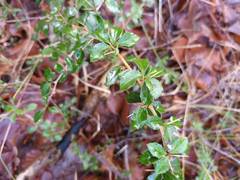 Warty barberryBerberis verruculosa
- Purpleleaf or redleaf Japanese barberryBerberis thunbergii f. atropurpurea
- Helmond Pillar Japanese barberryBerberis thunbergii f. atropurpurea 'Helmond Pillar'