Spiraea, Genus, nipponica, Species, 'Snowmound', Cultivar,
- Genus & species
- Cultivar
snowmound spirea
Species {S. nipponica} native to Japan (Honshu, Shikoku). 'Snowmound' is a cultivar selected for dense mounding habit and heavy bloom
Overview
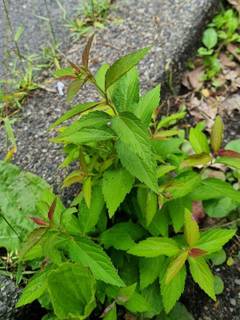
Spiraea nipponica 'Snowmound' is Snowmound spirea (Snowmound Nippon spirea), a dense mounding deciduous shrub growing 3-5 feet (0.9-1.5 m) tall and 3-5 feet (0.9-1.5 m) wide with arching stems. White tiny 5-petaled flowers 0.3 inch (8 mm) in dense flat-topped clusters 1-2 inches (2.5-5 cm) cover the arching stems in May-June (3 weeks). Dark green small obovate leaves 0.5-1 inch (1.3-2.5 cm) closely spaced along the stems. Turns yellow in fall. In Rosaceae. Species native to Japan (nipponica = from Nippon). Unlike S. japonica cultivars that bloom on new wood, 'Snowmound' blooms on old (previous season's) wood — pruning must occur after flowering (June-July), not in late winter. Late winter pruning removes the flower buds and eliminates the bloom. This old-wood blooming habit requires correct pruning timing. The bloom is concentrated in a single 3-week period (no repeat bloom) — the plant is visually unremarkable for the remaining 49 weeks. Does not self-seed aggressively (unlike S. japonica). Tolerates a wide range of soils and pH (5.5-7.5). Deer-resistant. Drought-tolerant once established. Non-toxic. Zones 3-8. Full sun to partial shade. Growth rate is moderate.
Native Range
Species S. nipponica native to Japan (Honshu, Shikoku). 'Snowmound' is a cultivar selected for dense mounding habit and heavy bloom.Suggested Uses
Grown as a low hedge, foundation plant, mass planting, and in containers of at least 5 gallons (19 L), spaced 3-5 feet (0.9-1.5 m). White spring bloom on arching stems. Prune after flowering (not in winter). Deer-resistant. Non-toxic. Zones 3-8.How to Identify
Appearance
Size & Dimensions
Height3' - 5'
Width/Spread3' - 5'
Bloom Information
Detailed Descriptions
Flower Description
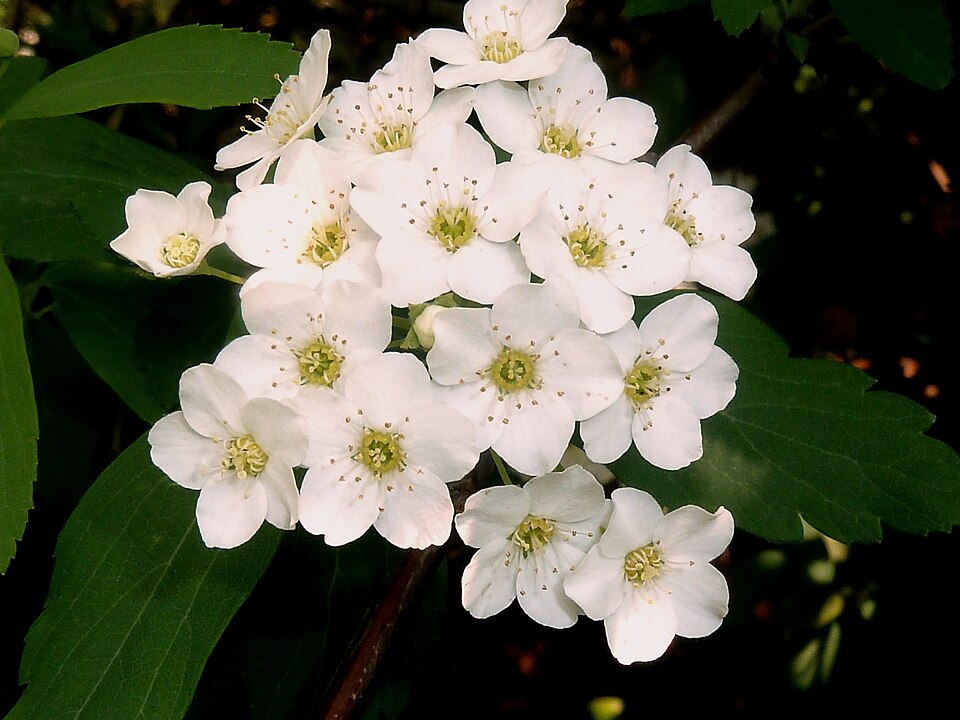
White, tiny, 5-petaled, 0.3 inch (8 mm), in dense flat-topped clusters 1-2 inches (2.5-5 cm) densely covering the arching stems in May-JuneFoliage Description
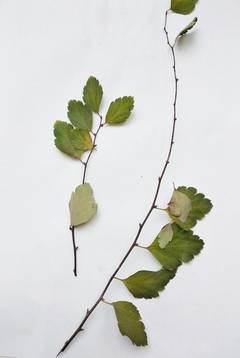
Dark green, small, obovate, 0.5-1 inch (1.3-2.5 cm); dense and closely spaced along the arching stems; turns yellow in fall — fall color often brief and unremarkableGrowing Conditions
Sun Requirements
Requires 4-8 hours of direct sunlight daily
• Full Sun: 6+ hours of direct sunlight
• Partial Shade: 3-6 hours of direct sunlight
• Full Shade: Less than 3 hours of direct sunlight
Care & Maintenance
Care Guide
Full sun to partial shade (4-8 hours). Well-drained soil pH 5.5-7.5. Drought-tolerant once established. Blooms on old wood — prune after flowering (June-July), NOT in late winter (late winter pruning removes flower buds). Does not self-seed aggressively. Deer-resistant. Non-toxic. Zones 3-8.Pruning
Prune after flowering (June-July) — blooms on old (previous season's) wood. Do not prune in late winter (removes flower buds). Remove oldest stems at the base for renewal (1/4-1/3 of oldest canes annually). The arching mounding form is natural — do not shear into a ball.Pruning Schedule
Prune: June–July
summer
Container Growing
Suitable for container growing
Minimum container size: 5 gallons