Image 1 of 7
1 / 7
Plant Reference
Spiraea, Genus, japonica, Species, 'Goldflame', Cultivar,
- Genus & species
- Cultivar
Goldflame spirea
Species {Spiraea japonica} native to Japan, Korea, and China; the species is listed as invasive under state invasive plant regulations in Pennsylvania, Tennessee, Virginia, and other eastern US states where naturalized populations establish in old fields and forest margins. 'Goldflame' is a colored-foliage cultivar selected in the mid-20th century
Overview
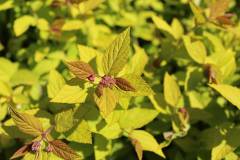
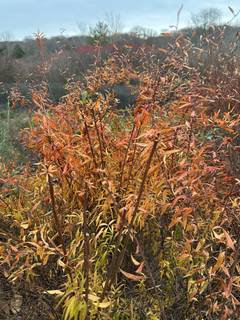
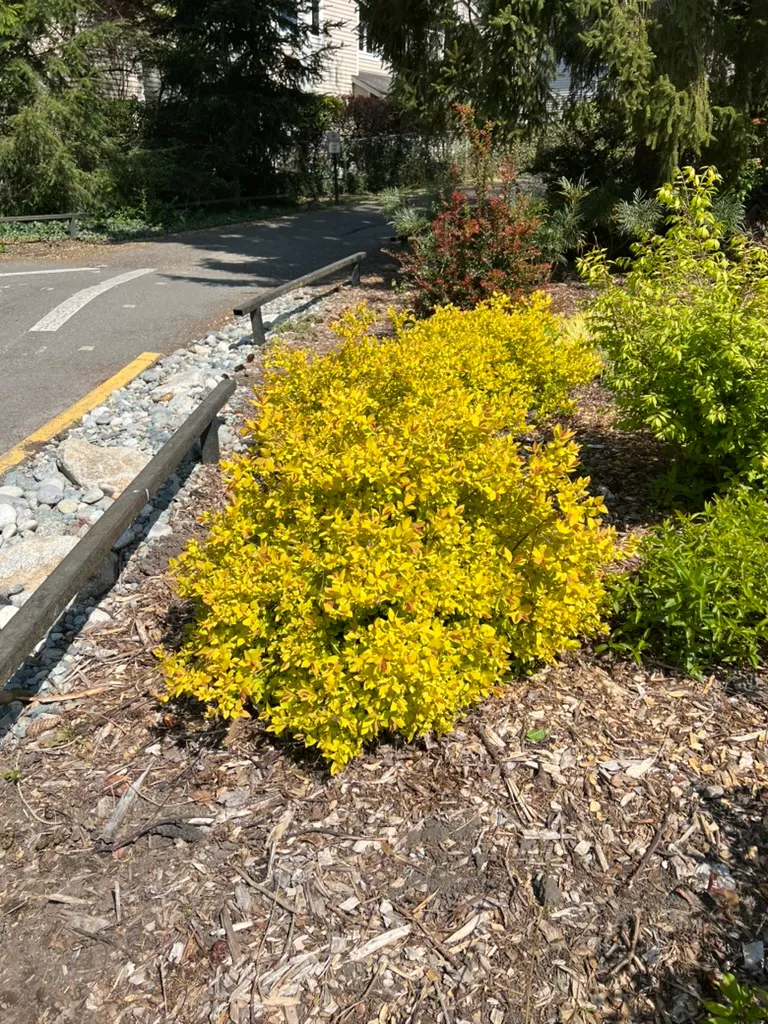
Spiraea japonica 'Goldflame' is a compact mounding deciduous shrub in the family Rosaceae reaching 3–4 feet (0.9–1.2 m) tall and 3–4 feet (0.9–1.2 m) wide. The cultivar is grown for its three-season foliage color sequence: leaves emerge bronze-red in early spring, mature to golden-yellow through summer, and turn russet-orange to red in fall before leaf drop, so the plant carries a different foliage color in every season of active growth. Rosy-pink tiny 5-petaled flowers are borne in flat-topped corymbs 3–5 inches (7–13 cm) across at the branch tips from June through August across a 6-week bloom period, and the pink flowers read against the golden summer foliage as a two-color display that is the main ornamental feature of the cultivar. Shearing the spent flower corymbs after the main flush in July encourages a secondary bloom flush in August and September. The bloom is borne on current-season wood, so pruning is done in late winter while the plant is dormant rather than after flowering. Green-reverted shoots appear on most 'Goldflame' plants each year and are removed at the base as they appear because the green tissue is more vigorous than the golden and will gradually replace the cultivar characteristic if left in place. Limitation: the golden-yellow summer foliage fades to lime-green in heavy shade, so full sun positions with 6 or more hours of direct sun per day hold the color through the summer while partial shade positions produce a muted green-gold that does not match the cultivar name; the species S. japonica is listed as an invasive plant under state invasive plant regulations in Pennsylvania, Tennessee, Virginia, and other eastern US states, and 'Goldflame' produces viable seed that birds disperse into natural areas, so planting is discouraged or prohibited in those states where the species is regulated. Other S. japonica cultivars including 'Magic Carpet', 'Shirobana', and 'Anthony Waterer' share the same regulatory status and the same seed production.
Native Range
The species Spiraea japonica is native to Japan, Korea, and China, growing in open woodlands, stream banks, and forest margins across its native range. 'Goldflame' is a colored-foliage cultivar of the species selected in the mid-20th century for its three-season foliage color sequence (bronze-red, golden-yellow, russet-orange). The species is listed as an invasive plant under state invasive plant regulations in Pennsylvania, Tennessee, Virginia, and other eastern US states where naturalized populations establish in old fields, roadsides, and forest margins.Suggested Uses
Used as a low hedge, border edging, mass planting, foundation plant, and container specimen at 3–4 foot (0.9–1.2 m) spacing, and in containers of at least 7 gallons (26 L) with well-drained potting mix. The three-season foliage color sequence and the June–August rosy-pink bloom make the cultivar a design anchor in mixed shrub borders and foundation plantings where long-season color is the goal. Planting is discouraged or prohibited in Pennsylvania, Tennessee, Virginia, and other eastern US states where S. japonica is regulated as an invasive species, and native alternative shrubs including Itea virginica (Virginia sweetspire), Clethra alnifolia (summersweet), and Hypericum kalmianum (Kalm St. Johnswort) supply summer bloom without the regulatory issue.How to Identify
Appearance
Size & Dimensions
Height3' - 4'
Width/Spread3' - 4'
Bloom Information
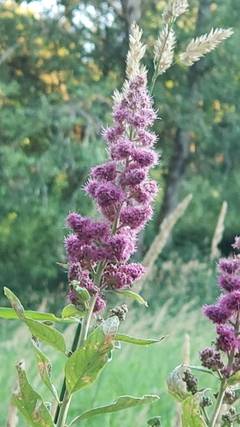
Rosy-pink tiny 5-petaled flowers open in flat-topped corymbs 3–5 inches (7–13 cm) across at the branch tips from June through August across a 6-week bloom period on current-season wood. Honeybees, native bumblebees, and butterflies work the flowers for nectar. Shearing the spent flower corymbs after the main flush in July encourages a secondary bloom flush in August and September, which extends the bloom window into early fall in the Pacific Northwest and similar mild summer climates.
Detailed Descriptions
Flower Description
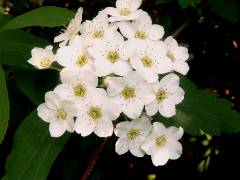
rosy-pink tiny 5-petaled flowers borne in flat-topped corymbs 3-5 inches (7-13 cm) across at the branch tips from June through AugustFoliage Description
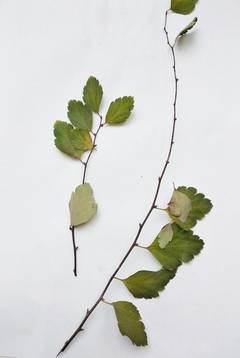
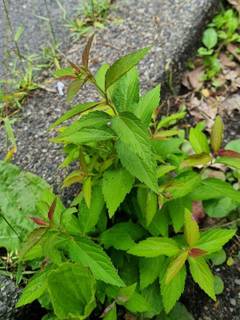
bronze-red emerging in spring, maturing to golden-yellow through summer, and turning russet-orange to red in fall — a three-season foliage color sequence that is the reason the cultivar was selected; occasional green-reverted shoots appear and should be removed at the base because the green growth is more vigorous than the golden and will overtake the plant if left in placeGrowing Conditions
Sun Requirements
Requires 4-12 hours of direct sunlight daily
• Full Sun: 6+ hours of direct sunlight
• Partial Shade: 3-6 hours of direct sunlight
• Full Shade: Less than 3 hours of direct sunlight
Care & Maintenance
Care Guide
Site in full sun to partial shade with 4–12 hours of direct sun per day in well-drained soil with a pH of 5.0–7.5. Full sun positions with 6 or more hours of direct sun per day hold the golden-yellow summer foliage color, while partial shade positions produce a muted green-gold that does not match the cultivar characteristic. The cultivar tolerates loam, clay, and sand substrates and is drought-tolerant once established after the first growing season. The species S. japonica is listed as an invasive plant under state invasive plant regulations in Pennsylvania, Tennessee, Virginia, and other eastern US states, and planting of 'Goldflame' is discouraged or prohibited in those jurisdictions because the cultivar produces viable seed that birds disperse into natural areas. Green-reverted shoots are removed at the base as they appear because green tissue grows more vigorously than golden tissue and will gradually replace the cultivar characteristic if left in place. Hardy in USDA zones 3–8.Pruning
Pruning is done in late winter (February and March) while the plant is dormant because the bloom is borne on current-season wood rather than on old wood. A hard cut back to 6–12 inches (15–30 cm) above ground produces dense compact regrowth with strong bloom in June and July, and a lighter shaping cut preserves more of the previous years framework for earlier leaf emergence. Shearing the spent flower corymbs after the main July flush encourages a secondary bloom flush in August and September. Green-reverted shoots are removed at the base at any season as they appear.Pruning Schedule
Prune: February–March
early spring
Container Growing
Suitable for container growing
Minimum container size: 7 gallons