Image 1 of 15
1 / 15
Plant Reference
Spiraea, Genus, thunbergii, Species,
- Genus & species
Thunberg spirea
Japan and China; open woodlands, hillsides, and stream banks at middle elevations
Overview
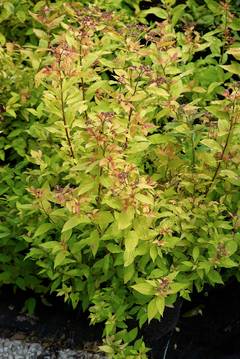
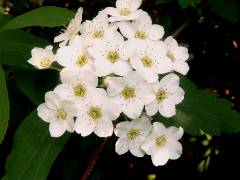
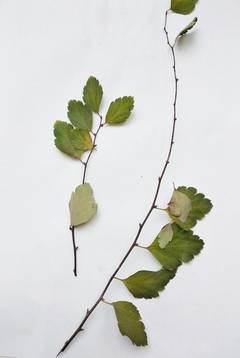
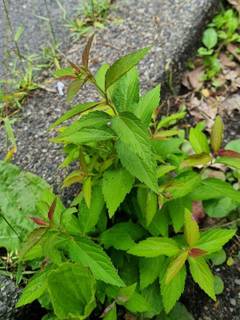
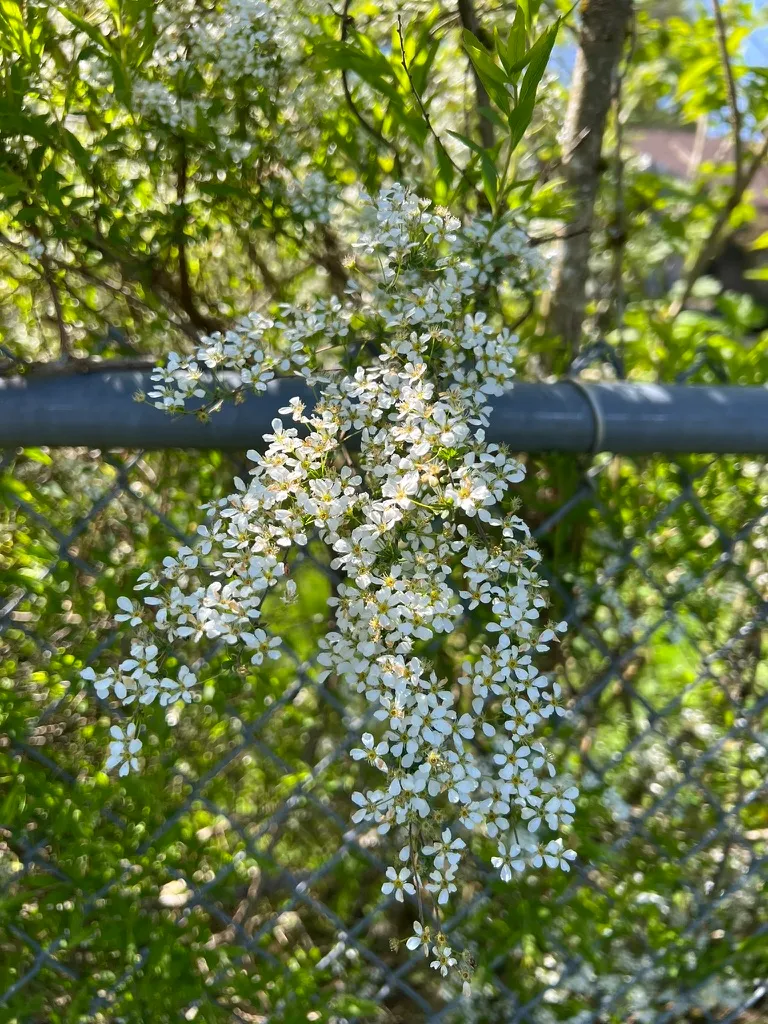
Spiraea thunbergii is a spreading deciduous shrub in the family Rosaceae reaching 3–5 feet (0.9–1.5 m) tall and 3–5 feet (0.9–1.5 m) wide with thin arching stems that radiate outward from the crown. Leaves are alternate, linear-lanceolate (very narrow and strap-shaped), 1–1.5 inches (2.5–4 cm) long and only 0.1–0.2 inch (3–5 mm) wide — the narrowest leaves of any commonly cultivated Spiraea species, giving the foliage a wispy airy texture across the thin arching stems that is often compared with the texture of baby's breath (Gypsophila paniculata) and is the source of the alternate common name baby's breath spirea. White tiny 5-petaled flowers 0.3 inch (8 mm) across open in clusters of 2–5 flowers along the bare or partially leafed stems from March through April across about 2 weeks, and S. thunbergii is the earliest flowering spirea in temperate gardens, blooming 2–4 weeks before the more commonly planted S. × vanhouttei and S. japonica. The species was named for Carl Peter Thunberg, the 18th-century Swedish botanist who collected plants in Japan as physician to the Dutch East India Company trading post at Nagasaki and introduced many Japanese species to European cultivation. Foliage turns yellow to orange in fall before leaf drop. Limitation: the bloom display is brief and subtle — the tiny 0.3 inch (8 mm) flowers and the 2-week bloom window mean the flowering impact is visible only at close range rather than as a landscape-scale spring display, and the thin wiry stems become twiggy and congested without annual renewal pruning that removes the oldest canes at the base. The shrub blooms on previous-season (old) wood, so pruning calls for timing immediately after the bloom period in May rather than in late winter or early spring, which would remove the following year's flower buds.
Native Range
Native to Japan and China, growing on open woodlands, hillsides, and stream banks at middle elevations. Introduced to Western cultivation from Japan in the 18th century by the Swedish botanist Carl Peter Thunberg, who collected the species during his term as physician to the Dutch East India Company trading post at Nagasaki between 1775 and 1776, and the species epithet thunbergii honors his contribution to the documentation of Japanese flora.Suggested Uses
Used as a low informal hedge, mixed shrub border plant, foundation planting, and container specimen in pots of at least 5 gallons (19 L) at 3–5 foot (0.9–1.5 m) spacing. The early March-to-April bloom on the wispy arching stems supplies the first spirea display of the season in temperate gardens, and the narrow linear foliage carries an airy texture through the growing season that contrasts with the broader foliage of most other shrubs. Formal clipped hedges and high-impact distance-viewed landscape plantings are unsuitable because shearing destroys the arching form and the tiny 0.3 inch (8 mm) flowers are visible only at close range rather than as a distance display.How to Identify
Appearance
Size & Dimensions
Height3' - 5'
Width/Spread3' - 5'
Bloom Information
White tiny 5-petaled flowers 0.3 inch (8 mm) across open in clusters of 2–5 flowers along the bare or partially leafed stems from March through April across about 2 weeks on previous-season (old) wood. S. thunbergii is the earliest flowering spirea in temperate gardens, blooming 2–4 weeks before other commonly cultivated species. The bloom is pollinated by honeybees and native bees as an early-season nectar source in late-winter-emerging pollinator populations.
Detailed Descriptions
Flower Description
white tiny 5-petaled flowers 0.3 inch (8 mm) across in clusters of 2-5 along the bare or partially leafed stems from March through AprilFoliage Description
medium green through the growing season; linear-lanceolate (very narrow and strap-shaped), 1-1.5 inches (2.5-4 cm) long and only 0.1-0.2 inch (3-5 mm) wide — the narrowest leaves of any commonly cultivated Spiraea; turns yellow to orange in fall before leaf dropGrowing Conditions
Sun Requirements
Requires 4-8 hours of direct sunlight daily
• Full Sun: 6+ hours of direct sunlight
• Partial Shade: 3-6 hours of direct sunlight
• Full Shade: Less than 3 hours of direct sunlight
Care & Maintenance
Care Guide
Site in full sun to partial shade with 4–8 hours of direct sun per day in well-drained soil with a pH of 5.5–7.5. The species is drought-tolerant once established after 2–3 growing seasons and calls for supplemental irrigation only during extended summer dry periods. Bloom forms on previous-season (old) wood, so any shaping pruning is done in May immediately after the bloom period rather than in late winter or early spring, which would remove the following year's flower buds. Annual renewal pruning that removes about one-third of the oldest stems at ground level each year rebuilds the shrub with younger vigorous canes and holds the form without the twiggy congestion that develops on un-pruned plants. The species is deer-resistant and carries no significant pest or disease pressure in most landscape positions. Hardy in USDA zones 4–8.Pruning
Pruning is done in May immediately after the bloom period because flower buds for the following year form on new wood through summer and fall, and winter or early spring pruning removes the next year's bloom. Annual renewal pruning removes about one-third of the oldest stems at ground level each year on a 3-year rotation, which rebuilds the multi-stemmed framework with younger vigorous canes and holds the thin arching form without twiggy congestion. Shearing and formal clipping are not used because they destroy the natural wispy arching form that is the main design feature of the species.Pruning Schedule
Prune: May
late spring
Container Growing
Suitable for container growing
Minimum container size: 5 gallons