Spiraea, Genus, lucida, Species,
- Genus & species
shinyleaf spiraea
Overview
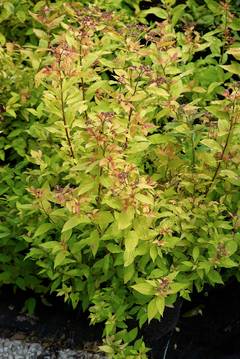
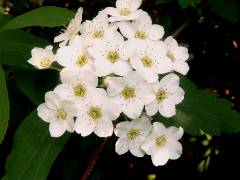
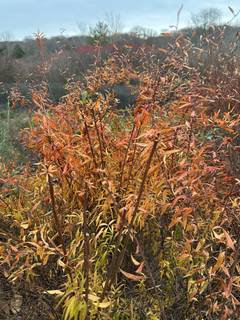
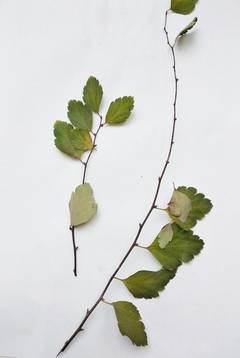
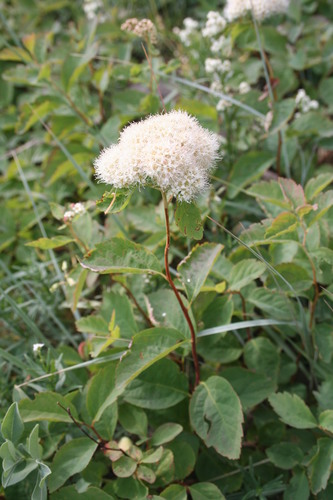
Spiraea lucida is a low deciduous shrub reaching 1-3 feet (30-90 cm) tall and 2-4 feet (60-120 cm) wide, with an upright clumping habit from rhizomatous roots that form colonies. Leaves are oval to obovate, 1-2.5 inches (2.5-6.5 cm) long, with sharply double-toothed margins on the upper half; the upper surface is dark green and shiny, and the lower surface is paler and matte. Foliage turns yellow to orange-yellow in fall before dropping. White flowers about 0.25 inch (6 mm) across with five rounded petals appear in flat-topped corymbs 1-3 inches (2.5-7.5 cm) wide at the tips of the stems from June through August. Each flower cluster lasts 2-3 weeks; bloom on a single plant extends 3-4 weeks. Brown follicles ripen August through September, splitting to release small seeds. Spreads by underground rhizomes, expanding 4-8 inches (10-20 cm) per year and forming colonies 5-10 feet (1.5-3 m) wide over 5-10 years. Lifespan of individual stems 6-10 years; rhizome systems persist much longer through ongoing stem replacement.
Native Range
Native to western North America from Alaska south through interior British Columbia to Oregon, east to Alberta, Montana, Wyoming, Colorado, and the Black Hills of South Dakota. Found in open conifer forest understory, montane meadow margins, rocky slopes, and stream terraces at elevations of 1,500-9,000 feet (450-2,750 m).Suggested Uses
Used in dry slope plantings, open-conifer-understory gardens, native shrubland restorations, and as a low informal hedge. Spaced 3-4 feet (90-120 cm) apart for solid coverage or 5-6 feet (1.5-1.8 m) apart in mixed plantings. Tolerance for lean rocky soils suits it to xeric sites where many other shrubs decline.How to Identify
Appearance
Size & Dimensions
Height1' - 3'
Width/Spread2' - 4'
Bloom Information
Flowers from June through August across the range, with peak bloom in July at most sites. High-elevation populations (above 7,000 feet / 2,100 m) bloom from mid-July through August; low-elevation populations may begin in early June. Each flower cluster lasts 2-3 weeks; total bloom on a single plant extends 3-4 weeks.
Detailed Descriptions
Foliage Description
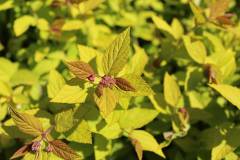
shiny dark green above, paler beneathGrowing Conditions
Sun Requirements
Requires 5-10 hours of direct sunlight daily
• Full Sun: 6+ hours of direct sunlight
• Partial Shade: 3-6 hours of direct sunlight
• Full Shade: Less than 3 hours of direct sunlight
Care & Maintenance
Care Guide
Plant container-grown stock in spring or fall in well-drained loamy or rocky soils with full sun to light shade. Water weekly during the first growing season; established plants tolerate extended summer drought of 4-6 weeks without irrigation. Tolerates a wide range of soil pH from 5.5 to 7.5 and grows in lean as well as fertile soils. Powdery mildew may develop on foliage in humid conditions but causes only cosmetic damage. Aphids may colonize new growth in spring; populations typically collapse after 2-3 weeks as predators arrive. Spreading rhizomes can extend beyond intended planting areas and may need a root barrier in confined garden beds.Pruning
Prune in late winter or early spring before bud break to remove dead, damaged, or crowded stems. Renewal pruning by cutting one-third of the oldest stems to ground level rejuvenates older colonies. Heavy pruning to within 4-6 inches (10-15 cm) of the ground in late winter is tolerated and produces a flush of new stems by midsummer.Pruning Schedule
Prune: February–March
winterearly spring