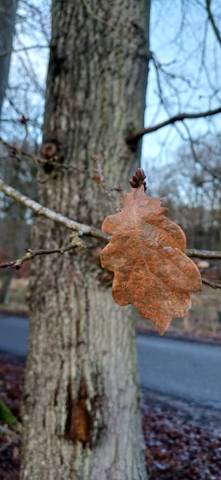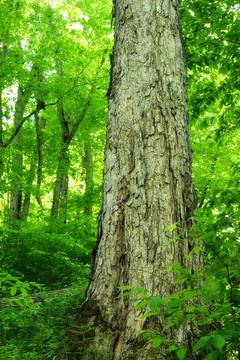
Quercus, Genus, falcata, Species,
- Genus & species
southern red oak tree
Overview
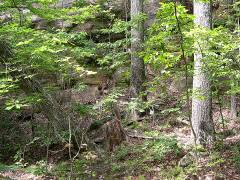
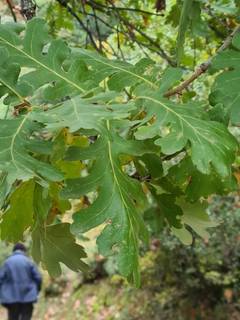
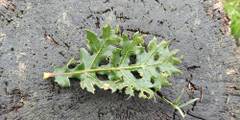
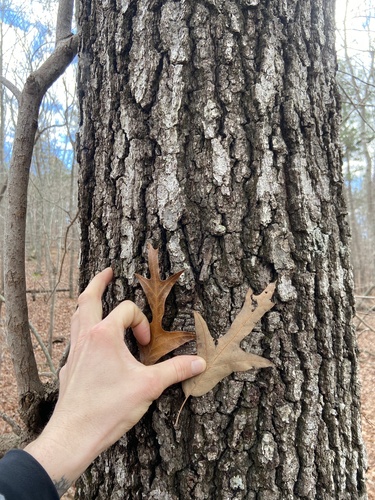
Quercus falcata is a deciduous tree in the red oak group reaching 60-80 feet (18-24 m) tall and 50-70 feet (15-21 m) wide at maturity, with a broadly rounded crown and a single central trunk 2-4 feet (60-120 cm) in diameter on mature specimens. Leaves are variable, 5-9 inches (13-23 cm) long and 3-5 inches (7.5-13 cm) wide, with a U-shaped to bell-shaped base and 3-7 sharply pointed lobes; the terminal lobe is often greatly elongated and sickle-shaped (the species name falcata means sickle). Lobe tips bear bristle points typical of the red oak group. Foliage emerges with rusty-bronze pubescence in April, matures to dark green above and grey-tomentose below by mid-May, and turns dull orange-red to rusty brown over 7-14 days in October-November in zones 6-8. Acorns are 0.4-0.6 inch (10-15 mm) long, nearly round, with a saucer-shaped cap covering 25-35% of the nut; mast cycles run 2-3 years. Bark is dark grey to nearly black on mature trunks, with deep furrows and broad ridges, contrasting with the smoother bark of Q. shumardii and Q. rubra. Growth rate is 12-24 inches (30-60 cm) per year on dry to medium soils.
Native Range
Native to southeastern North America from southern New York and southern Illinois south to central Florida and west to eastern Texas and Oklahoma. Found on dry to mesic upland slopes, ridges, and sandy soils in pine-oak and oak-hickory forest at 100-2,500 feet (30-760 m) elevation, often associated with Quercus alba, Q. velutina, and Pinus taeda. Less cold-hardy than other red oaks; absent from the upper Midwest and northern New England.Suggested Uses
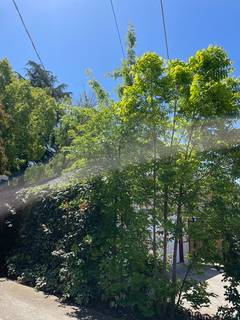
Planted as a shade tree, lawn specimen, or restoration component in southeastern landscapes, spaced 50-70 feet (15-21 m) apart. Used in mixed-species canopy plantings on residential and rural sites in zones 6-9. Mature heights of 60-80 feet (18-24 m) make this species unsuitable for sites with overhead utility lines or limited overhead clearance.How to Identify
Appearance
Size & Dimensions
Height60' - 80'
Width/Spread50' - 70'
Colors
Bloom Information
Wind-pollinated, with male catkins emerging in late March to mid-April just before or as leaves expand. Male catkins are 3-5 inches (7.5-13 cm) long, hanging in clusters of 3-6 and releasing yellow-green pollen over 7-14 days. Female flowers are inconspicuous reddish spikes 0.1-0.2 inch (2.5-5 mm) long at new leaf bases. In zones 8-9, bloom occurs in mid-March.
Detailed Descriptions
Flower Description
Yellow-green male catkins; reddish female spikesFoliage Description
Rusty-bronze on emergence; dark green above and grey-tomentose below in summer; orange-red to rusty brown in fallGrowing Conditions
Sun Requirements
Requires 6-8 hours of direct sunlight daily
• Full Sun: 6+ hours of direct sunlight
• Partial Shade: 3-6 hours of direct sunlight
• Full Shade: Less than 3 hours of direct sunlight
Care & Maintenance
Care Guide
Trees establish well in full sun on acidic, well-drained sandy loam to clay loam soils at pH 4.5-6.5; chlorosis develops on alkaline soils above pH 7.0. Watering of 15-20 gallons (57-76 L) weekly during the first three growing seasons is typical; established trees withstand droughts of more than 4 weeks once roots reach 24 inches (60 cm) deep. Drought tolerance is strong on sandy ridgetop sites in the species's native range. Oak wilt (Bretziella fagacearum) is a serious disease in central populations, transmitted by sap beetles attracted to fresh wounds during April-July. Bacterial leaf scorch (Xylella fastidiosa) is widespread across the species's native range, killing trees over 5-10 years once symptoms appear. Periodical cicada egg-laying damages young branches every 13 or 17 years. Lifespan is 70-150 years on suitable soils.Pruning
Pruning is performed in winter (December-February) when sap beetles vectoring oak wilt are inactive. Co-dominant leaders, dead wood, and crossing branches are removed during the first 15-20 years to set scaffold structure with vertical spacing of 24-36 inches (60-90 cm) between major branches. Wound dressing is applied to fresh cuts on red oaks during the growing season to limit sap-beetle attraction. Heavy pruning on mature trees creates wounds prone to colonization by decay fungi.Pruning Schedule
Prune: December–February
winter
Container Growing
Minimum container size: 25 gallons