Quercus, Genus, hypoleucoides, Species,
- Genus & species
silverleaf oak
Southwestern US and northern Mexico (sky island mountains of Arizona, New Mexico, Texas; pine-oak woodlands, 5,000-8,000 feet / 1,500-2,400 m)
Overview
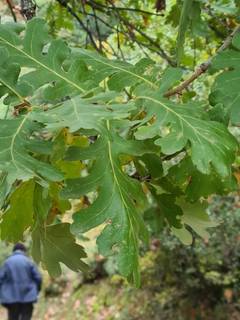
Quercus hypoleucoides is the silverleaf oak, an evergreen tree growing 240-480 inches (600-1,200 cm / 20-40 feet) tall and 180-300 inches (450-750 cm / 15-25 feet) wide. Lanceolate leaves 2-4 inches (5-10 cm) with glossy dark green upper surfaces and bright silvery-white dense felt (tomentum) on the undersides — the bicolored leaves flash white when wind turns them. The species name 'hypoleucoides' means 'resembling white beneath' (Greek hypo + leukos + oides). The white leaf undersides are the whitest of any North American oak. The leaf margins roll inward (revolute) — an adaptation to the arid climate. In the beech family (Fagaceae), section Quercus (red oaks). Acorns 0.5-0.8 inch (12-20 mm) in shallow cups, maturing in 1 year — consumed by Merriam's turkey, black bear, and band-tailed pigeon. Native to the sky island mountains of the American Southwest (Arizona, New Mexico, Texas) and northern Mexico, growing in pine-oak woodlands at 5,000-8,000 feet (1,500-2,400 m). The Madrean sky islands are isolated mountain ranges surrounded by desert — the disjunct populations create genetic isolation. Drought-tolerant once established. Intolerant of humid summer climates east of the Great Plains. Acorns are edible only after leaching; raw leaves and acorns contain tannins that are harmful if eaten in quantity, especially to horses and grazing livestock. Deer-resistant. Full sun. Native. Zones 7-10. Growth rate is slow to moderate.
Native Range
Native to the sky island mountains of the American Southwest (Arizona, New Mexico, Texas) and northern Mexico, growing in pine-oak woodlands at 5,000-8,000 feet (1,500-2,400 m).Suggested Uses
Commonly planted as a specimen and shade tree in arid southwestern landscapes in zones 7-10. The bicolored leaves (dark green above, silvery-white beneath) flash white in wind. Sky island native. Drought-tolerant. Intolerant of humid eastern climates. Leaves and acorns are harmful to horses, livestock and pets if eaten in quantity. Native.How to Identify
Appearance
Size & Dimensions
Height20' - 40'
Width/Spread15' - 25'
Bloom Information
Spring (April-May) — inconspicuous catkins. Acorns 0.5-0.8 inch (12-20 mm) in shallow cups, maturing in 1 year. Wildlife food (turkey, bear, pigeon). The bicolored evergreen foliage is the year-round feature.
Detailed Descriptions
Foliage Description
Glossy dark green above; bright white to silvery-white dense felt (tomentum) beneath; lanceolate, 2-4 inches (5-10 cm); margins roll inward (revolute)Growing Conditions
Sun Requirements
Requires 6-12 hours of direct sunlight daily
• Full Sun: 6+ hours of direct sunlight
• Partial Shade: 3-6 hours of direct sunlight
• Full Shade: Less than 3 hours of direct sunlight
Care & Maintenance
Care Guide
Full sun. Well-drained soil. Drought-tolerant once established. Adapted to the arid Madrean sky-island climate — intolerant of humid summer climates east of the Great Plains. The bicolored leaves flash white in wind. Leaves and acorns are harmful to horses, livestock and pets if eaten in quantity. Deer-resistant. Native. Zones 7-10.Pruning
Prune in winter (January-February) when dormant. Remove dead, damaged, and crossing branches. The natural crown shape develops over decades. Do not top.Pruning Schedule
Prune: January–February
winter